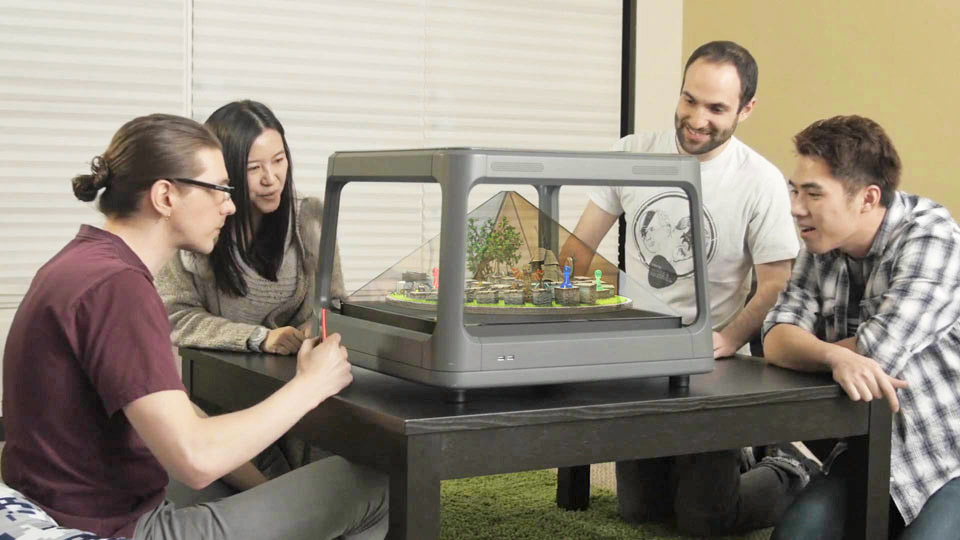
Recently, we posted an article about a new awesome device you can place on your tabletop and make your games three dimensional, called Holus. Unfortunately, it has come to our attention that this might possibly be a very good scam!
In their video, the Holus creators (a Vancouver based startup called H+ Technology) are using photorealistic renderings to make their product look like a perfect volumetric display.
Beauty is in the CGI of the beholder
So what about the motion tracking they are showing in the video? H+ says:
It changes the image so we actually get different perspectives. As a result, we have now turned it into a proper hologram.
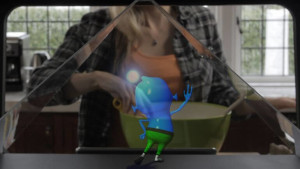
Using a smartphone orientation sensors to rotate a model in the Holus.
This is a cool trick but don’t be fooled: while the model on the screen is rotated, the image is still a flat plane since both eyes are looking at the same image (of course, this is hard to see in a 2D video).
The Holus is nothing more than a standard computer monitor lying on top of a glass pyramid. In other words, in it’s current form, the Holus is unlikely to display anything more impressive than four distinct 2D views, reflected in four panes of glass. Or as someone on Reddit brilliantly said: “This is a strange 4 sided semi transparent TV.”
H+ Technology said they are exploring using a lenticular display (the same 3D technology used in the Nintendo 3DS for example) but it looks like this is not past the R&D phase yet. Even if Holus did show a prototype that solved the many issues of lenticular displays, it won’t look anything like the promo video simply because reflected light cannot do that.
Holus also (allegedly) created numerous fake accounts on Kickstarter and posted glaringly positive messages in favor of the project. The accounts were just 1 day old!
Another thing that we noticed is that, the website of H+, the creators of Holus, is missing many pages (or has a lot of bad links). Click on Press -> In the news -> 404 error. Try Contact and you’ll be taken here: https://www.hplustech.com/new-folder/ This cannot be expected from true professionals, who by the way are running a ground breaking technology company. Something smells fishy, and it might be Holus…
We contacted H+ Technologies for a response to these allegations, they sent us this link: https://vimeo.com/channels/933372
If you have ever thought that the apps and movies in your smart phone have been flat and lifeless, a company called H+ Technology may have a solution. It’s crowdfunding the Holus, a tabletop display that turns 2D content material from many sources into 3D holograms inside a glass pyramid which you can see from any direction. All you need to do is plug it in, after that, you may play digital board games, academic titles and many other types of apps. It is also set to incorporate functionality for eye trackers and even brainwave sensors. There’s even motion tracking that can ensure content follows you whenever you wander around.
The potential for the machine has already won folks over. It sailed past its initial funding aim of CAD $50,000 for its Kickstarter campaign in only two hours, and at time of writing has attracted greater than $254,873 from backers.
H+ hopes that Holus will revive the lost art of real-life get together with out making you revert to that Ludo game gathering dust in your attic. That’s a bit optimistic, however it’s difficult to deny the appeal of a living room holographic display that you can move around.
The Holus will be available in two varieties, Home and Pro. Home has two smartphone charging docks, whereas Pro contains an HDMI port and comes with an SDK tool, enabling developers to create software programs and apps for it. The company also has plans for upscale versions, having created a room size model to be used at exhibits.
Six college researchers have revealed dangerous zero-day flaws in Apple’s iOS and OS X, claiming it’s entirely possible to crack Apple’s password-storing key chain, break app sandboxes, and bypass its App Store safety checks.
A variety of newly found vulnerabilities affecting Apple’s Mac OS X and iOS operating systems may permit attackers to steal passwords and different credentials if successfully exploited. The vulnerabilities were uncovered by a team of researchers based in the University of Indiana, who found that the 4 separate flaws could enable a malicious app to bypass safety controls and steal sensitive information from different apps. The vulnerabilities had been reported to Apple in October 2014 and the company stated it will require six months to roll out fixes. Although some issues have been addressed, a lot of the vulnerabilities remain un patched till the filing of this report.
Every app installed via Apple’s Mac App Store and iOS App Store is confined to a secure container on the pc generally known as a sandbox. These apps are granted restricted privileges and if they need to access any extra resources outside of their very own container, then the user must grant permission first. The researchers discovered 4 vulnerabilities by which unauthorized access could possibly be granted, which they refer to as cross-app resource access (XARA) attacks.
1. Password-stealing vulnerability Apple operating systems have a safe password storage feature referred to as Key chain which permits the user to store and retrieve passwords for numerous apps and on-line services. The first vulnerability permits a malicious app to create a key chain entry for another app. If the targeted app isn’t present on the pc and the user subsequently installs the app, its credentials are saved on the key chain entry created by the malicious app. If the targeted app is already installed, a malicious app can delete its existing key chain entry and create a brand new one, which the user will re-enter their credentials the subsequent time they access the targeted app.
2. Container cracking The second vulnerability could enable a malicious app to gain entry to the secure container belonging to another app and steal data from it. Each app container is given a unique id referred to as a Bundle ID (BID). The Mac App Store doesn’t permit submitted apps to make use of a BID that’s already been utilized by any another app.
However, an issue lies with sub-targets, apps that work embedded in another app, such as extensions, frameworks, or helper applications. The Mac App Store doesn’t verify if a sub-target’s BID is similar to those belonging to other apps or their sub-targets. An attacker might therefore use a malicious app with sub-targets that use BIDs belonging to other apps or their sub-targets. This may allow the malicious app to gain full entry to another app’s container.
3. Inter-process communication (IPC) interception An additional vulnerability exists as a result of cross-app IPC channels on Mac OS X and other platforms, such as Web Socket, which contain flaws which expose vital data. For instance, Web Socket is used to establish a connection between a server and a client. A malicious app might claim the port utilized by a legitimate application and intercept data supposed for it, for example passwords or other sensitive data.
4. Scheme hijacking The 4th vulnerability relates to the URL scheme apps used to pass information to another app. For example, URLs starting with “mailto” direct information to the Mail app. This vulnerability permits a malicious app to hijack a scheme, which implies data sent to the target app can be obtained by it instead. This may facilitate the theft of access tokens and other data.
Risk of exploitation All apps distributed on the official Mac App Store and iOS App Stores are vetted by Apple and only sand boxed apps may be distributed. A Mac OS X feature known as Gatekeeper blocks apps that aren’t signed by the Apple Store or a trusted developer.
However, the researchers created a proof-of-concept malicious app which passed the vetting and was briefly live on the Mac App Store before they removed it from the store.
Here’s the boffins’ (the security guys) description of their work:
Our study brings to light a series of unexpected, security-critical flaws that can be exploited to circumvent Apple’s isolation protection and its App Store’s security vetting. The consequences of such attacks are devastating, leading to complete disclosure of the most sensitive user information (e.g., passwords) to a malicious app even when it is sand-boxed.
Such findings, which we believe are just a tip of the iceberg, will certainly inspire the follow-up research on other XARA hazards across platforms. Most importantly, the new understanding about the fundamental cause of the problem is invaluable to the development of better app isolation protection for future OSes.
In-depth technical details are available in the aforementioned link.
No known exploits of those vulnerabilities have occurred within the wild. However, as word spreads of their existence, we believe its highly likely that attackers will begin making an attempt to exploit them.
A 3D printer that makes metal structures appear out of thin air will attempt its hand at constructing — wait, printing — a pedestrian bridge!
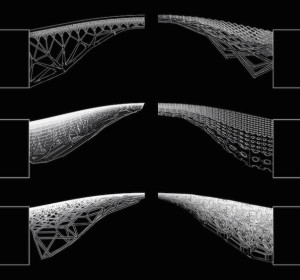
An conceptualization of MX3D’s printers in motion. (Credit: MX3D)
MX3D is a Netherlands-based startup that researches and develops 3D printing technologies. Later this year the company is planning its most formidable challenge yet: Using 3D printers to construct a bridge over a canal in the heart of Amsterdam.
Make Me a Bridge
The MX3D crew essentially takes everything about 3D printing and turns it on its head. The conventional process would be this: Printers build objects from the bottom up by applying layer after layer of plastic goop from dispenser that shuttles backwards and forwards along a horizontal plane. The finished product has telltale layers that sort of resemble a topographic map.
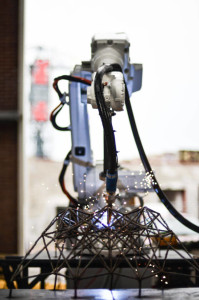
This isn’t how MX3D printers work. Instead, the MX3D-Metal printer prints structures by ejecting small amounts of molten metal via a welding nozzle at the end of a 6-axis robotic arm — it can craft objects from any angle, rather than simply along a horizontal plane. As molten steel flows via the nozzle, it quickly cools and sets, which allows the printer to produce straight lines, spirals or any other form for that matter, out of ‘thin air.’
“3D printing like this is still unexplored territory and leads to a new form language that isn’t bound by additive layers. This method makes it possible to create 3D objects in almost any size and shape,” wrote MX3D on its site.
You can get a close look at the metallic printer in the following Youtube video:
New Frontier
For their bridge, the team plans to make use of two teams of two robots. The teams would begin on opposite sides of the canal and build till they meet in the center, constructing their own supports along the way while moving ahead on movable platform bases.
The final design of the bridge and its exact location are still to be decided, however construction is being anticipated to start in September.
The venture is about much more than just a bridge; it might serve as a glimpse into what future construction sites would possibly look like. Rather than workers in hard hats and neon orange vests, autonomous 3D printers could be the new norm. If we are able to 3D print a bridge, why not make a skyscraper with 3D printing cranes? The MX3D group appears to agree with the broader influence their bridge project may have, as they state on the project website:
This bridge will show how 3D printing finally enters the world of large-scale, functional objects and sustainable materials while allowing unprecedented freedom of form. The symbolism of the bridge is a beautiful metaphor to connect the technology of the future with the old city, in a way that brings out the best of both worlds.
Although MX3D has tested their bridge-printing robots on smaller scales, they will possibly face a number of new challenges once the project gets going. Their robots must deal with irregular terrain, changing weather conditions and other factors which are usually controlled within the lab.
We will have to wait and see if MX3D’s bridge results in new potentialities for the technology, or if they merely ended up building a bridge to nowhere.
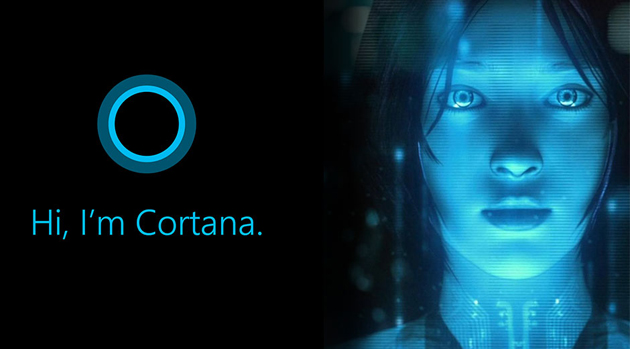
Microsoft announced that its digital personal assistant, Cortana is coming to the Xbox!
Gaming will get even better on Xbox One with a totally redesigned user experience launching globally this fall. Microsoft is making some massive modifications to make it faster to get to your content and complete must-have tasks on Xbox One. And, Xbox One will also become extra intelligent with the help of Cortana.
Last month, Microsoft announced that Cortana will soon be available for Android Phones and iPhones, working as a companion to the Windows 10 PCs. Starting in July, the beta of the Cortana app for Android Phones will be available to test as a companion to Windows 10 (also to be released in July).
Cortana running inside Blade
It was announced at E3 on the 15th of June, that Cortana is also coming to Xbox One this fall in the U.S. and UK markets. Cortana will be a powerful assistant for hundreds of thousands of gamers helping elevate their game when they need her. Through voice instructions on Xbox One, Cortana will assist them to more quickly discover great games, new challengers and buddies on Xbox Live, or accomplish common tasks.
According to Microsoft:
Your Microsoft account helps keep your personal assistant connected to you across device experiences, whether on your PC, phone or Xbox One. Cortana’s Notebook will be available across your devices to keep track of details important to you. Cortana only knows what you want her to know and you are fully in control of how you use her across devices.
On Xbox One, Cortana knows your friends and makes it easy to invite them to play with you through simple voice commands. If you want to record and share a clip of your game play, you can use Cortana to precisely control the length of the recording and quickly share it with your friends without leaving your game. Cortana will also help you find information about games, such as the release date of an upcoming game, or help you get achievements by surfacing videos and information to help you succeed.
On your Android phone you can ask Cortana to remind you to walk the dog at 8pm in the evening, and then when you’re watching a movie your Xbox will interrupt playback to let you know it’s time to take the dog out.
You can ask Cortana questions and she’ll give you answers, using the same natural language, regardless of which device you’re on. Want to know the weather tomorrow? Just ask Cortana from any device. Cortana can help you search for what matters most on the device you’re using. On your Windows PC, you can use natural language to ask Cortana to help you find recent documents and pictures. On your Xbox One, you can use natural language to ask Cortana to find a friend online or record a game DVR clip.
Cortana will only be available in selected markets on launch (US & UK). It will later be expanded worldwide. Will it beat Google Now or Apple’s Siri in everyday life?
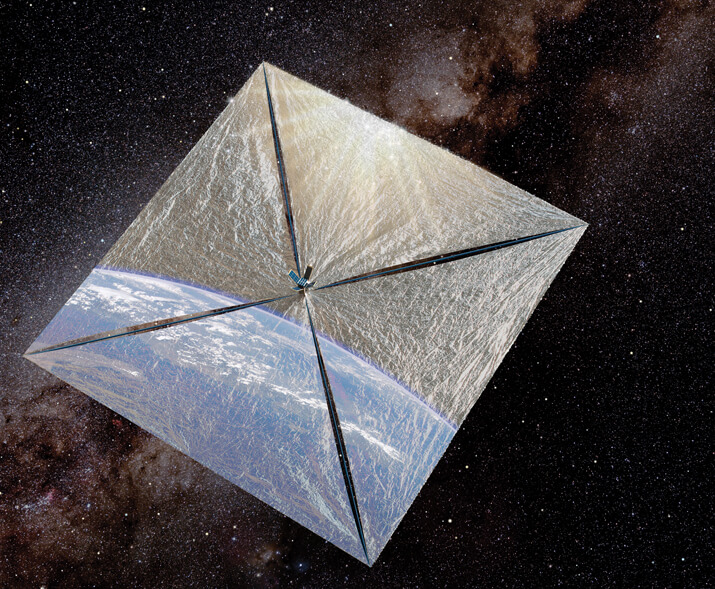
The final time LightSail checked in was Wednesday, June 10 at 11:29 p.m. EDT. The corresponding beacon packet, which turned out to be the mission’s last, displayed an actual-time clock value of 1,837,416 seconds—21 days since launch on May 20. The gyroscopes, which had been able to capture snapshots of the spacecraft’s tumble rate after each reboot, confirmed LightSail tumbling at 6.7, 2.4, and 0.3 degrees per second about its X, Y and Z axes.
On Sunday, Cal Poly’s Justin Foley heard from LightSail on its final ground station pass of the day, which started at 12:52 p.m. EDT. It was overflight number 223, & it would be the very last time the spacecraft would call home—even though it wasn’t a lot of a dialog, with LightSail continuing to talk in gibberish.
Ted Molczan of SatObs made the first end-of-mission pronouncement Sunday afternoon, calling time of death at 1:23 p.m. EDT (17:23 UTC). Further proof in favor of Ted’s numbers came Monday when the Joint Space Operations Center issued a new set of orbital elements.
Of the reentry, Ted wrote:
“Allowing the GMAT propagation to continue to decay revealed that it would have reached the altitude at which decaying objects usually become self-luminous (96 km) on Jun 14 near 17:22 UTC, and would have passed through the typical altitude of “main-break-up” (78 km) near 17:23 UTC. Given its low mass, I doubt it would have survived for much longer. If this is right, then it survived less than half an hour after the Cal Poly pass.”
If you plug the spacecraft’s last orbital elements into modeling software, you get an altitude of -53.5 kilometers at 01:39 UTC. In other words, the spacecraft would have been “underground”. But it’s fun to think about a scenario in which LightSail’s photo voltaic sails snapped cleanly away as the CubeSat reentered, permitting the avionics and radio systems to skirt around the Earth for a few extra orbits. One last act of defiance, so to speak.
This image of LightSail was captured from Santa Cruz, California on June 9 at 3:52 a.m. PDT (10:52 UTC). The photo was analyzed by two additional amateur trackers for verification. Photo details: f/1.4, exposure 20 seconds, ISO 800, 30mm.
Whatever actually occurred, LightSail—the test unit, anyway—is dead. The vast list of lessons learned should now be applied to the second mission. While LightSail ran into a lot of trouble on its mission, it was ultimately successful — the only real objective was to deploy the ship’s namesake sails and prove that the vehicle was space worthy. The real challenge comes near the end of 2016, when the Planetary Society expects to fly a second model that will actually use its photon-powered sails to get around!
Do you like free stuff? Who doesn’t? We digg Free Stuff!
Today, we’ll give you some awesome free stuff. Worth more than 100$ in total! So here are our top 10 freebies of the month! All links open in a new tab/window. So check them all out 🙂
1. Get a free Fiverr Gig! (Worth 5$). (If first link doesnt work, try this) You can many kinds of gigs for free! Get a brand new logo, SEO for your website, an article for your blog, an introduction video for your company, a voice over or audio for your book and many others! CLICK HERE. While you are at it, please do check out our friends BabaJee and Sundus. They also have some awesome fiverr gigs! (You will need a new account)
3. Now that you have your own domain name, you need hosting. Get free hosting! Register at the site, then order any 1 of the 4 packages. It’ll take about a day for the package to start. All packages cost zilch! nothing, nada!! Ample space, bandwith, cpanel and a load of other stuff! We are also using this and it’s one of the best hosting service. If you are looking for a paid option, then Hosting24 is THE BEST! Use our link and get 24$ discount!
4. Once you have a website, you’ll need some form of income. The best option we found is Paid4Click. They’ll pay you $2 for signing up, $1 for every referral and 0.1$ for every visit to their website from your link! This is the highest we have found. Even google ads don’t come close! So join now and get some $$$ without any investment!
5. Some time to pass? Remember the old MS-DOS Games? Well, now you can play more than 2000 old MS-DOS games (including dangerous dave, prince of persia etc) for free from here!
6. Need a good CV/Resume for a job? Professionals usually ask a lot of money, but now you can get your resume done for free at ResumeRobin.com
7. Want a free cell number, which can recieve and even send free sms? Signup at www.textnow.com (buggy) or better yet, download an android app NextPlus. They’ll give you a free US number along with the ability to send and recieve SMS. You can even use it to register a facebook profile!
9. Get Dozens of digital magazines free (only for a month!) Includes all the famous magazines you can think of!
10. Last but not least, get a free audiobooks or ebook! Goto our store at https://gadgtec/cube [(hasn’t opened officially hence we’re giving away some free stuff 😉 ]We haven’t mentioned it but if you like any audiobook or book, simply email at the given address and mention “freebie” in the subject line and we’ll give you 1 free audiobook/ebook you want.
If you like this (and we are sure you do 🙂 ) please share this page with your friends. You can use the buttons at the bottom to share this page on facebook, twitter etc etc. Happy FreeLoading!
P.S: If any freebie is not working, or if you have any more suggestions to add, feel free to comment using the below form. We read each and every comment!
Antibacterial soaps like Dettol, Safeguard and LifeBuoy provide an enticing solution to destroy bacteria that can make us sick. But triclosan, a typical ingredient in many anti-bacterial products, has come under fire for potential health and environmental hazards.
Now, the Food and Drug Administration, USA, is reviewing the research on triclosan and contemplating a ban on the chemical. That raises questions on how effectively antibacterial soaps work in the first place and what we would lose in the event that they’re taken off the market.
Does scrubbing with bacteria-destroying products really stop diseases? Or is it making issues worse?
Research suggests that hand-washing with regular soap is still your best bet.
Hand washing stays an essential strategy to keep healthy, experts stated, particularly through the winter months. But common soap and water or alcohol-based hand-sanitizers work just as well as triclosan-containing products do, with none of the potential issues.
“It’s clear that triclosan targets some bacteria however not all, but it’s not effective against viruses, and viruses cause the majority of diseases in a community setting” stated Allison Aiello, an epidemiologist at the University of Michigan School of Public Health in Ann Arbor.
“It seems strange to support or promote a product that targets specific micro organism but doesn’t actually target the viruses that trigger most of the illnesses in a family. To me, that does not make a lot of sense.”
Triclosan was first registered as a pesticide in 1969, according to a fact page maintained by the US EPA. Since then, the chemical has been added to toothpastes, hand soaps, body washes, chopping boards, toys, carpets, mattresses, garments, furnishings and all kinds of other products with the goal of combating bacteria, fungi and mildew.
At first, triclosan was thought to behave as a universal bacteria-killer however beginning in 1998, Stuart Levy and colleagues at Tufts University discovered that the chemical targets specific bacteria and that bacteria can become resistant to triclosan with a mutation in genes required to build cell walls.
A new class of antibiotics was structured like triclosan, Levy added, elevating concerns that the chemical might be contributing to the development of antibiotic-resistant bacteria by favoring the survival and growth of microbes that were immune to the chemical.
Bad hits keep coming for hand sanitizer & its key element triclosan. New research says hand sanitizers can even enhance the skin’s absorption of BPA (Bisephenol A), which is used in nearly all hard plastics.
Other research has proven that triclosan acts like a hormone disruptor in animals. Once triclosan moves from toilet drains to lakes and rivers, it also breaks down into dioxins, which might cause all types of health problems, including birth defects and cancer.
A 2006 research in Sweden found triclosan in breast milk at increased concentrations in women who used soap, deodorant or toothpaste that contained the chemical.
In a review article in 2007 in the journal “Clinical Infectious Disease”, Aiello and her colleagues looked at 27 studies that compared triclosan-containing products to common soap and found that individuals were no less likely to come down with diarrhea, coughs, fevers or skin infections if they used the chemical-laden soap in their homes.
Some studies looked particularly at the bacterial load on hands before and after washing, and likewise, most of these found no difference between the 2 kinds of soap & their capability to rid bacteria from our hands. There may be some kinds of micro organism that are more effectively killed by triclosan, Aiello added, however not many, and those bacteria are usually not the ones that trigger common diseases.
Source: XKCD.com
Instead of killing bacteria, regular soap simply removes bacteria from the crevices in our hands, leading them to be washed down the drain, stated Levy, director of the Center for Adaptation Genetics and Drug Resistance at Tufts. After washing with soap and water (which works considerably better than just water), he advocates drying with paper towels because bacteria can linger on moist hand towels in the lavatory.
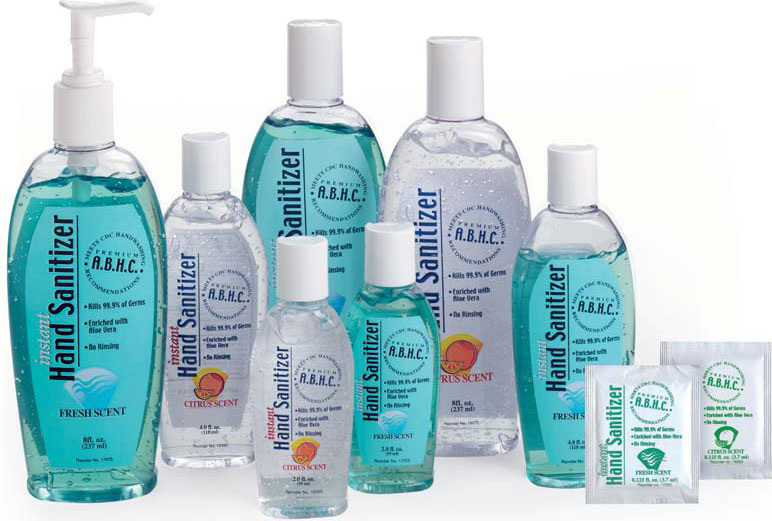
Another good choice is to use alcohol-based hand sanitizers, which kill bacteria through dehydration. Bacteria can not easily acquire resistance to alcohol.
“Start with soap and water” Levy mentioned. “You do not have to use soaps impregnated with chemicals. Anything that is antibacterial or antimicrobial in my prevue, ought to be used prudently.”
Hackers have personnel data on every federal employee
WASHINGTON (AP) — Hackers stole personnel data and Social Security numbers for each and every federal employee, a governmentworker union stated Thursday, saying that the cyber theft of U.S. employeedata was more damaging than the Obama administration has acknowledged.
Sen. Harry Reid, the Democratic leader, said on the Senate floor that the December hack into Office of Personnel Management data was carried out by “the Chinese” without specifying whether he meant the Chinese government or individuals. Reid is one of eight lawmakers briefed on the most secret intelligence information. U.S. officials have declined to publicly blame China, which has denied involvement.
J. David Cox, president of the American Federal of Government Employees, mentioned in a letter to OPM director Katherine Archuleta that based on OPM’s internal briefings, “We believe that the Central Personnel Data File was the targeted database, and that the hackers are actually in possession of all personnel datafor each federal worker, every federal retiree, and as much asa million former federal employees.”
U.S. Office of Personnel Management building
The OPM data file contains the records of non-military, non-intelligence executive branch employees, which covers most federal civilian employees but not, for example, members of Congress and their staffs.
The union believes the hackers stole military records and veterans’ status information, address, birth date, job and pay history, health insurance, life insurance, and pension information; and age, gender and race data, he said. The letter was obtained by The Associated Press.
The union said it is basing its assessment on internal OPM briefings. The agency has sought to downplay the damage, saying what was taken “could include” personnel file information such as Social Security numbers and birth dates.
“We believe that Social Security numbers were not encrypted, a cybersecurity failure that is absolutely indefensible and outrageous,” Cox said in the letter. The union called the breach “an abysmal failure on the part of the agency to guard data that has been entrusted to it by the federal workforce.”
Samuel Schumach, an OPM spokesman, said that “for security reasons, we will not discuss specifics of the information that might have been compromised.”
The central personnel data file contains up to 780 separate pieces of information about an employee.
Cox complained within the letter that “very little substantive information has been shared with us, despite the fact that we representgreater than 670,000 federal staff in departments and agenciesthroughoutthe executivebranch.”
The union’s release and Reid’s comment in the Senate put into sharper focus what is looking like a massive cyber espionage success by China. Sen. Susan Collins, an intelligence committee member, has also said the hack came from China.
Mike Rogers, the former chairman of the House intelligence committee, said last week that Chinese intelligence agencies have for some time been seeking to assemble a database of information about Americans. Those personal details can be used for blackmail, or also to shape bogus emails designed to appear legitimate while injecting spyware on the networks of government agencies or businesses Chinese hackers are trying to penetrate.
Senate Minority Leader Sen. Harry Reid of Nev. speaks at a news conference on Capitol Hill in Washington, Tuesday, June 9, 2015, following a Senate policy luncheon. (AP Photo/Molly Riley)
U.S. intelligence officials say China, like the U.S., spies for national security advantage. Unlike the U.S., they say, China also engages in large-scale theft of corporate secrets for the benefit of state-sponsored enterprises that compete with Western companies. Nearly every major U.S. company has been hacked from China, they say.
The Office of Personnel Management is also a repository for extremelysensitivedata assembled by means of background investigations of staff and contractors who holdsecurity clearances. OPM’s Schumach has statedthat there’s “no proof” that information was taken. But there’srising skepticism amongst intelligence agencystaff and contractors about that claim.
In the Senate on Thursday, Democrats blocked a Republican effort to add the cybersecurity bill to a sweeping defense measure. The vote was 56-40, four votes short of the number necessary.
Democrats had warned of the dangers of cyber spying after the theft of government personnel files, but Democrats voted against moving ahead on the legislation, frustrated with the GOP-led effort to tie the two bills together. President Barack Obama has threatened to veto the defense legislation over budget changes by the GOP.
“The issue of cyber security is simply too important to be used as a political chit and tucked away in separate legislation.” Sen. Chris Coons, D-Del. mentioned.
___
Associated Press writers Donna Cassata and Eric Tucker contributed to this report.
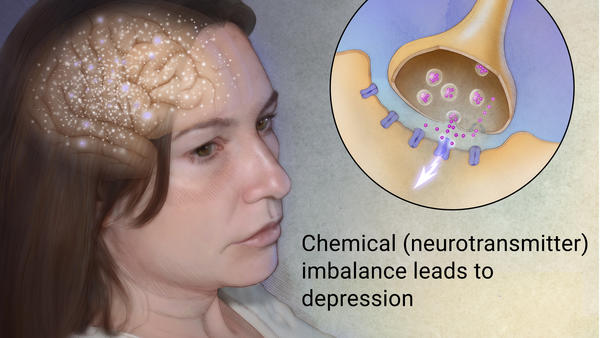
Everyone occasionally feels blue or sad. These feelings are usually short-lived & pass within a couple of days. But when you have depression, it interferes with daily life and causes pain for both you and those who care about you. Depression or depressive disorder is a common but serious illness.
<Sponsered Post>
There are several forms of depressive disorders.
Major depression,—severe symptoms that interfere with your ability to work, sleep, study, eat, and enjoy life. An episode can occur only once in a person’s lifetime, but more often, a person has several episodes.
Persistent depressive disorder—depressed mood that lasts for at least 2 years. A person diagnosed with persistent depressive disorder may have episodes of major depression along with periods of less severe symptoms, but symptoms must last for 2 years.
Some forms of depression are slightly different, or they may develop under unique circumstances. They include:
Psychotic depression, which occurs when a person has severe depression plus some form of psychosis, such as having disturbing false beliefs or a break with reality (delusions), or hearing or seeing upsetting things that others cannot hear or see (hallucinations).
Postpartum depression, which is much more serious than the “baby blues” that many women experience after giving birth, when hormonal and physical changes and the new responsibility of caring for a newborn can be overwhelming. It is estimated that 10 to 15 percent of women experience postpartum depression after giving birth.
Seasonal affective disorder (SAD), which is characterized by the onset of depression during the winter months, when there is less natural sunlight. The depression generally lifts during spring and summer. SAD may be effectively treated with light therapy, but nearly half of those with SAD do not get better with light therapy alone. Antidepressant medication and psychotherapy can reduce SAD symptoms, either alone or in combination with light therapy.
Bipolar disorder, also called manic-depressive illness, is not as common as major depression or persistent depressive disorder. Bipolar disorder is characterized by cycling mood changes—from extreme highs (e.g., mania) to extreme lows (e.g., depression).
Once diagnosed, a person with depression can be treated in several ways. The most common treatments are medication (which can be costly and have a lot of side effects) and psychotherapy (can be very costly and time consuming!). Fortunately, there is another way to cure depression! It is called the Destroy Depression™ System, it costs a fraction of any others, has NO side effects and comes with a 60 day money back guarantee! Several people have already tried and benefited from it. You can try it risk free NOW. There is nothing to lose. You’ll thank us! The return rate for this system is less than 1.8% (meaning out of 100 people who buy it, less than 2 choose to return it for a full no questions asked refund!). USE THIS LINK and get a MASSIVE DISCOUNT + 3 FREE GIFTS. Do tell us your results (good or bad) and we’ll publish them (if you allow it).