AI – Computer Learns From Mistakes – Becomes ‘Chess GrandMaster’

1

A computer program called Giraffe has taught itself to become an international grand master after playing itself for just 72 hours. The software was able to learn from its own mistakes as it played against itself and is now able to beat most humans who have spent a lifetime learning the game.

The software can play with itself and perfect the moves by detecting previous mistakes. It can also find alternative combinations for every set.

To be crowned as “Grandmaster” in chess, a player must be able to have a rating of more than 2,500. The world’s current number one player, Magnus Carlsen, was rated at 2,853.

It’s been nearly 20 years since IBM’s Deep Blue supercomputer beat the reigning world chess champion, Gary Kasparov, for the first time under standard event rules.  Since then, chess-playing computer systems have developed considerably powerful, leaving the best humans little likelihood even against a modern chess engine running on a smartphone.

Gary vs IBM
Gary Kasprov playing against Deep Blue – 1997 – Source: Reuters

However while computers have become faster, the way chess engines work has not changed. Their power depends on brute force, the process of looking through all possible future moves to seek out the most effective next one.

Of course, no human can match that or come anyplace close. While IBM’s Deep Blue was searching some 200 million positions per second, Kasparov was probably searching not more than 5 a second. And yet he performed at essentially the same level. Clearly, humans have a trick up their sleeve that computers don’t (yet).

This trick is in evaluating chess positions and narrowing down the most profitable avenues of search. That dramatically simplifies the computational process because it prunes the tree of all doable moves to only a few branches.

Computers have never been good at this, but that changes thanks to the work of Matthew Lai at Imperial College London. Lai has created an artificial intelligence machine, which he calls Giraffe that has taught itself to play chess by evaluating positions much more like humans and in a completely different technique to conventional chess engines.

Lai generated his dataset by randomly choosing 5 million positions from a database of computer chess games. He then created greater variety by adding a random legal move to each position before utilizing it for training. In total he generated a hundred and seventy five million positions in this method.

The usual way of training these machines is to manually evaluate every position and use this information to teach the machine to recognize those that are robust and those that are weak.

However this can be an enormous task for 175 million positions. It might be carried out by another chess engine but Lai’s objective was more ambitious. He wanted the machine to be taught itself.

As an alternative, he used a bootstrapping approach in which Giraffe played against itself with the aim of enhancing its prediction of its own evaluation of a future position. That works because there are fixed reference points that ultimately determine the value of a position—whether or not the match is later won, lost or drawn.

Lai says this probabilistic approach predicts the best move 46 percent of the time and places the best move in its top 3 ranking, 70 percent of the time. So the computer doesn’t have to bother with the other moves.

Robot playing chess
Source: https://www.lkessler.com/brutefor.shtml

In a report from Daily Mail, Mr. Lai admitted that his software was not as good as the best chess software.  “Giraffe is able to play at the level of an FIDE International Master on a modern mainstream PC,” says Lai. By comparison, the top engines play at super-Grandmaster level.

Source – Giraffe: Using Deep Reinforcement Learning to Play Chess 


A Malware Called Active VisitorTracker Campaign Infecting WordPress Sites

3

For the last couple of weeks Sucuri have been tracking a new Malware threat that has gained significant traction over the past forty eight-seventy two hours. The malware they call the “Active VisitorTracker Campaign” is fairly easy to identify because of very particular “visitorTracker_isMob” code being used.

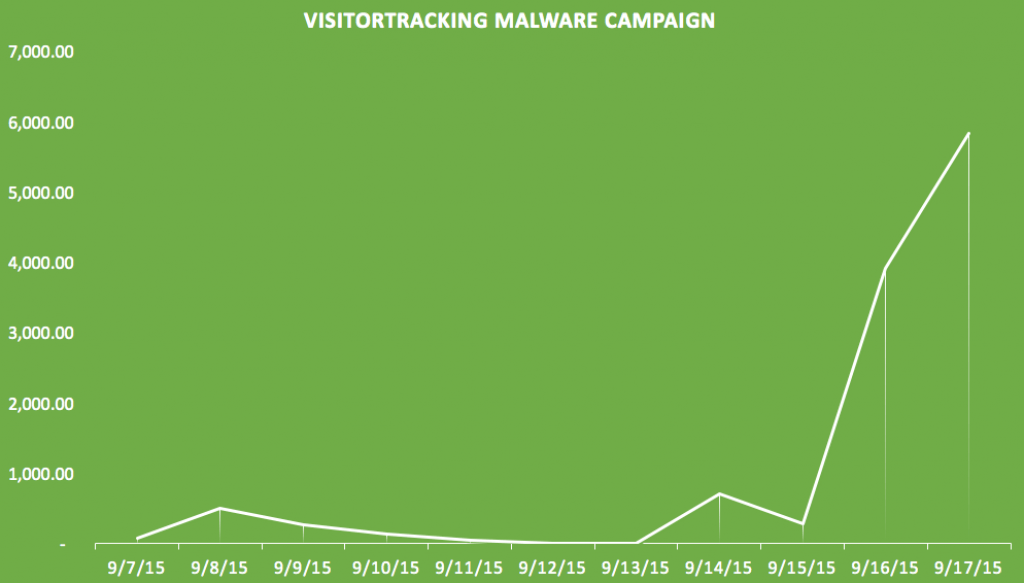
As of the 18th September 2015, slightly over 6 million web sites now contaminated, with over 5 million of these infections occurring within the last 48 hours. The chart created by Sucuri shows the rate of infections below:

Malware rising trend by Sucuri
See the rise especially 15th September onwards – Source: Sucuri

What does the Active VisitorTracker Malware do?

Based on Sucuri, the final objective of the infection is to redirect the visitors of the website to a Nuclear Exploit Kit landing pages, which may in turn use numerous methods to infect the physical computers of these visitors. Some examples of the strategies used include infecting the visitors computer utilizing Flash, Silverlight, PDF, and Internet Explorer to install malware or ransomware.

For more detailed \ technical article on the Nuclear Exploit Kit click here.

The exploit works by inserting the following code in to your web site:

  • function visitorTracker_isMob( ) var ua = window.navigator.userAgent.toLowerCase(); if(/(androidmobile|avantgo|bada\/|blackberry|blazer|compal|elaine|fennec|hiptop|iemobile|ip(hone|od)|iris|kindle|lge |maemo|mi..|v400|v750|veri|vi(rg|te)|vk(40|5[0-3]|\-v)|vm40|voda|vulc .. |vx(52|53|60|61|70|80|81|83|85|98)|w3c(\-| )|webc|whit|wi(g |nc|nw)|wmlb|wonu|x700|yas\-|your|zeto|zte\-/i.test(ua.substr(0,4))) return true; return false; /* .. visitorTracker .. */ /*

This code will then force the visitors web page to load an iframe from one of many Nuclear Exploit Kit landing pages which then infects the visitors computer system.

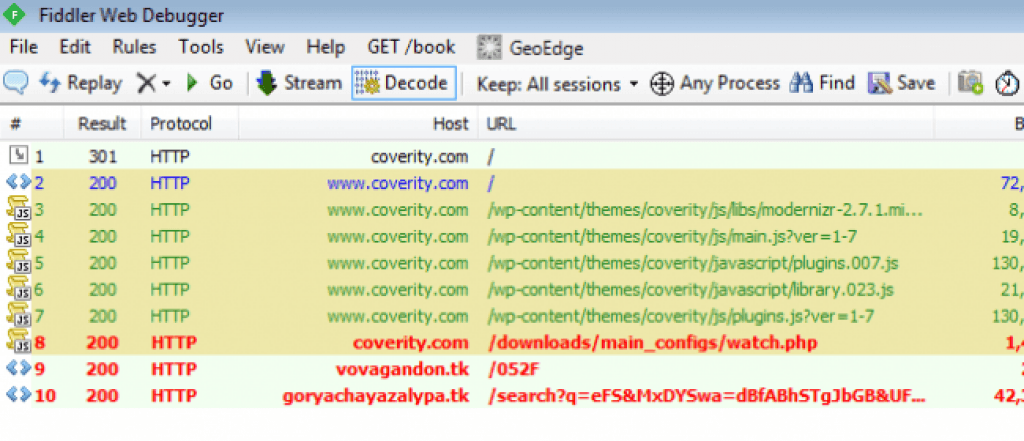
An example of the exploit in action has been noted by Jerome Segura from MalwareBytes showing an infection on a web site owned by a big security provider (Coverity):

Security site effected
Source: Malwarebytes

However they aren’t the only major security firm affected by this exploit.

Sucuri itself is infected by this Malware [Update: FALSE POSTIVE]

What concerns us very deeply is that Sucuri’s own labs (dot) sucuri (dot) net (don’t visit it – we are going to update when it’s secure) website is contaminated by this very malware. Their main blog post on this very Malware links to an article on that sub-domain with additional information on the exploit.

For a security firm, it’s quite serious that they’re really directing you to click a link to a contaminated page, and we immediately reached out to them via their support site and via their live chat to let them know. At the present time we do not have a reply/see any action has been taken.

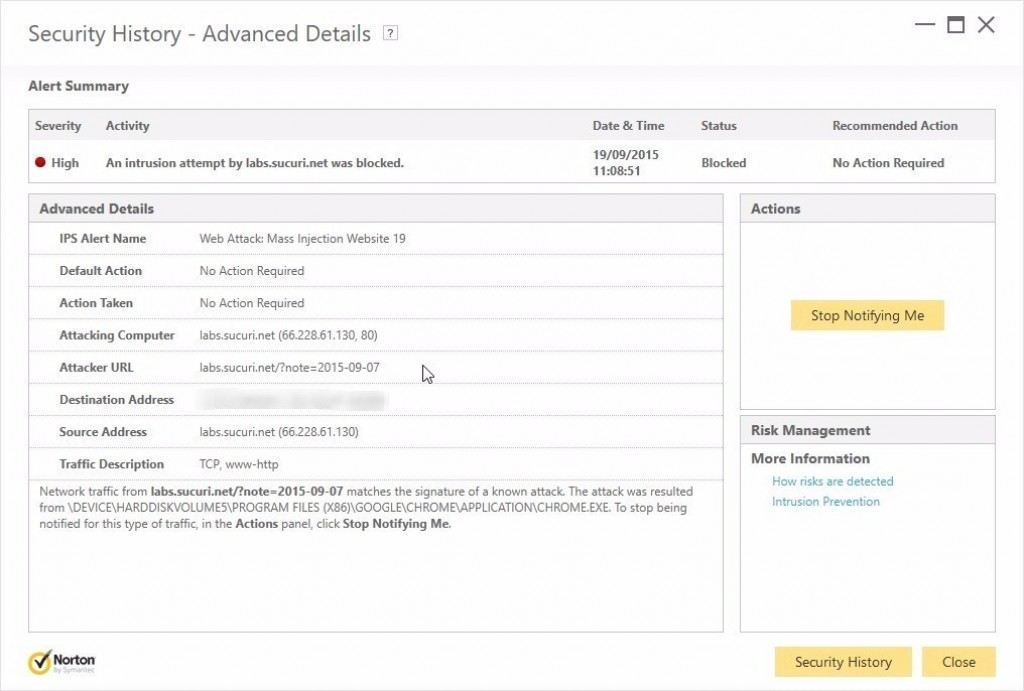
We were first alerted to the fact their website was infected by Norton Antivirus as shown beneath:

Norton says Sucuri infected
Norton says Sucuri is infected with the malware

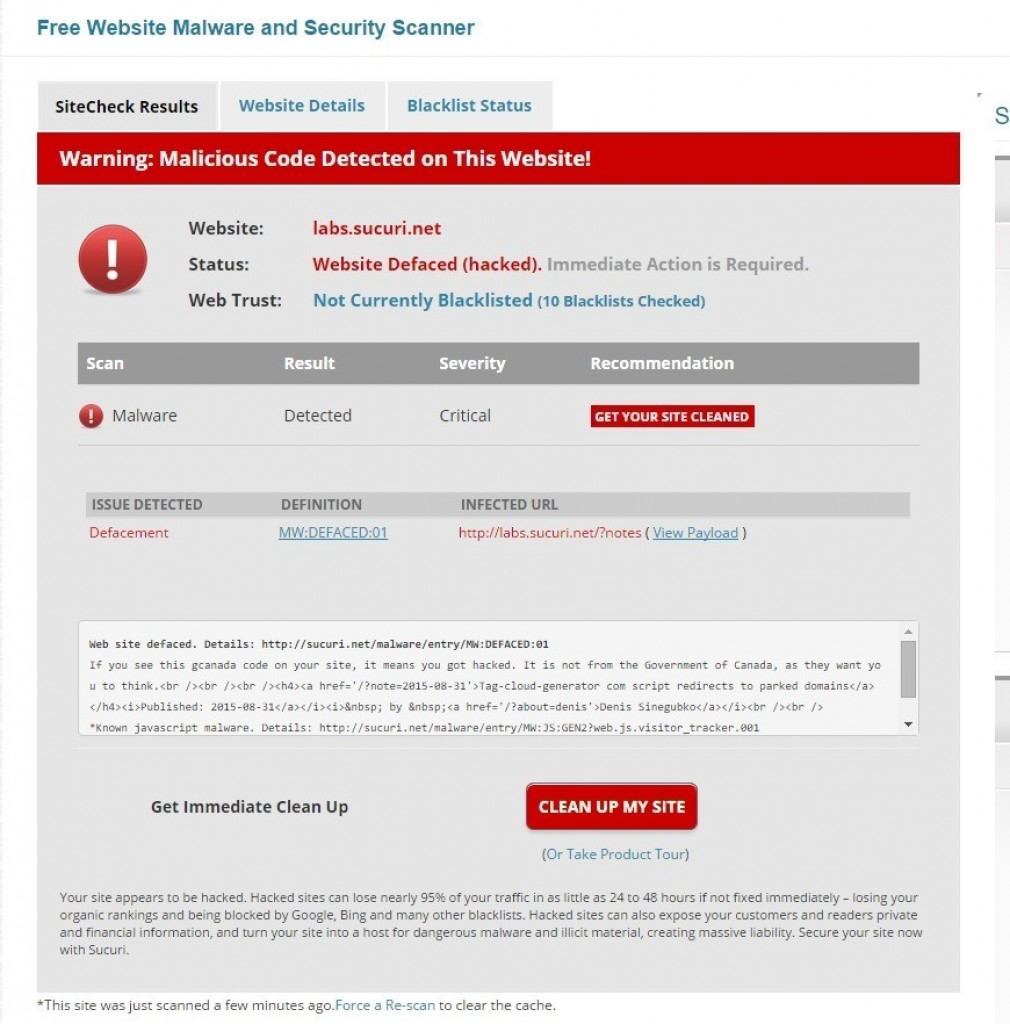
We then followed this up by using Sucuri’s own Site Scanner Tool, which confirmed that malicious code was detected, and that the code of the infection contained the following:

  • if(visitorTracker_isMob())

while also referring to their Malware entry: MW:JS:GEN2 (we will link to the page once we confirm the malware has been eliminated).

You can see a screenshot of their infection below:

Sucuri Infected - Checked by Sucuri
Source: Sucuri

Obviously, it is extremely serious that a web site people use to find out extra info on this infection is in turn responsible for spreading the infection itself.

UPDATE:

SUCURI REPONDED: “Indeed, since we publish details about attacks and malicious code on labs.sucuri.net, this can sometimes be flagged in SiteCheck. Not a big deal, though — you can see it’s alerting about a blog post that actually discusses the malware in question.

THE CEO of SUCURI then Added:

Yes, we flagged ourselves. and it caused others, like Norton to flag us as well.. these however are false positives. We have direct lines of communication with many vendors

Many of Infected Sites already blacklisted by Google

The seriousness of this Malware cannot be understated. Not only are you opening up your Guests computers to malware/ransomware, but Google appears to be very quickly blacklisting any site affected by this exploit.

Based on Sucuri, 17% of all websites they’ve found with the exploit are already blacklisted by Google and other popular blacklists.

How to test if your Site is infected with the VisitorTracker Malware?

The simplest method to check if your website is contaminated is to use this free tool by Sucuri. (This is safe to use)

How can you protect yourself as a website visitor?

While we haven’t checked all firewalls or antivirus programs but we are able to confirm that MalwareBytes and Norton successfully prevented us from visiting a website infected with this malware.


Here is Mr Tony Perez’s (CEO of Sucuri) full response. We (GadgTecs) apologize deeply for the confusion.

Thanks for sharing our information, but I did want to let you know it is a bit misleading. We are not and have not been compromised by this infection.

As an organization we invest heavily in research, specifically the public disclosure of that research to keep communities such as this one informed. This sometimes requires us to release snippets of malware variants, such as was the case here.

Yes, we flagged ourselves.. 🙁 and it caused others, like Norton to flag us as well.. these however are false positives. We have direct lines of communication with many vendors

If you have any other questions, please let me know I’d be happy to expand on the subject if required.

Tony Perez
Sucuri – CEO

tony@sucuri.net

How To Bypass (Hack) Android 5.x (Lollipop) Lockscreen

1

A hack or a vulnerability exists in Android Lollipop 5.x (uptil 5.1.1, build LMY48L) that enables an attacker to crash and bypass the lockscreen and achieve full access to a locked machine, even when encryption is enabled on the device. It was discovered on the 25th of June, 2015 and reported (privately) to Google. Now an update to patch this vulnerability has been released, and Google has made the exploit public (CVE-2015-3860). The method detailed here has been originally taught by jgor and first published here.

By manipulating a sufficiently large string within the password field when the camera app is active an attacker is able to destabilize the lock screen, causing it to crash and go to the home screen. At this point arbitrary applications may be run or adb developer access can be enabled to gain full access to the gadget and use any of its stored data.

The exploit requires the following:

The hacker/user should have physical access to the device (duh!)

Person who own’s a phone must have a password enabled (pin / pattern configurations are not effected by this exploit)

Video proof – [Nexus 4, Android 5.1.1 (build LMY48I)]:


Steps:

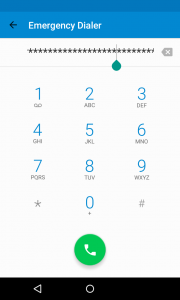
emergency call

  • From the locked screen, open the EMERGENCY CALL window.


hacking android

  • Type a few characters in the dialer, e.g. 11 asterisks. Then Double-tap the characters to highlight and then tap the copy button. Then taponcein thefield and tap paste, doubling the characters in thefield (i.e. now you have 22 asterisks) Repeat this process ofhighlight all, copy, and paste untilthe field is so lengthy that double-tapping no longer highlights the field. This usually occcurs after 10 or so repetitions.


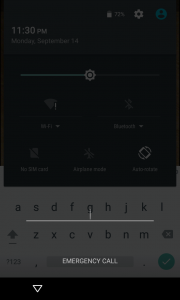
camera password screen

  • Return to the lockscreen, then swipe left to open the digital camera. Open the notifications from by swiping down down from the top of the screen, then select the Settings (gear) icon (top right). Now you’ll see the prompt asking you for the passwords.


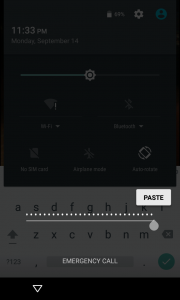
  • just before crashLong-tap in the password field and select paste. Keep doing this as many times as its possible, until you notice the UI crash and the soft-buttons at the bottom of the screen disappear, expanding the camera to full screen. It may take longer than usual for the paste button to appear as you long-tap.



Tada! You are in. You can navigate to the Settings and enable USB debugging (so that you can use adb to root the device or do anything else you want 😉

Do mention in the comments if it worked for you, the type of device and android version you have.

Source: https://sites.utexas.edu/iso/2015/09/15/android-5-lockscreen-bypass/

Next Hacker International Programming Player Competition (IPPC)

0

Miami, September 16, 2015

Java Programmers Competition 2016 IPPC: $500,000 cash prizes

SHOW ME YOUR SPEED!

We are already convinced that there are many gifted programmers and ingenious hackers.

    Now we want to know who the fastest and most flexible are.
After all, we are in the century of speed:

TIME = $

Next Hacker: International Programming Player Competition, February 26 & 27, 2016 in Berlin, Germany, the 2016 IPPC promises an exciting two days of intriguing events and programming competitions featuring 3,000 of the world’s best up and coming developers and programmers in an extreme and exciting skill competition.

IPPC’s main event is where the true competition really begins and everyone can be a winner in the Xtrem Programming Competition Speed & Skill Challenge. $500,000.00 cash prize they await the winners. This multi-stage challenge starts with each programmer having to successfully find and fix errors in three random Java programs.  Once that phase is completed, the programmer needs to achieve a score of 150,000 points in a single Classic Pac-Man game.  Once both tasks are completed, the fastest programmers win a share of the cash pool.  In addition, contestants’ contest performance information will be made available for all Companys.

The 2016 International Programming Player Competition will also offer technical sessions on programming, an open panel discussion with renowned hackers and programmers, and the opportunity for the world’s top programmers to be exposed to and meet leading high tech companies from around the globe.  The two day IPPC is open to programmers worldwide and space is filling up rapidly. All the money from our sponsors and advertisements that will be gathered will increase the winner’s number.

About Next Hacker IPPS
Next Hacker IPPS LDT is a worldwide group of like-minded computer programmers.  Their mission is to organize and host international programming events that connect talented programmers with corporations. The team specializes in planning and producing high quality competitive programming events.

Contact Details

Email:    info@nexthacker.com
team@nexthacker.com
Website: https://www.nexthacker.com

Logo_next_hacker

nextHacker IPPC LTD
Miami- 201 South Biscayne Boulevard – USA / Athens – Prasinou Lofou, Theatre Square (Minoti) – Greece
Sofia – Business Center Evrotur 2 – Bulgaria
Tel. +30 211 2104995

Amputee Can Control and ‘Feel’ using a Robotic Arm

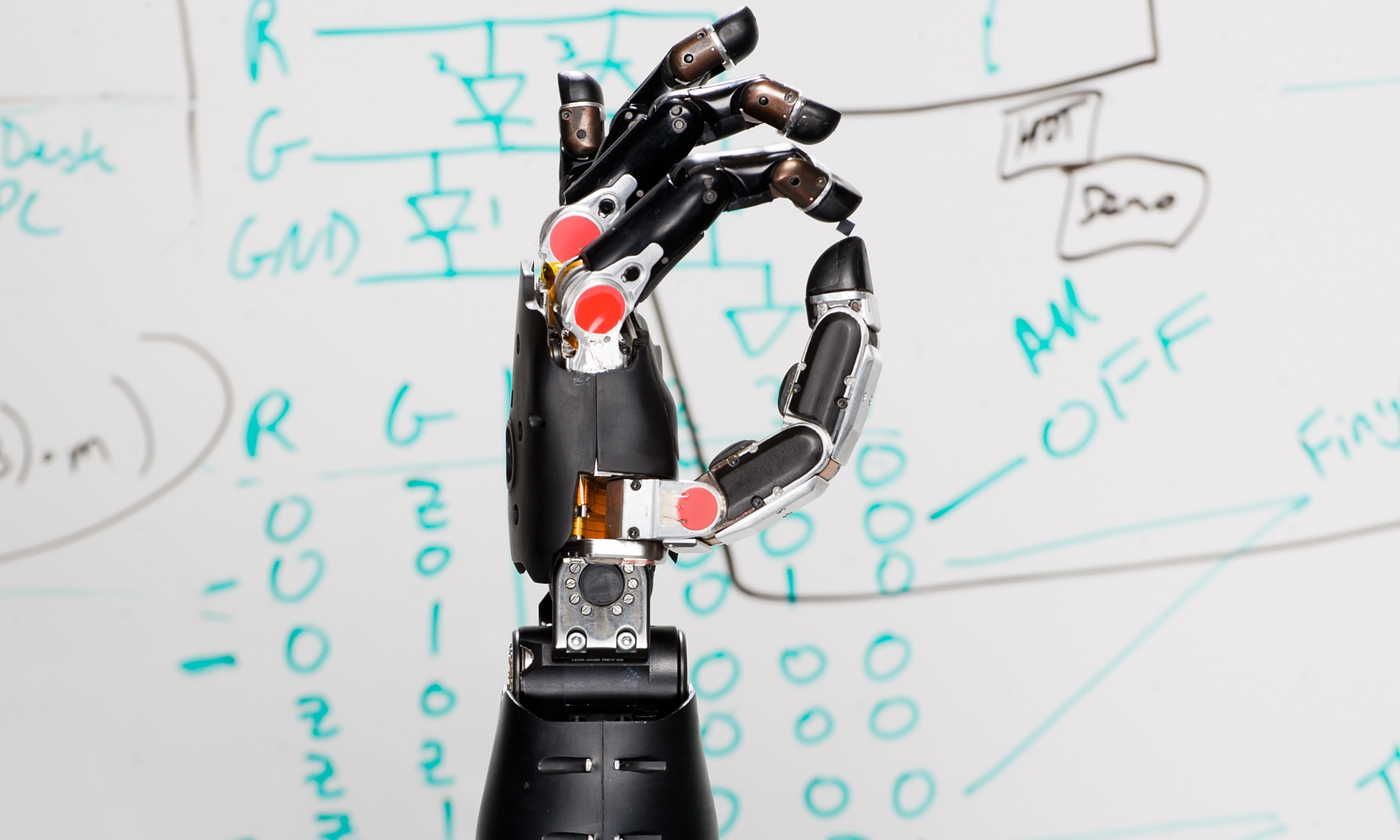
A brand new advanced robotic hand that’s wired directly into the brain has been successfully tested, permitting a paralysed man to “feel”.

The hand, developed by the Applied Physics Laboratory at Johns Hopkins university, is part of a research venture into advanced replacement limbs funded by the US army’s Defence Advanced Research Projects Agency (DARPA).

The 28 year old person, who has been paralysed for more than a decade after a spinal-cord injury, had electrodes from the prosthetic hand inserted into his sensory and motor cortexes. This allowed him to both control the hand with his ‘thoughts’ and sense when the fingers of the hand were touched individually.

Sensors in the hand detect pressure applied to any of the fingers and create electrical signals to mimic touch sensations. When blindfolded, the volunteer could determine which finger on the hand was touched with practically 100% accuracy, according to DARPA.

“At one point, instead of pressing one finger, the team decided to press two with out telling him,” DARPA program manager Justin Sanchez said. “He responded in jest asking whether somebody was trying to play a trick on him. That’s when we knew that the feelings he was perceiving through the robotic hand were near-natural.”

Sanchez added: “Prosthetic limbs that can be controlled by thoughts are showing great promise, but with out feedback from signals traveling back to the mind it can be tough to achieve the level of control needed to carry out precise movements.”

By wiring a sense of touch from a mechanical hand directly into the brain, this work shows the potential for seamless biotechnological restoration of near-natural function. We’ve completed the circuit.”

The hand and the neurotechnologies on which it relies are hoped to permit those that have lost limbs to not only gain fully functioning replacements but also the level of control that may only be provided with sensation.

Related: Brain implant controls robotic arm – with the power of thought 

Facebook is introducing the ‘Dislike’ button

Facebook is working on a “dislike” button for its posts. This was revealved by the company’s co-founder and chief Mark Zuckerberg, during a question and answer session on Tuesday.

“People have asked about the ‘dislike’ button for many years, and probably hundreds of people have asked about this, and today is a special day because today is the day that I really get to say we’re working on it, and are very close to shipping a test of it,” he stated.

The “dislike” button has been a subject of much discussion through the years.

CEO Mark Zuckerberg revealed the plans for such a button during a Q&A session on the company’s headquarters Tuesday. The thought for such a brand new feature, which the social network plans to start testing soon, has been shot down by Zuckerberg and different Facebook executives before. However moving beyond “Like” is key to growing Facebook’s ability to surface a greater variety of content folks really care about.

The centerpiece of the Facebook experience is the News Feed, the individualized stream of stories, articles, cat photos and old style status updates you see whenever you go to the social network’s web site or app. Facebook uses an algorithm to curate the News Feed, because there’s simply too much content material to show all of it in chronological order as it once did. Each time you go to the News Feed, Facebook’s algorithm kicks into gear, sorting all of the available posts from your pals, pages you’ve liked and advertisers into order based on what it thinks you’ll find most interesting.

Facebook can’t read minds (yet), so the firm can only guess as to which posts every consumer will care the most about. The News Feed algorithm takes under consideration hundreds of factors to determine its ranking, ranging from how much you tend to watch video posts to how often a person has clicked the poster’s profile photos. Plenty of it amounts to painstaking guesswork.

However clicking Like is totally different. It’s binary and unequivocal. You either Like something or you don’t. Due to this fact, it’s one of the biggest elements in News Feed’s secret sauce. Posts that get plenty of Likes from some users are positioned higher up in other users’ feeds because it’s assumed they’ll appeal to even more engagement and Likes.

That works to some extent, however it doesn’t necessarily assist Facebook meet its stated goal of “connecting the world.” After all, the 1.5 billion humans (and some dogs, cats and robots etc) using Facebook experience a variety of feelings in addition to “Like.” As the social network increasingly positions itself as a destination for news and thought-provoking conversations, “Like” grows ever more restrictive. Customers don’t want to “Like” an article about the struggles of Syrian refugees or give a thumbs up when a buddy shares that a loved one has died. Thus, Facebook’s algorithm might bury this kind of essential content material under traditional Internet catnip.
Dislike much?
It will NOT be called the ‘dislike’ button

So “Dislike,” or whatever it winds up being known as, might provide a counterbalance to that phenomenon, making it simpler for customers to signal interest in a post or story that would be awkward to “Like.” Though Zuckerberg didn’t explain precisely how a dislike button would work, it certainly won’t be framed as a way to hate on your cousin’s cat photos. Facebook already has tools that allow individuals to hide posts, people and ads that they don’t care about. “Dislike,” then, is about opening up an avenue for users to interact with interesting content that would be awkward to do anything with inside Facebook’s present framework.

“If you’re expressing something sad . . . it may not feel comfortable to ‘like’ that post, but your pals and other people need to have the ability to express that they understand,” Zuckerberg stated on Tuesday.

Serious Flaw Discovered in the OS used by Over a Billion Devices

There’s a simple vulnerability inside an extensively used operating system, although not one that most would be aware of, known as VxWorks. It happens to be the same software program used to control components of NASA’s Curiosity Mars Rover and lots of critical infrastructure systems, while another flavour of the OS, VxWorks 653 (not effected by this flaw), is utilized in Boeing 787 Dreamliners and even many military helicopters. Some versions, used by tens of thousands of machines at the very least, are also carrying a vulnerability that may be exploited from anywhere with an internet connection, according to researcher Yannick Formaggio, from Canadian outfit Istuary Innovation Labs.

Talking at the 44Con convention in London on 10th September, 2015, Formaggio stated he’d looked into the software following a request from a client working within the critical infrastructure industry. Formaggio and his fellow researchers created their very own “fuzzing” tool, which threw data at VxWorks to see where the errors occurred.

This led to the discovery of what’s generally known as an integer overflow vulnerability, which allowed him to target a particular part of the operating system and write to memory on the machine running VxWorks. From there, it was possible to set up a backdoor account and control features of the OS, Formaggio claimed. “It’s a very basic vulnerability,” he added. An attacker must find targets with a certain port (port 111) open, but when they did; the exploit code could run without any interaction from the user. In other words, a silent & (possibly even a) deadly attack.

Mars Curiosity Rover
VxWorks, the operating system used in over a billion devices, contained a vulnerability that could be exploited from anywhere. The Mars Rover also uses the VxWorks OS

Affected versions include VxWorks 5.5 through to 6.9.4.1 (the latest version is 7.0). A simple search for ‘vxworks’ on Shodan, the security testing service for uncovering open internet servers, revealed that tens of thousands of computer systems running the OS can be accessed over the net. According to Wind River, the Intel owned company behind the 28-yr-old software, as many as 1.5 billion devices are managed by VxWorks. The company describes VxWorks as “the world’s most widely-used real-time operating system”. However, it is unclear how many are vulnerable to the attacks developed by Formaggio.

He mentioned that the flaw was reported on 22 July and was quickly acknowledged the day after. Wind River had not responded to media’s requests for comment, although Formaggio believes the firm has issued a patch,and thins that the company wouldn’t release a public advisory as it didn’t deem the issue serious enough. That may be because the researchers did not inform the firm they have been able to remotely exploit VxWorks. They merely handed over specifics on the flaw that led to control being relinquished to willing attackers.

VxWorks
VxWorks by the Wind River

This is not the first time VxWorks has been caught by security researchers this year. In June, the US Industrial Control Systems Computer Emergency Response Team, run by the Department of Homeland Safety, warned about a flaw uncovered by Raheem Beyah, David Formby and San Shin Jung of Georgia Tech. The problem would have allowed any hacker who could intercept an unprotected connection between a computer and a VxWorks server to completely take over a connection as soon as the user had logged in.

At the time, Beyah said the vulnerability was resident within the TCP protocol – a core internet protocol – utilized by VxWorks and that flaw was initially discovered over twenty years ago. While he didn’t believe the vulnerability was especially critical, he pondered: “What other legacy vulnerabilities that have been addressed by the ‘mainstream’ computing community persist in our critical infrastructure?”

A NASA spokesperson stated: “While we don’t discuss specific security issues regarding our infrastructure, we do take the necessary steps to ensure safe and secure operation of all our systems.” Certainly, without doubt, NASA would not take any chances with Curiosity, so don’t expect the intrepid robot explorer to be controlled by criminal mastermind hackers any time soon.

Boeing doesn’t run a vulnerable version of VxWorks on its planes. Nevertheless the firm said it had multiple layers of safety “designed to ensure the security of all critical flight systems from intrusion”.

However that doesn’t detract from researchers’ findings this year. They’ve uncovered some severe weaknesses at the heart of the world’s critical infrastructure.

Russian Spy Team Accused of Hacking Satellite Data

0

In case you’re a state-sponsored hacker siphoning data from selected computer systems, the very last thing you need is for somebody to find your command-and-control server and shut it down, finishing your capacity to communicate with contaminated machines and steal data.

The Russian-speaking spy gang often known as Turla have discovered a solution to this—hacking the satellite IP addresses of reliable customers to use them to steal from infected systems in a method that hides their command server. Researchers at Kaspersky Lab have found proof that the Turla gang has been utilizing the covert approach since, at the very least 2007.

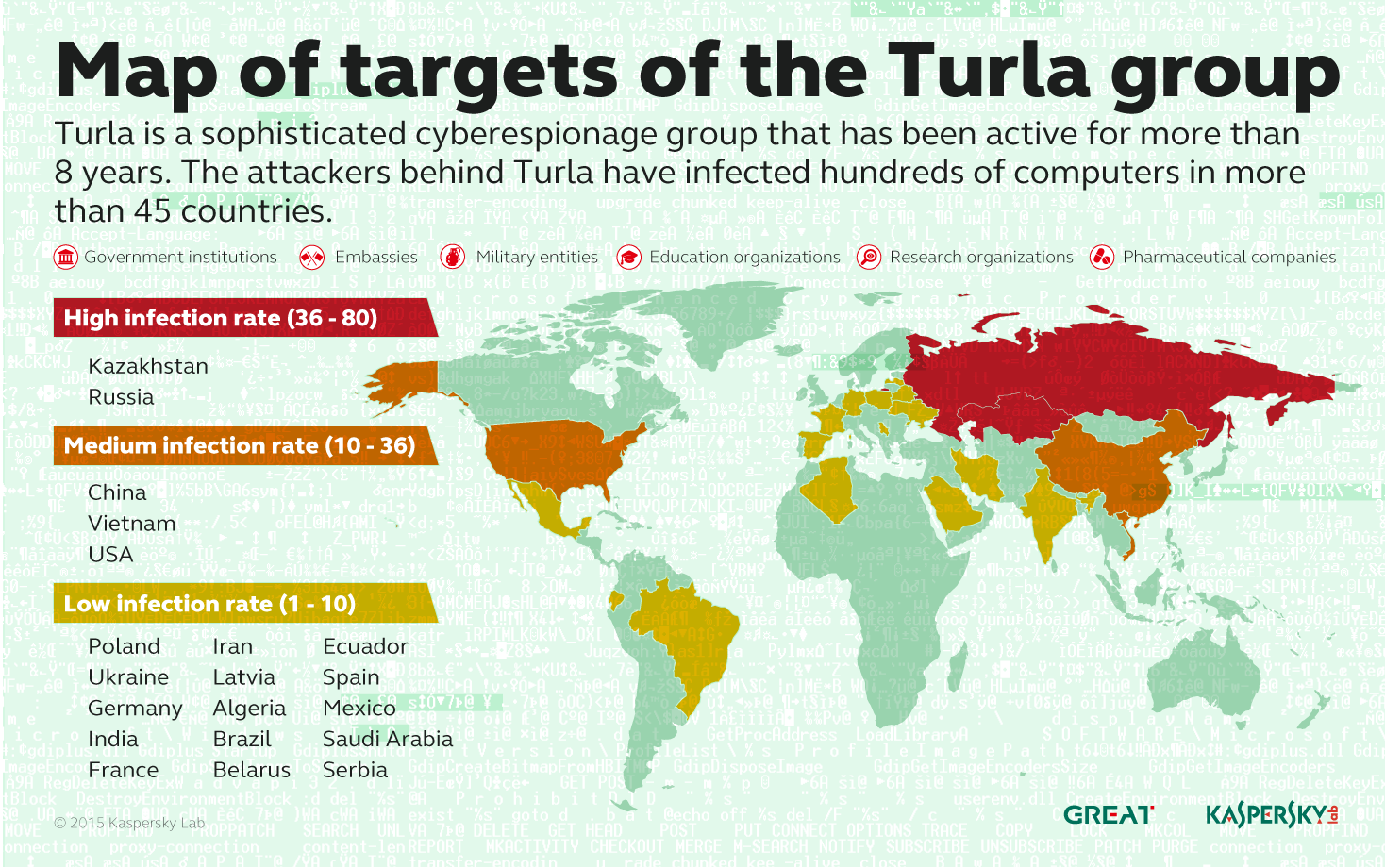
Turla is a sophisticated cyber-espionage group, believed to be sponsored by the Russian government, that has for more than a decade targeted government agencies, embassies, and militaries in more than forty nations, including but not limited to Kazakhstan, China, Vietnam, and the USA, however with a particular emphasis on countries in the former Eastern Bloc. The Turla gang uses various strategies to infect systems and steal information, but for some of its most high-profile targets, the group seems to use a satellite–based communication method to assist in concealing the location of their command servers, according to Kaspersky researchers.

Video: Ubuntu Touch Transforms into an Ubuntu Desktop

1

Seeing Ubuntu Touch transform right into a small desktop version of the distribution is somewhat weird, nevertheless it’s also revealing the immense power that is obtainable underneath the hood.

Canonical has been talking about platform convergence for a very long time, and it is one of the many issues that really got through. It is true that KDE has been speaking about this function for a while too, however their message got lost in the space. Microsoft also planned this with the new version of Windows but in the meantime, Ubuntu Touch is now a full fledged operating system that can offer a desktop experience and it is doing that seamlessly.

This isn’t the type of feature that is easy to make overnight and it took Canonical a few years to get it to work. The road from the drafting board to a functioning convergent desktop has been a very long one, and it is still not over. We should have a smartphone that is able to show us the power of the ‘Unity 8’ desktop in the coming months, so we know that the convergence plan is finally reaching a stable point.

You may examine the Ubuntu convergence right now

The flexibility to turn your Ubuntu Phone or Tablet into a desktop OS (kind of) is already implemented, and users need not do any loopy stuff. All you have to do is simply switch it on and enjoy the experience.

Ubuntu user Popescu Sorin made a very cool video exhibiting off a few of the capabilities available right now within the mobile version of the OS. He is using a Meizu MX4 smart phone, so there isn’t any way of using an external monitor. On the other hand, Nexus 4 is perfectly suited to do that with the assistance of an MHL A/V link.

You may also notice that there’s mouse support too, however for now the mouse isn’t visible. It isn’t a big issue, and will probably be in all probability fixed very soon. Keyboards are also supported if you wish to make your life easier.

See and Enjoy the video below!

Graphene Converts Heat into Electrical Energy

1

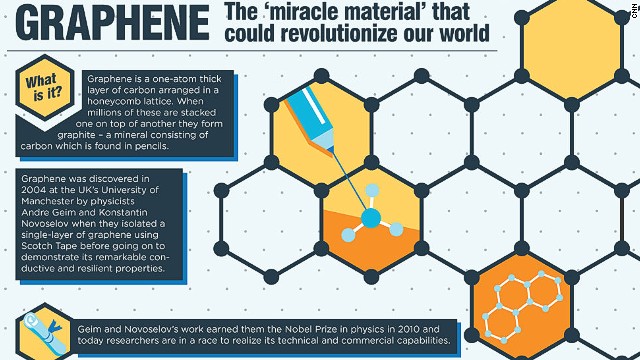
Graphene, an allotrope of carbon, was first isolated at the University of Manchester in 2004 by Sir Andre Geim and Sir Kostya Novoselov. In 2010, they had been awarded the Nobel Prize for Physics for their discovery. Graphene’s most unique property is that it is just 1 atom thick, making it the first 2-dimensional material. At present, the university remains the home of graphene research, with over forty industrial partners working on graphene-related projects.

Graphene, a miracle
Graphene, a ‘miracle material’ – Source: CNN

Not too long ago, its scientists, working with European Thermodynamics Ltd, created low-cost thermoelectric materials that could be used to capture warmth from vehicles and convert it into electrical energy. That electricity can then be used to recharge the batteries in hybrid, plug-in hybrid, and electrical cars to provide them extra range.

The group—led by Prof Ian Kinloch, Prof Robert Freer, and Yue Lin—added a small quantity of graphene to strontium titanium oxide. The resulting composite was able to convert heat that would otherwise be wasted into an electrical current over a broad temperature range, starting at room temperature. Previously, thermo-electric materials only functioned at extremely high temperatures of around 700 degrees Centigrade.

“Our findings show that by introducing a small amount of graphene to the base material can cut back the thermal operating window to room temperature which offers an enormous range of potential for applications,” said Prof Freer. “This brand new material will convert 3-5% of the heat into electrical energy. That’s not a lot but, given that the average automobile loses roughly 70% of the energy supplied to it by its fuel to waste heat and friction, recovering even a small proportion of this with thermo-electric technology would be worthwhile.”

The numbers get a bit complicated, but if a standard internal combustion engine only converts 30% of its fuel into forward movement, recapturing only 3% of its wasted heat may translate into a 10% improvement in fuel economy. Car manufacturers today would be thrilled to make their vehicles 10% more fuel efficient as they battle to comply with tough new laws set to begin shortly in the US and Europe.

The quest to enhance fuel efficiency while retaining performance is of huge interest to automobile manufacturers. Not only could graphene boost fuel economy, it may also improve safety when used as a composite material in the chassis to reduce overall car weight.

Recapturing waste energy for tomorrow’s vehicles has led to proposals for tires that produce a small electrical voltage while driving as well as shock absorbers that do the same thing. Range is the new “Holy Grail” for makers of cars with batteries. Anything that helps add range to tomorrow’s automobiles will probably be gladly exploited by the auto industry.

Watch this helpful if somewhat light hearted video to learn more about graphene.