AI: Robots that can learn by viewing how-to videos

5


Scanning several videos on the same how-to matter, a computer inside a robot finds instructions they’ve in common and combines them into one step-by-step series.
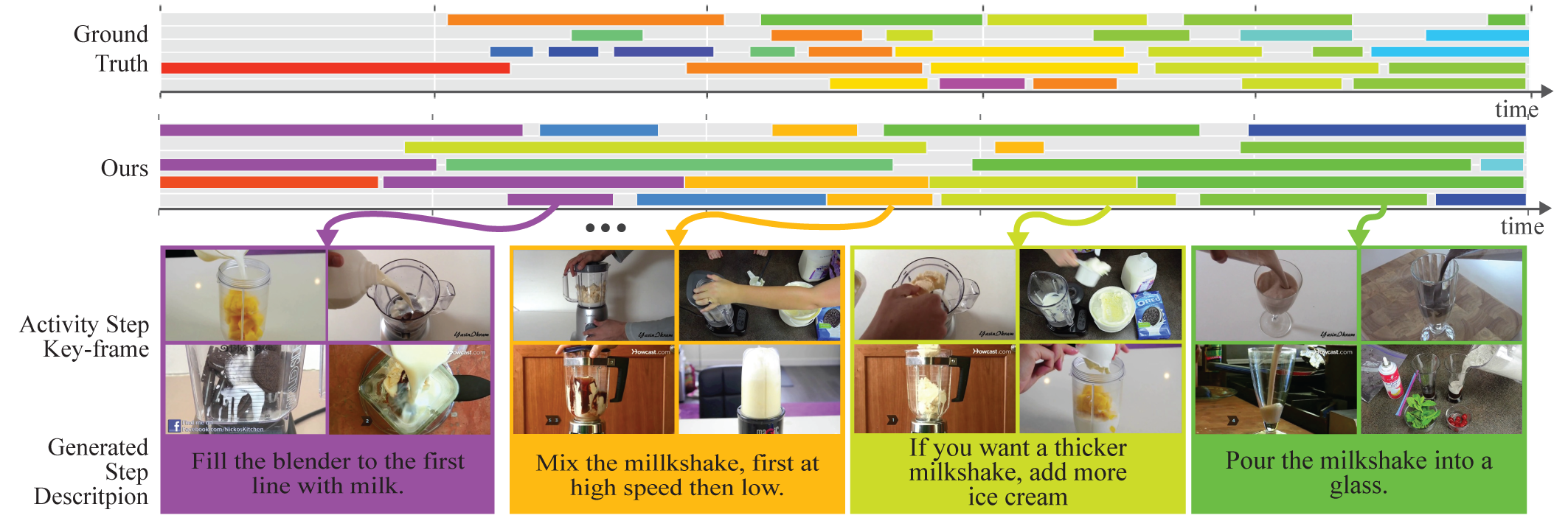
Robot learns from how to videos
Source: RoboWatch

If you hire new employees you may sit them down to look at an instructional video on how you can do the job. What would happens if you bought a new robot?

Cornell researchers are teaching robots to watch educational videos and derive a sequence of step-by-step directions to carry out an activity. You won’t even have to turn on the DVD player; the robot can lookup what it wants on YouTube. The work is geared towards a future when we might have “personal robots” to carry out everyday tasts – feeding the cat, washing dishes, cooking, doing the laundry – in addition to helping the aged and other people with disabilities.

The researchers named their project ”RoboWatch.” A part of what makes it possible is that there’s a common underlying structure to most how-to movies. And, there is plenty of source materials out there. YouTube has more than 180,000 clips on “How to make an omelet” and 809,000 on “ how to tie a tie.” By scanning a number of videos on the same activity, a computer can discover what all of them have in common and reduce that to easy step-by-step directions in natural language.

Why do people publish all these videos? “Maybe to assist individuals or perhaps simply to show off,” stated graduate student Ozan Sener, lead author of a paper on the video parsing methodology presented on the 16th of December at the International Conference on Computer Vision in Santiago, Chile.  Sener collaborated with colleagues at Stanford University, where he’s presently a visiting researcher.

A key feature of their system, Sener identified, is that it’s “unsupervised.” In most previous work, robot learning is achieved by having a human explain what the robot is observing – for instance, teaching a robot to recognize objects by displaying it photos of the objects while a human labels them by name. Here, a robot with a job to do can lookup the directions and figure them out for itself.

Faced with an unfamiliar task, the robot’s computer mind begins by sending a question to YouTube to find a collection of how-to videos on the subject. The algorithm includes routines to omit “outliers” – videos that match the keywords but aren’t instructional; a question about cooking, for instance, may bring up clips from the animated feature Ratatoullie, advertisements for cooking utensils or some old Three Stooges routines.

The computer scans the clips frame by frame, searching for objects that appear often, and reads the accompanying narration – utilizing subtitles – looking for frequently repeated phrases. Using these markers it matches similar segments in the numerous videos and orders them into a single sequence. From the subtitles of that sequence it will produce written directions. In other research, robots have learned to carry out duties by listening to verbal directions from a human. In the future, data from other sources such as Wikipedia may be added.

The learned knowledge from the YouTube videos is made accessible through RoboBrain, an online knowledge base robots anyplace can consult to help them do their jobs.

The research is supported in part by the Office of Naval Research and a Google Research Award.

MIT’s latest microscope can view nanoscale processes in real time

1


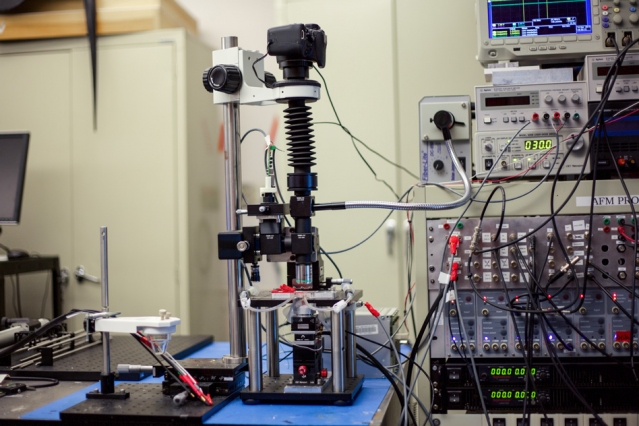
State-of-the-art atomic force microscopes (AFMs) are designed to capture pictures of structures as small as a fraction of a nano meter — one million times smaller than the width of a human hair. In recent times, AFMs have produced desktop-worthy close-ups of atom-sized structures, from single strands of DNA to individual hydrogen bonds between molecules.

However scanning these pictures is a meticulous, time-consuming process. AFMs, due to this fact have been used mostly to picture static samples, as they’re too sluggish to capture active, changing environments.

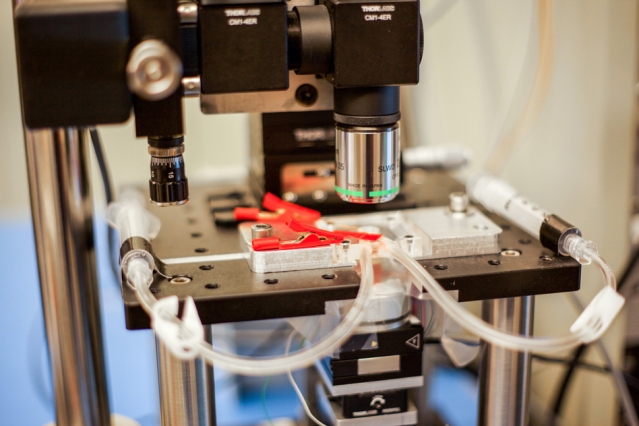
MIT latest microscope
Source: MIT

Now engineers at Massachusetts Institute of Technology (MIT) have designed an atomic force microscope that scans images 2,000 times faster than present commercial models. With this new high-velocity instrument, the team produced photos of chemical processes happening at the nanoscale, at a rate that’s near to a real-time video.

In one demonstration of the instrument’s capabilities, the researchers scanned a 70- by-70-micron sample of calcite as it was first immersed in de-ionized water and later exposed to sulfuric acid. The group noticed the acid eating away at the calcite, expanding existing nanometer-sized pits within the material that quickly merged and led to a layer-by-layer removal of calcite along the material’s crystal pattern, over an interval of several seconds.

Kamal Youcef-Toumi, a mechanical engineering professor at the MIT, says the instrument’s sensitivity and speed will allow scientists to look at atomic-sized processes that play out as high-resolution “movies.”

“People can see, for instance, condensation, nucleation, dissolution, or deposition of material, and the way how these occur in real-time — things that people have never seen before,” Youcef-Toumi says. “This is incredible to see these details emerging. And it’ll open great opportunities to discover all of this world that’s in the nanoscale.”

The group’s design and pictures, that are based on the PhD work of Iman Soltani Bozchalooi, now a postdoc in the Department of Mechanical Engineering, are published in the journal Ultramicroscopy. Co-authors include former graduate scholar Andrew Careaga Houck and visiting scholar Jwaher AlGhamdi.

The big picture

Atomic force microscopes usually scan samples utilizing an ultrafine probe, or needle, that skims alongside the surface of a sample, tracing its topography, similarly to how a blind individual reads Braille. Samples sit on a movable platform, or scanner, that moves the sample laterally and vertically beneath the probe. Because AFMs scan extremely small structures, the instruments need to work slowly, line by line, to avoid any sudden movements that might alter the sample or blur the picture. Such conventional microscopes typically scan about 1 to 2 lines per second.

“If the sample is static, it is okay to take 8 to 10 minutes to get an image,” Youcef-Toumi says. “But if it is something that’s changing, then think about if you begin scanning from the top very slowly. By the time you get to the bottom, the sample has changed, and so the information in the picture is not right, because it has been stretched over time.”

To speed up the scanning process, scientists have tried constructing smaller, more nimble platforms that scan samples more quickly, albeit over a smaller area. Bozchalooi says that such scanners, whereas speedy, do not enable scientists to zoom out to see a wider view or examine bigger features.

“It’s like when you were landing someplace in the USA and don’t have any clue where you are landing, and are informed wherever you land, you are only allowed to look a few blocks around and up to a limited height,” Bozchalooi says. “There is no way you will get a bigger image.”

Scanning simultaneously

Bozchalooi came up with a design to allow high-speed scanning over both large and small ranges. The primary innovation centers on a multi-actuated scanner and its control: A sample platform incorporates a smaller, speedier scanner as well as a bigger, slower scanner for every direction, which work collectively as one system to scan a wide 3-D area at high speed.

Other attempts at multi-actuated scanners have been stymied, mostly because of the interactions between scanners: The movement of 1 scanner can have an effect on the precision and movement of the other. Researchers have also discovered that it is difficult to control each scanner individually and get them to work with every other component of a microscope. To scan each new sample, Bozchalooi says a scientist would need to make a number of tunings and adjustments to multiple components within the instrument.

To simplify the use of the multiactuated instrument, Bozchalooi developed control algorithms that take into consideration the effect of one scanner on the other.

“Our controller can move the little scanner in a manner that it does not excite the big scanner, because we know what sort of movement triggers this scanner, and vice versa,” Bozchalooi says. “In the end, they’re working in synchrony, so from the perspective of the scientist, this scanner looks like a single, high-speed, large-range scanner that doesn’t add any complexity to the operation of the instrument.”

After optimizing other components on the microscope, such as the instrumentation, optics, and data acquisition systems, the group discovered that the instrument was able to scan a sample of calcite forward and backward, with no damage to the probe or sample. The microscope scans a sample faster than 2,000 hertz, or 4,000 lines per second — two thousand times quicker than existing commercial AFMs. This translates to about 8 to 10 frames per second. Bozchalooi says the instrument has no limit on imaging range and for a maximum probe speed, can scan across hundreds of microns, as well as picture features which are several microns high.

“We want to go to real video, which is at least 30 frames per second,” Youcef-Toumi says. “Hopefully we can work on improving the instrument and controls so that we are able to do video-rate imaging whereas maintaining its large range and keeping it user-friendly. That will be something nice to see.”

See the video below, of the microscreleased by the researchers. It has no sound.

This research was supported, in part, by the Heart for Clean Water and Clean Energy at MIT and KFUPM, and by National Instruments.


Google Has Patented A New Wearable That Can Draw Blood

2


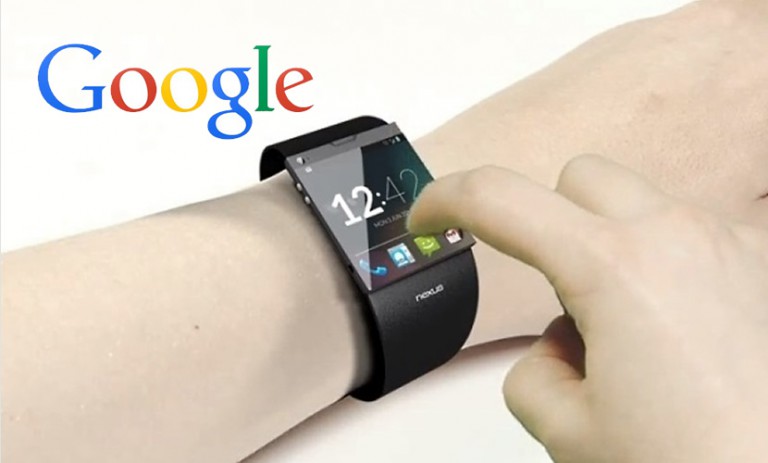
The new wearable from Google may assist diabetics easily monitor their blood glucose levels and include a variety of different health-centric features. The Mountain View-based search giant has filed a patent for a wearable that enables it to take samples of your blood with out using any needles.

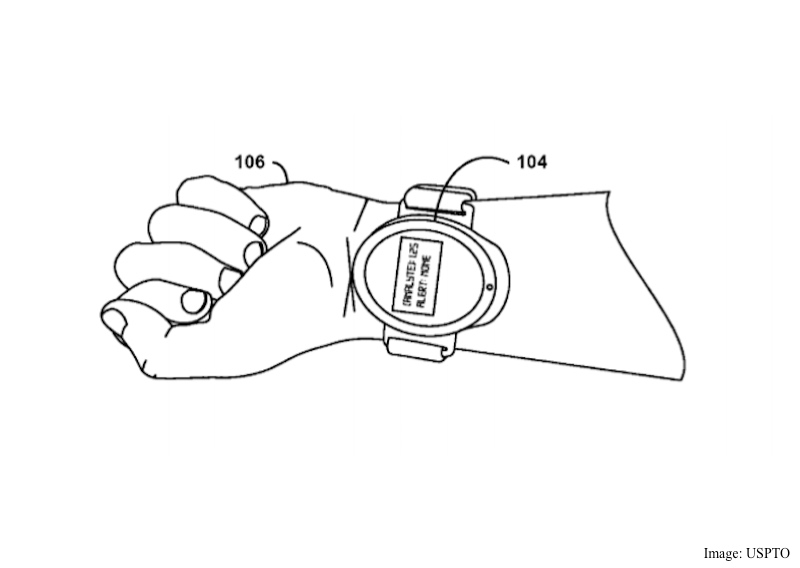
The patent in question reveals that the gadget first sends an “abrupt surge” of gas into a cylindrical container which consists of a micro-particle, then punctures the skin to acquire a small drop of blood. “Such an application might be used to draw a small quantity of blood, for instance, for a glucose check,” the patent explains. The patent was granted on 3rd December 2015, and was applied for back in May 2014.

Google Wearable Draw Blood Patent US20150342509
Source: Google

At the moment, diabetics are required to use a finger prick to draw blood & use a glucose meter multiple times a day to measure their blood sugar levels. A number of handsets in the current pool of Android Wear smartwatches and other health trackers provide the ability to observe heart rate and in addition sport sensors for monitoring fitness, nevertheless, the addition of a “needle-free blood draw” capability may significantly improve the usability of the gadget.

“Consequently, very small diameter needles or lancets (the needle in a glucose testing device) may be considered advantageous for purposes at least of comfort of the patient. In practice, small piercing components might be built-in in small, hand-portable implements that can be utilized by a healthcare practitioner, or even the patient, to collect a small sample of the affected person’s blood and provide it to a lab for testing.”

Google, as you can imagine, has remained tight lipped in regards to the matter, and has offered the following boilerplate statement (via The Verge). “We hold patents on a wide range of concepts – a few of these concepts later mature into actual services or products, some do not. Potential product announcements shouldn’t necessarily be inferred from our patents.”

The patent ties in nicely with a recent report citing the ex-Head of Life Sciences at Google, Andy Conrad (now heading of the newly-formed Life Sciences company at Alphabet), to say Google is working on a medical-grade wristband. At the time, Conrad mentioned the wearable like others available in the market would have the ability to measure heart rate and pulse of the person, however with minute-to-minute updates. Moreover, the gadget would also measure skin temperature on a minute-by-minute basis and will also deliver external data such as sun exposure. These attributes make it more suited to health-monitoring than common wearables available in the market. “Our intended use is for this to become a medical device that is prescribed to patients or used for clinical trials,” Conrad stated.


World’s First Washable Smartphone

0


With regards to smartphones, cellular companies race to give you distinctive and latest designs. From waterproofing to fingerprint scanners to triple-SIM support, these improvements are making its way out to the market. As for Japanese electronics firm Kyocera and Japanese telecommunications operator KDDI, their newest enterprise is releasing the world’s first washable and soap-proof cellphone dubbed called the Digno Rafre.

According to a report by GSM Arena, the brand new smartphone is made to withstand scorching water at forty three degrees. Which means that throughout winter, customers may give their gadget a pleasant, warm bath. And since it’s IP58 certified, the Digno Rafre is protected against limited dust ingress and lengthy time period immersion up to a specified pressure.

Read more at the original source: Latest GadgetsThe world’s first washable phone


Simple Tips To Solve Common DNS Issues

0


We can’t emphasize enough on the importance of Domain Name System (DNS) with the internet. It’s a backbone of the whole system, which is responsible for matching domain names to the right IP addresses. If the DNS goes down, it’s impossible to access most websites or internet, depends on the scope of the issue.

Sometimes, DNS errors will happen on your computer, due to DNS servers timed out. But you can easily avoid DNS errors on your computer or device by using another DNS service, instead of the default DNS addresses.

Basically, when you set up an internet connection on your computer or router without any specific DNS address, it will automatically pull DNS information from your ISP (internet service provider). And somehow if these DNS servers timed out, then you will not able to access any websites or internet. In this article, we will tell you a few simple tips that will help you to fix common DNS issues on your computer. These tips are verified by many users and they work.

How To Solve Common DNS Issues?

As we mentioned above, due to problems with your default DNS server addresses, you are unable access to the internet. If you want to fix DNS errors, you must replace the default DNS addresses with another, like Google’s DNS or OpenDNS. Sometimes, the default DNS server address, which is automatically pulled from ISP (internet service provider), is timed out and can’t do its job, which is to translate domain names to correct IP addresses. In this case, DNS services like Google’s DNS or OpenDNS are very good options.

How To Change Default DNS Server IP Address?

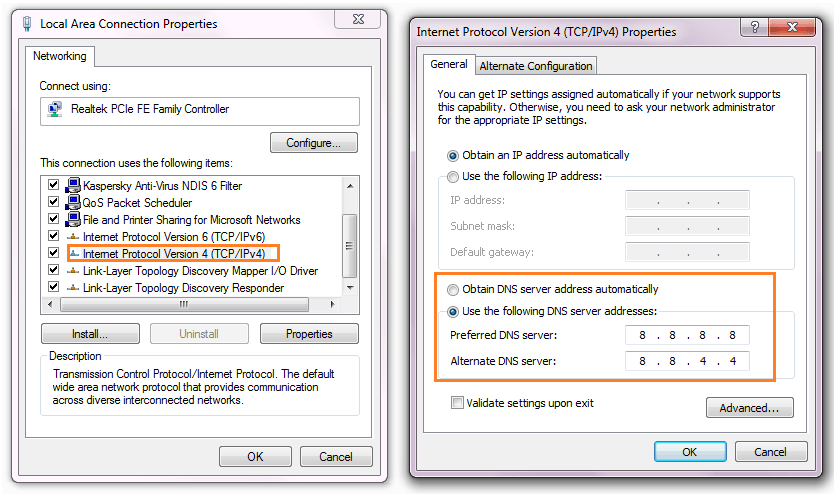
In order to change the default DNS server IP address, go to Start > Control Panel > Select “Network and Sharing Center”. On the left side, click on the “Change adapter settings” link to open current network connection.

In the next step, right click on the current network connection that you are using and select Properties. Scroll down and click on the “Internet Protocol Version 4 (TCP/IPv4)” option. After that, set DNS server under DNS server addresses section, as in the picture below.

how to setup DNSYour computer is now using Google’s DNS server with following DNS server addresses: 8.8.8.8 – 8.8.4.4. If you want to use OpenDNS, instead of Google’s DNS, use the following addresses: 208.67.222.222 – 208.67.220.220.

If DNS errors are related to your computer, you should go to Windows Services, find the DNS Server service and restart it. In the next step, try to clear all DNS cache on your computer by using the command: ipconfig /flushdns on the Command Prompt, accessible by typing ‘cmd’ in Start > Run.

There is an built-in tool in Windows called Diagnostic Tool, which will help you scan and detect DNS errors, and will automatically try to fix it. You can access this feature when you lose internet connection due to DNS problems.

Fix DNS Errors With Command Prompt

When your computer connects to the internet, it will automatically pull DNS information from your ISP or a DNS service, depends on your configuration. But if your computer gets corrupted or expired DNS information, then you will not able to use the internet.

In order to fix DNS problems in this case, use two following commands in Command Prompt to solve the problem. This step also helps you to fix many other related DNS errors, including “DNS Server Not Responding Error”.

First, open Command Prompt program by clicking on Start > Run > type “cmd.exe” to open the application. In the next step, type “ipconfig /renew”, and press Enter. Next, type “ipconfig /release” and press Enter again.

I hope this article can help you fix most popular DNS errors that might appear on your computer. If you have any question about DNS errors, feel free to ask by leaving your comment below.


This Week In Technology: 27th November – 4th December 2015

0


This week in tech
This week in technology: AI programs, driverless F1, Samsung VR, Robotics, Touchable holograms and quick charge


The New Cheapest Computer In The World – $5

7

Some months ago, you might have previously read about the $9 C.H.I.P, world’s cheapest computer, that was made by a company called Next Thing. Well, last week, C.H.I.P lost that title to the Raspberry Pi Zero, the new cheapest computer in the world.

raspberry pi zero - 9g
Source: Raspberry Pi Foundation.

Last week, the latest issue of a computer magazine known as The MagPi was released, and as a world’s first, this magazine comes with a free pc—literally stuck to the cover. It is the latest Raspberry Pi release, weighing only 9 grams, known as Pi Zero. It also goes on sale worldwide for only $5.

Pi Zero is a tiny gadget and contains the first generation Raspberry Pi’s BCM2835 chip, safely overclocked to 1GHz. Pi Zero packs the same GPU as the regular Raspberry Pi and comes with 512MB RAM. It runs Linux and runs all the applications and programs any other Pi will—including Python, Sonic Pi, Java, an internet browser, and way more. You can run a media center, use if for teaching programming, or embed it in a project—and it fits in your palm! The specs of the previous record holder, the CHIP were also similar: It had a 1GHz Allwinner R8 Cortex A8 processor with a built-in Mali400 GPU, 512MB of RAM and 4GB of flash storage [missing in the Pi Zero]. It additionally encompasses a micro USB port, composite headphone/mic port, Wifi and Bluetooth [also not present natively in the Pi Zero].

How to get the cheapest computer?

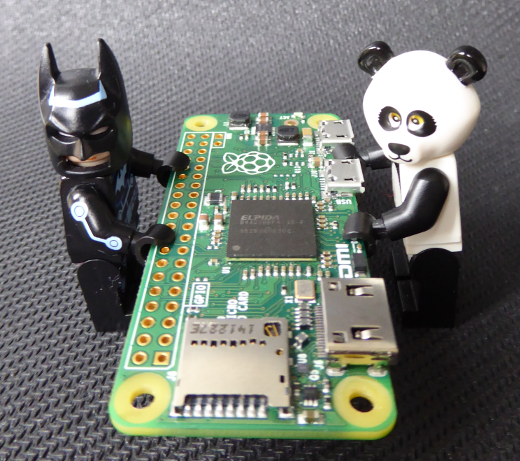
pi with a dollar
Source: Raspberry Pi Foundation

USA: The December issue of The MagPi shall be out soon in Barnes & Noble.

UK: The MagPi may be found in  TescoSainsbury’s, and WHSmith, it costs £6 and comes with the Pi Zero for free.

Rest of the world: You can purchase the magazine online from the Raspberry Pi swag store or order a subscription. Alternatively, the Pi Zero itself is available for purchase from the usual distributors—element14 and RS Components—in addition to the swag store and others.

So, is it a complete PC?

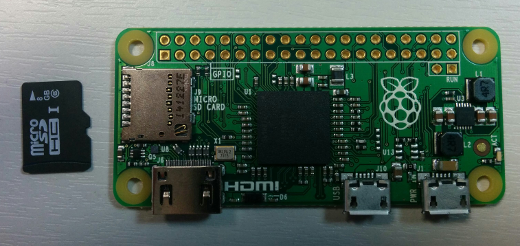
First, have a look at Raspberry Pi Zero, compared to a Micro SD card:

Pi Zero with a Micro SD card
Source: Raspberry Pi Foundation

The answer is no, you can say it’s the CPU. You will need the following to be able to run it as a complete system [just like the CHIP, though it didn’t require the Micro SD because of built-in flash storage]

  • An HDMI enabled monitor
  • Mini HDMI to HDMI adapter or cable
  • A Micro SD card loaded with NOOBS or Raspbian
  • Micro USB adapter
  • Micro USB power cable
  • USB mouse & keyboard

Alternatively, you may prepare your Micro SD card utilizing a regular Raspberry Pi, set your code to run on boot, stick your card into the Zero, and as soon as it has power, your program will run. A good way to deploy code to an embedded project.

You can even connect to the Zero through VNC or SSH over wired or Wi-Fi connection and control it from another pc.

#PiZero projects

You can do countless projects with the Pi Zero. The sky is the limit. Actually, that may not be true. People like Dave Akerman, have sent the Pi’s out of the sky as well. Anyways, most projects which have been carried out with a Raspberry Pi could be performed with a Zero (some requiring the GPIO pin header), however, what other projects can be done with the Zero that makes use of its compact and discreet form factor? Here are some ideas from the Raspberry Pi Foundation. Visit them for more details.

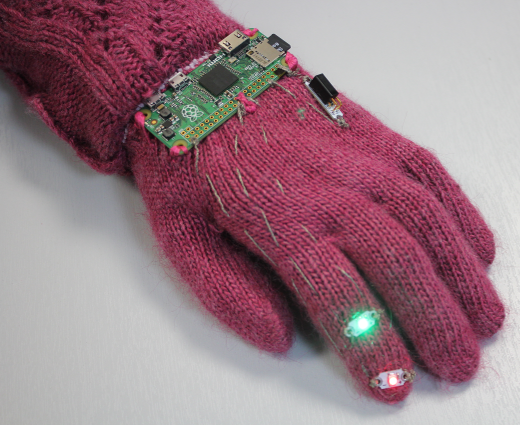
  • Wearables: Zero tech glove
PiZero on a glove
Source: Raspberry Pi Foundation
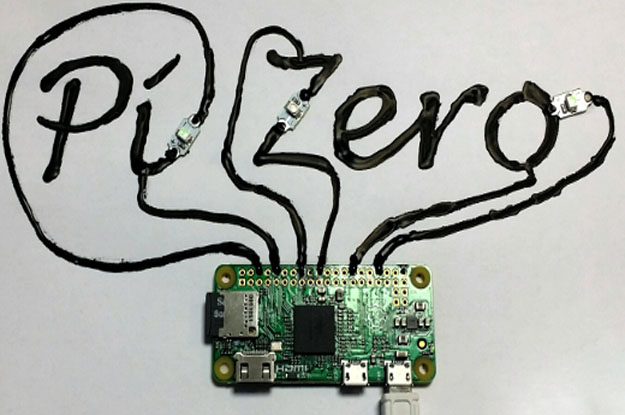
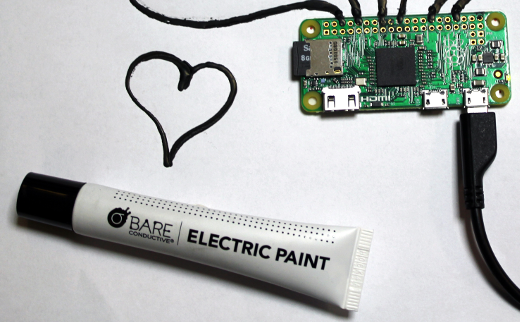
  • Paintables: Zero conductive paint circuits
Painting Cicruits - PiZero
Source: Raspberry Pi Foundation
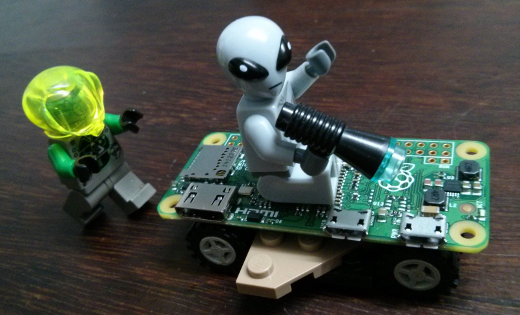
  • Drive-ables: Zero robot
PiZero Car
Source: Raspberry Pi Foundation

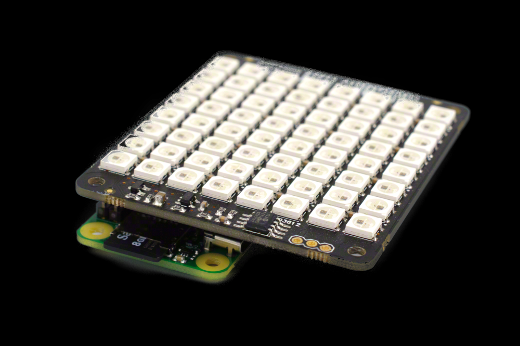
Add-ons for the Zero?

PIZero with an addon
Source: Raspberry Pi Foundation

There aren’t any out yet, as it is a brand new model, however, the Raspberry Pi community is a speedy and agile one. Although present add-on boards and HATs should work with the Zero (with a pin header soldered on), we are certain to see some expansion (or reduction, if you like) in the range of accessories out there—maybe a Zero-sized HAT-like standard will come up and we may see a bunch of new and exciting miniature add-on boards, such as LED boards and motor controllers perfectly sitting aboard the Zero with the mounting holes in the corners. You can see below for some existing Add-ons that have been doing well for the Raspberry Pi.

Click here for cheaper and quality add-ons for the Raspberry Pi from AliExpress

Check out the cheapest Cloud-based computer on CloudDesktopOnline.com and SharePoint hosting on CloudappsPortal.com. You should also check out the best laptops for engineering students at LaptopsPark.com or the Huawei Matebook 13, which is one of the best laptops for college for all students!

Blazingly-Fast Camera Can Capture Light as it Travels

A brand new camera developed at Massachusetts Institute of Technology can photograph a trillion frames per second. Compare that with a conventional film camera which takes a mere 24. This new development in photographic technology has given scientists the power to photograph the motion of the fastest thing in the Universe, light. In the video below, you’ll see experimental footage of light photons traveling at approximately 965 million-kilometers-per-hour (that’s roughly 600 million mph) through water. The actual event occurred in a mere nano second, but the camera has the ability to slow it all the way down to twenty seconds. For some perspective, according to New York Times author, John Markoff, “If a bullet had been tracked in the identical fashion moving through the same fluid, the ensuing film would last 3 years.”

“Beyond the potential in educational & artistic visualization, applications for this include industrial imaging to analyze faults and material properties, scientific imaging for understanding ultra-fast processes and medical imaging to reconstruct sub-surface elements, i.e., ‘ultrasound with light’ [i.e. it can even allow photographing hidden or blocked elements, as shown in the video below]. In addition, the photon path analysis will allow new forms of computational photography, e.g., to render and re-light photos using computer graphics techniques.”

It’s not possible to directly record light so the camera takes millions of scans to recreate each picture. The method has been called femto-photography by the research team and according to Andrea Velten, a researcher involved with the project at MIT, “There’s nothing within the universe that looks fast to this camera.” According to the paper, “We use an indirect ‘stroboscopic‘ method that records millions of repeated measurements by careful scanning in time and viewpoints. Then we rearrange the data to create a ‘movie’ of a nanosecond long event.”


Graphene Could Massively Improve Thermal Imaging

4

Night-vision windshields on automobiles may someday be possible with advanced thermal imaging technology based on flexible, transparent, atomically thin sheets of carbon, researchers say.

Thermal imaging lets people see the invisible infrared rays that objects shed as heat. Thermal imaging devices have helped soldiers, police, firefighters and others see in the dark and in smoky conditions so they can better do their jobs.

At present, many thermal imaging units need cooling systems to filter out background heat to be able to create useful images. However, these cooling systems complicate the design of the devices, increasing their price and bulkiness.

Now researchers have developed a new thermal imaging system based on sheets of graphene, which are each made from a single layer of carbon atoms organized in a honeycomb pattern. Graphene is extraordinarily strong—about 200 times stronger than steel by weight—and extremely electrically conductive.

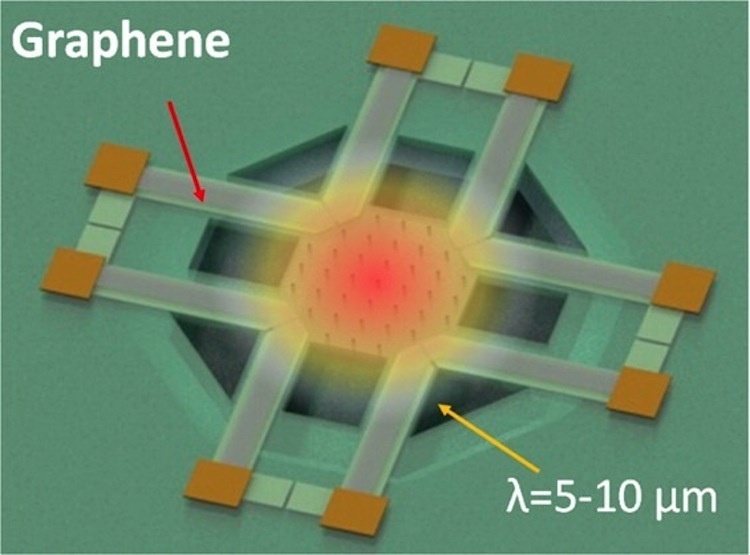
The center of the device is a square patch of graphene mixed with microscopic silicon devices (MEMS). This square patch serves as the thermal sensor, converting thermal signals into electrical signals.

“Graphene isn’t only great for transistors and nice for reinforcing structural materials, but it’s also one of the best possible materials we know for infrared detection,” stated study co-author Tomás Palacios, an electrical engineer at the Massachusetts Institute of Technology.

Instead of utilizing a cooling system, the researchers isolated the thermal sensor from the remainder of the system. They did this by using strips of graphene to suspend the thermal sensor in the open air, where it could detect incoming heat. These strips also convey electrical signals from the thermal sensor to the rest of the machine.

SEE ALSO: Graphene Converts Heat Into Electrical Energy

The scientists discovered that their device could make out the heat signature of a human hand at room temperature without needing cooling fluids, often called refrigerants. The researchers suggest their findings could in the future result in flexible, transparent, low-cost thermal imaging systems.

Graphene as a thermal sensor
Scientists created a thermal sensor out of thin sheets of graphene. Source: American Chemical Society

“The benefit of significantly reducing the price and increasing the performance of infrared imagers is that now you can start introducing these cameras in many new places,” Palacios informed Live Science. “For instance, in the future, we can have infrared detectors built-in in every cellphone and every laptop. That means that in the future, you can control them just by waving your hand in front of them.”

Although computers nowadays can use regular cameras to recognize gestures, “it takes a lot of computing power to identify where your hands are and how they are moving,” Palacios stated. “By utilizing an infrared sensor, imaging of the body is simplified, since it’s very easy for thermal imaging to identify the contours of the human body with respect to backgrounds, which tend to be at a lower temperature.”

Thin, flexible, clear thermal imaging systems “may be integrated into the windshields of automobiles,” suggested Palacios, “You’ll be able to view night-vision systems in real time with out blocking a driver’s regular view of the street.”

The scientists detailed their findings online Oct. 15 in the journal Nano Letters.