Students want to make it to orbit, and they are close!

0


Last month, the Portland State Aerospace Society (PSAS), a student venture at Portland State College, launched a rocket out in the Oregon desert, on 19th July 2015 to be exact. The rocket soared almost five kilometers into the sky—an impressive feat, however that is just the start for PSAS. The group has its eyes set much higher.

In the video, you see the ground rapidly zoom away as the rocket, dubbed “LV2.3”, shoots into the sky. It is a beautiful sight—and one that was captured unintentionally.

“The digital camera falling out of the rocket was accidental,” chuckles Andrew Greenberg, an adjunct professor in Electrical and Computer Engineering at PSU who’s involved in the club. “In this case, the plastic cracked and the camera came out at Mach 1.” The Raspberry Pi-based camera was supposed to record from the side of the rocket’s payload module. “3D-printing plastic isn’t necessarily great for rockets, it turns out.”

The membership’s targets are loftier than just getting just a few kilometers above the Earth. When asked about the objective of the club, Greenberg is direct. They want to put a nano-satellite into orbit.
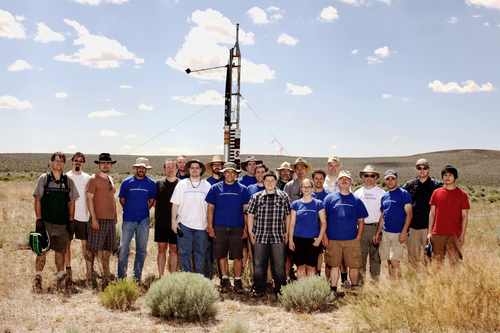
The PSAS in 2011
The PSAS in 2011

“We try to build as much as we can,” says Greenberg. When you’re trying to construct a space-bound rocket, the to-do list is spectacular. “We’re building our own avionics system. We are making our own software-defined radio GPS system. We’re building our own Ethernet-based systems. We’re using WiFi as a long distance telemetry on the amateur radio band.”

The plan to construct a nano satellite (particularly a CubeSat) came to the group during all of this tinkering. After an inspired burst of DIYing, they realized their computer for getting the rocket to space was fairly close to functioning as a tiny satellite. Now they had to figure out how to give it a second life in orbit.

Usually CubeSats function as small satellites that do their business only after they’re in orbit. They’re deployed out into space as a ten centimeter cube that then conducts scientific research within some particularly outlined parameters. It doesn’t usually deal with avionics for a rocket. However PSAS’s CubeSat does both the work. “Our CubeSat has an Ethernet peripheral called ‘a rocket,’ and it flies up and drops itself off and throws itself into space and then it becomes a satellite,” Greenberg says. “All that is, is a change of software, right?”

“WHEN YOU’RE TALKING ORBITAL-CLASS ROCKET, THERE ARE A BILLION THINGS TO DO TO PROVE IT’S SAFE.”

The technological hurdles are one thing. The bigger impediment keeping Portland State Aerospace Society from reaching orbit? “Think ‘cash and lawyers,'” says Greenberg. Including the Portland State Aerospace Society, there are other amateur teams that might potentially put something into orbit​ like the Boston University Rocket Propulsion Group and Delft Aerospace Rocket Engineering in the Netherlands. Actually, the Civilian Space eXploration Team (CSXT) made it a hundred and fifteen kilometers into the sky (which is, by all definitions, space) in 2004. However there’s no amateur group putting stuff in orbit just yet.
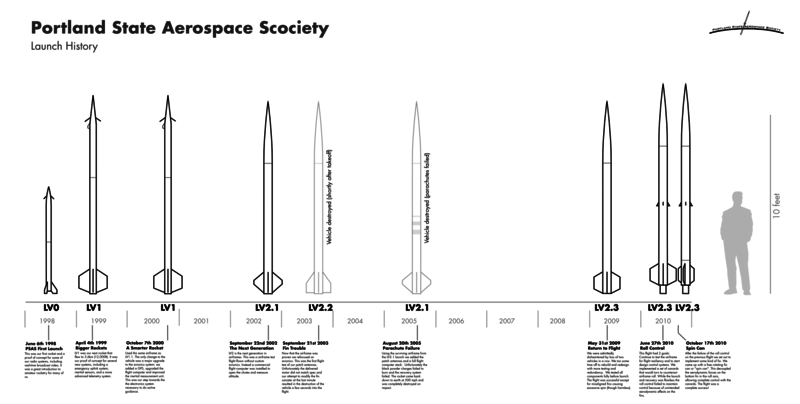
history of rockets
History of PSAS launches

All of them face the same issues of international law, regulatory compliance, safety evaluation, and a litany of different hurdles. “As soon as you begin talking orbital-class rocket, there are a billion issues you need to do to prove that your rocket is safe,” Greenberg says. “Minneapolis-St. Paul does not like it when you drop your first stage on them.”

These are complex issues even for massive corporations like SpaceX. It is even harder for a small group of hobbyists. “If someone drops out of the sky and says, ‘Here is $10 million, and here is a cadre of attorneys for you to use,’ we would happily do it,” says Greenberg. “But we do not expect that to happen.” They currently make do on between $3,000 and $10,000 a year in fundraising, however sooner or later these hurdles will become an issue that will require serious cash to solve. For now, the group chooses to focus on better rockets & avionics.

Then again, Greenberg and the Portland State Aerospace Society have a history of overcoming setbacks. In 2005, they had been at the cutting edge of amateur rocketry. “We had the world’s most superior avionics system,” Greenberg says. “It was a Linux-based computer that used the controller area network that is used in automobiles. It had every thing our current rocket has, but it was way ahead of its time.” He is fairly sure it was the first time, for example, people had used WiFi in rockets.

“We launched it, and it worked beautifully. Everything we thought would fail, like the software and the radios, worked perfectly.” The one piece that did fail? The parachute. “We lawn darted that thing at close to Mach 1 into the ground,” he laughs.

The loss of the rocket set the group back badly—they did not launch another rocket for 4 years—but they learned from their mistakes. “We construct three of every thing, so if we lose one thing that is okay.” If the group can recover from smashing up one of their best rockets, who’s to say they could not figure out the attorneys and regulatory angle as well?

In the meantime, the group has their hands full with a brand new “LV3” airframe they’re hoping could eventually attain a hundred kilometers (or about sixty two miles). “100 kilometers is the magic number,” Greenberg says giddily. “You get to say you are in space if you have gone 100 kilometers.”

They’ve already made it 5 kilometers. What’s one other ninety five?
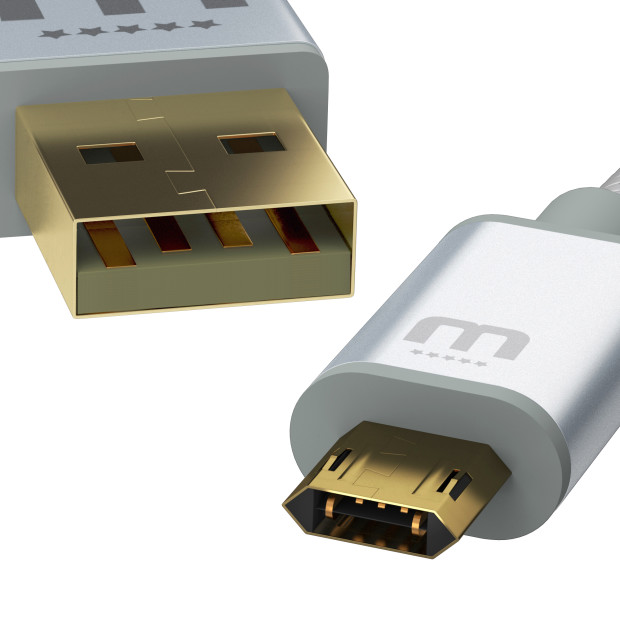
MicFlip : The World’s 1st Reversible Micro USB Cable

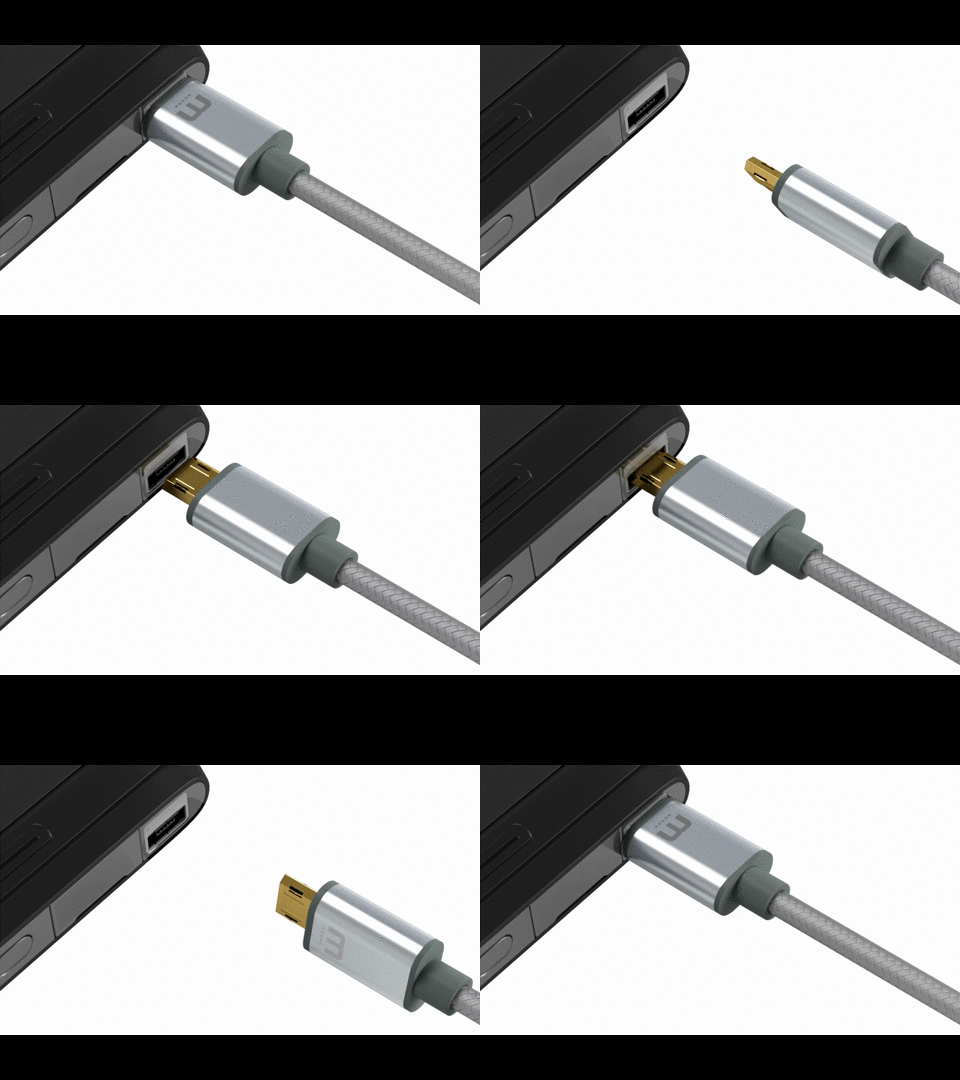
There was a lot griping when Apple changed its outdated dock connectors with the reversible Lightning cable, however they’ve made life much simpler for Apple customers. So the MicFlip, the world’s first reversible micro-USB cable, guarantees to do the same for Android, Nokia (and other smartphone) users.

MicFlip in action
MicFlip: First reversible MicroUSB ever

Have you ever tried plugging a micro-USB cable into your cellphone, tablets or any other gadgets in the dark? You’ve got a 50% probability of getting the connector the proper side up, however in actuality you often get it wrong 99% of the time. Not with the MicFlip. It works both way so every time you try to plug in a microUSB device, it’s guaranteed to work.

Of course, the angle of the plug was not the only important thing to regular USB cable users. 25% of respondents to the survey carried out by UK based Winner Gear said they wished their cables were more reliable. USB cables can become faulty fairly quickly, with connections becoming loose and proving unable to charge gadgets or transfer data. To overcome this problem, MicFlip is not only totally reversible, the wires are also covered in an ultra-strong and flexible braided nylon lead. The cables have a robust aluminum shell, and gold-plated plugs to prevent corrosion, ensure greater conductivity. The creator’s claim that MicFlip will outlast all of your other USB cables.

The MicFlip’s creators selected Indiegogo crowdfunding site to help bring the cable to the frustrated and challenged charging masses, but as of right now, it has already surpassed its funding goal by a long margin. When available sometime in September (assuming everything goes smoothly moving into product testing and manufacturing) the reversible microUSB will retail for about $20, however pre-orders are still out there so you can buy one now for just $15 and save your self a few dollars. Literally this is a feature many people want, our only criticism is that they didn’t show one actual cable in action, but only artist renderings.

Or, purchase a dozen since you’re in all probability just going to want to go ahead and replace every annoying microUSB cable in your home. Now just wish that someone makes that main USB connector as reversible too!

The Ladder made of Fire(works) into the Sky

0

A fiery, eighty-second artwork from earlier in the summertime that seems to indicate a towering ladder made of fireworks is going viral.

It was Guoqiang’s third attempt at creating Sky Ladder. In 1994, the artist attempted a similar show, but strong winds hindered the progress. In 2001, he tried again when China hosted the APEC summit, but restricted aerial access due to the Sept. 11, 2001 attacks meant that Guoquiang’s dream installation was again put on hold.

This beautiful installation, by artist Cai Guoqiang, occurred in June in Quanzhou Metropolis in China’s southeast Fujian Province. It was carried out utilizing a big weather balloon pulling on a 500-meter long wire ladder studded with fireworks and gunpowder, according to Yahoo News.

Sky Ladder, referred to by some as a “stairway to heaven,” was dedicated to the Cai’s grandma, who recently celebrated her 100th birthday.

Alternate source of video (for those where YouTube is not accessible):

Thanks to Purple Sim for bringing it into out attention 🙂

Scotland has Banned GM Crops

0

Scotland is to ban the farming of genetically modified (GM) crops, the nation’s rural affairs secretary announced on Sunday.

Richard Lochhead stated that the Scottish government was not ready to “gamble” with the future of the country’s £14 billion food and drinks sector.

Farming leaders were disappointed by the move.

Under European Union (EU) rules, GM crops must be formally authorized before they can be cultivated.

An amendment came into force earlier this year which permits member states and devolved administrations to restrict or ban the cultivation of GM organisms within their territory.

‘Consumer backlash’

Mr Lochhead said Scotland’s request for opt-outs from GM crop consent would cover an EU approved variety of genetically modified maize and 6 other GM crops which are awaiting authorization.

beautiful scotland

He stated that Scotland was recognized around the globe for its “beautiful natural environment” and banning the growing of genetically modified crops would protect and further enhance its “clean, green status”.

Mr Lochhead added: “There isn’t any proof of significant demand for GM merchandise by Scottish consumers and I’m concerned that permitting GM crops to be grown in Scotland would damage our clean and green brand, thereby gambling with the future of our £14 billion food and drink sector.

“Scottish food and drinks is valued at home and overseas for its natural, high quality which often attracts a premium price, and I’ve heard directly from food and drink producers in other nations who are ditching GM due to a consumer backlash.”

The announcement was welcomed by Scottish Green MSP Alison Johnstone, who agreed that the cultivation of GM crops would hurt the country’s environment and reputation for high quality food and drinks.

However she called on ministers to go further by challenging big retailers to improve their labeling to point out whether or not meat, eggs and dairy products come from animals fed on GM feed.

‘Embracing biotechnology’

The move has also been broadly welcomed by environment groups.

scot gm

However Scott Walker, chief executive of farming union NFU Scotland, stated he was disappointed that the Scottish government had determined that no GM crops should ever be grown in Scotland.

“Other countries are embracing biotechnology where appropriate and we should be open to doing the same in Scotland,” he stated.

Huw Jones, professor of molecular genetics at agricultural science group Rothamsted Research, said the announcement was a “sad day for science and a sad day for Scotland.”

He mentioned that GM crops approved by the EU were “safe for people, animals and the environment”.

Install Windows 10 using the ISO file

0

Microsoft has come up with its best Operating System (OS) so far, The MS Windows 10. Initially it is available for free for many users as an upgrade to their Windows 7, Windows 8 or Windows 8.1. For those people who can’t see it as an upgrade option, or for people who were on different OS such as Windows XP, Ubuntu or different flavors of Linux, we have prepared this simple guide to help you install Windows 10, using the official ISO file from Microsoft.

windows 10 iso download and booting

Before we begin Microsoft Windows 10 ISO download, you will need:

  • An internet connection for windows 10 iso download to your PC/laptop computer.
  • Sufficient storage space in your PC or laptop (It may require more than 3 GB).
  • A blank USB or a DVD which has minimum of 4GB empty space.
  • Your system should also meet these system requirements.
  • If you are installing for the first time you will need the product key. For more information, go to FAQ page.

First of all, we’ll download an image file of windows 10.

Click here to download the windows 10 iso file to your pc/laptop. (Alternatively, you can download it using torrents, Click here to download the 64-bit version, and here to download the 32-bit version) It’ll ask you whether you need the 32-bit or 64-bit version. If you are not sure, as a rule of thumb, if you have 4gb of RAM in your system, or more, you’ll need the 64-bit version, otherwise you are fine with the 32 bit one.

After downloading complete, you have to make a bootable USB or bootable DVD for windows 10 installation on your laptop/pc.

We suggest using a USB (pendrive) as they are faster, easier to carry and more durable then a DVD. Plus, unlike a DVD ROM, you can plug in a USB in almost any system out there.

To make a bootable Windows 10 installation USB, we recommend using the free version of Win To Flash. You can also use the official Microsoft USB tool, but we don’t recommend it as it is too buggy.

After you have created a USB, plug it in and restart your system. Go to the BIOS setup (usually by pressing F-12 or DEL) and make sure, in boot selection, USB is selected above your hard disk. Save and exit. When your computer will start, it should automatically take you to the Windows 10 setup.
From there, its as simple as ABC. If you have any trouble, you can ask for help in the comments below.

Users of Yahoo hacked because of Flash

4

Researchers at Malwarebytes, an anti-malware vendor, uncovered a large scale attack targeting Yahoo customers via Yahoo’s advertising network. Malwarebytes notified Yahoo about it and the “malvertising” marketing campaign is now no longer in progress.

The attack was possible as a result of Flash vulnerabilities in unpatched versions of Flash, even perhaps the same vulnerabilities that force Mozilla to block Flash by default in its browser for a number of days until Adobe released a patch. Not all Flash users have updated to the latest version, though, which implies they’re still susceptible to these highly dangerous security exploits.

Yahoo owns large Web properties with an estimated 6.9 billion monthly visits, based on data from SimilarWeb, which implies even if a small proportion of those visits resulted in malware installation on the users’ PCs, it might still affect millions of individuals.

Malvertising is particularly dangerous because it requires no action from the user, and it can download and install itself automatically on the user’s PC (assuming the user is on a Standard account and not an Administrator one, and the User Account Control protection is weak enough to be bypassed, or the malware makes use of native privilege escalation zero-days).

The malware can even install “ransomware” on users’ computers and lock their files till the customers pay the criminals.

Recently, Flash has been a lot in the news, with even Facebook saying it hurts their business. Apple and Twitch have already ditched Flash. Users are advised to either update their version of Flash or disable it completely.

We at GadgTecs think Flash should be abandoned by now. HTML5 is not perfect, but much secure and better alternate.


Upgraded: The flying car called the Terrafugia TF-X

Flying cars have probably been on the back of people’s from the time cars were invented. Many have daydreamed of having one, movies have come come up with concepts and ideas and a few have attempted or are attempting to actually build one.
Humans have gotten fairly good at waiting patiently for a flying car. If we’re being sensible, it might take a long time to produce them and get them into circulation. Many people who dreamt about this won’t be alive by the time one actually rolls of the garage of a common man.

The Italian firm Terrafugia isn’t letting all of that hold it back though – it has released new designs for the TF-X, and still in scale testing, they appear to be very classy. It will require no runway to take off, will have a maximum cruising speed of 200 mph and would be able to fly for about 500 miles.

First announced in 2013, the TF-X is a 4-passenger hybrid automobile, which will able to recharge its batteries both from its engine or by plugging in to an electrical charging station. It is going to be sufficiently small enough to get parked inside a regular garage, and will hopefully be street legal.

If you wish to go into flying mode, the wings will fold out, and twin electrical motor pods on the ends will power up and raise the vehicle off the ground using 1 MW of energy. 2 small helicopter-type propellers will give the required thrust when wanted, and are then folded again when the car is cruising on the road.

terrafugia-tf-x-autonomous
An artists impression. Score: Terrafugia

Flying will be computer operated, so drivers don’t have to worry about knowing how to navigate an airborne car. The Terrafugia website explains that prior to departure, the driver will choose a primary landing zone, plus two backup touchdown zones. If the TF-X calculates inadequate power on board to at least be able to land at one of the two backup landing zones in an emergency, and then make it to the final destination in half-hour, it won’t take-off. It’ll additionally not embark on a flying journey if the weather forecast appears dangerous, or if any of the chosen landing zones are in restricted airspace.

“Operating a TF-X car should be statistically safer than driving a modern automobile,” they claim.

Right now, we are  still looking at 8-12 years of development for the Terrafugia TF-X. They’re yet to produce a prototype of the design, however they’re about to test a one-tenth scale model at the MIT Wright Brothers wind tunnel in the United States. “The wind tunnel test model will be used to measure drag, lift and thrust forces while simulating hovering flight, transitioning to forward flight and full forward flight,” the company says.

Can’t wait until the video above becomes a reality. Till then, daydream on…

Microsoft Windows 10: Out of the “Doghouse”

Disclaimer: The author hasn’t used Microsoft Windows since 2006, and tried Windows 10 just for the sake of this article

Windows 8 was a travesty for Microsoft users. There were people actually rolling back to version 7, or earlier.

Now Microsoft is rolling out Windows 10 with massive improvements—much like a lover in the doghouse trying to win over his partner by showering them with chocolates, flowers and tickets to that “thing they love.”

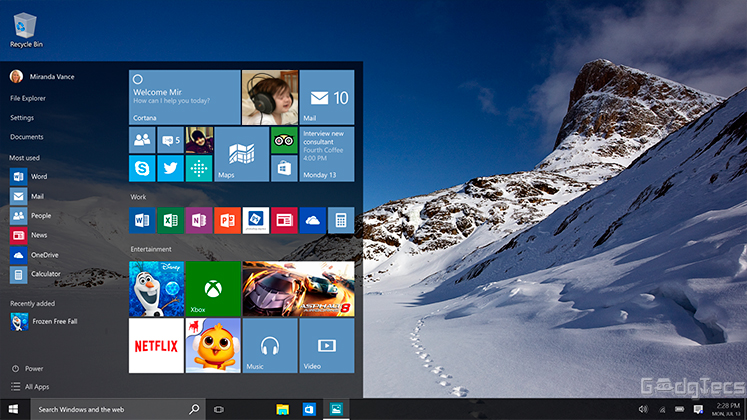
windows 10

And apparently it’s working. Windows 10 promises to be the software it’s supposed to be, and Windows fans are rejoicing, forgiving Microsoft for the nearly unforgivable slight that was Windows 8.

 So what’s making Windows 10 that new and improved, reformed “lover”?

  • 1) Cortana has come to the PC from being relegated to the Windows phone. You can not only record things in “notebooks” so she can learn what your favorite cuisines are, just for example, but you can bring her up manually using a menu, or by voice recognition. So you can use Cortana on the PC while your cell phone safely sleeps.
  • 2) The start menu is resizable. Oh, yes. It used to be the start menu was static. It was the size that Microsoft gave it and if you didn’t like it, too bad, so sad. Now the start menu is all sleeky, sexy and shiny, with the ability for you to give it any size that suits your style. And the start menu gives you the weather, news headlines and whatever else takes your fancy—including dragging and dropping applications that you use often.

It’s one heck of a “make-up gift,” really.

  • 3) Windows 10 has an all new password system built in called “Windows Hello.” How this works is that you can use iris scanners—already built into some computers—as well as face and fingerprint scanners. It’s been tested over and over, it works flawlessly, and Microsoft says that identification can’t be faked by using photos or other dupes. It has to be your actual eyes, whole face or finger.

 And this isn’t just a crazy gimmick. Microsoft’s part of something called FIDO, or Fast Identity Online. It’s an alliance that’s getting banks and other financial institutions on board with this kind of software. You really can’t beat that kind of new technology for making sure your money is safe—because only you can prevent theft with a scan of your irises.

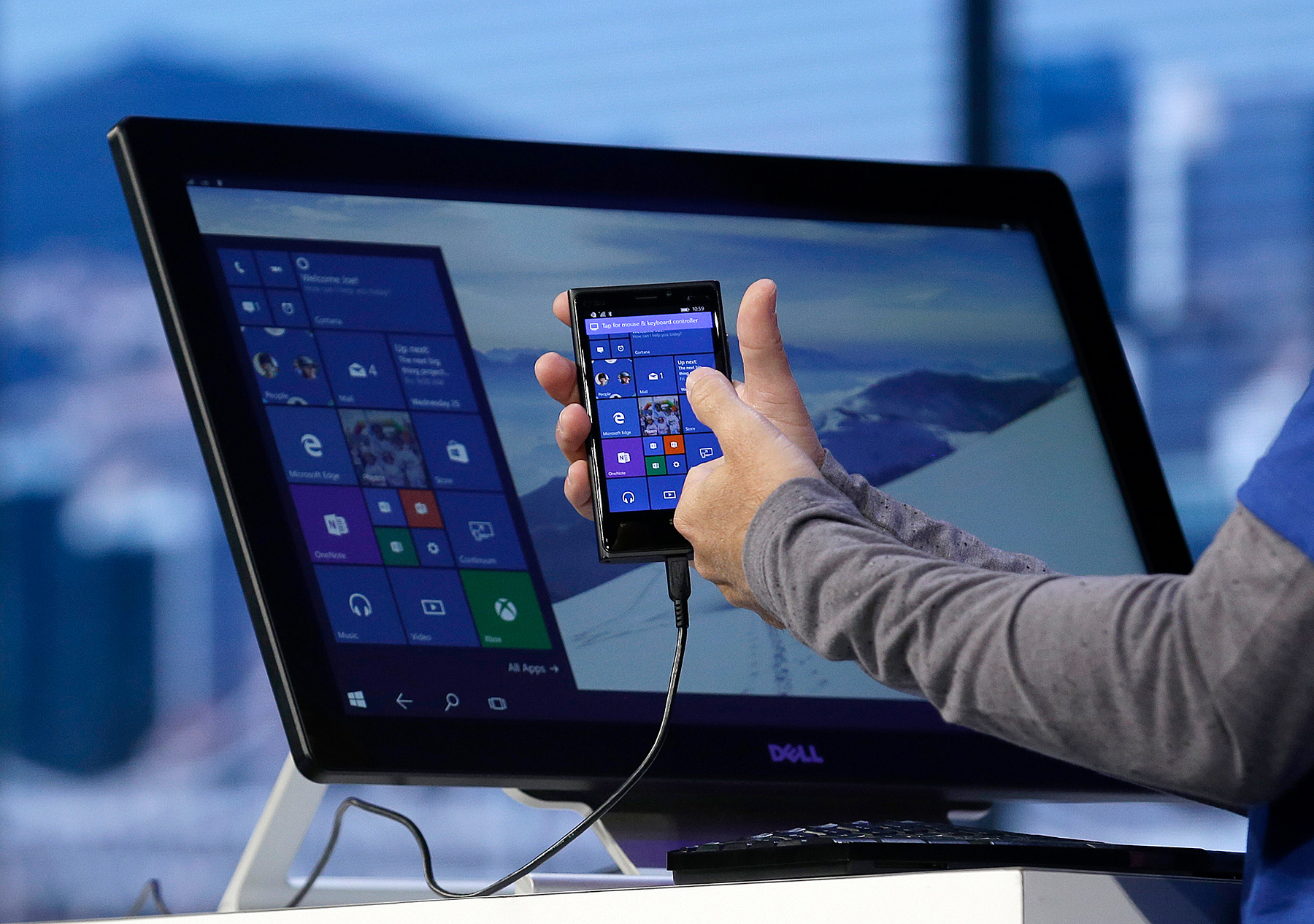
Continuum
Joe Belfiore, Microsoft Corporate Vice President of Operating Systems Group, demonstrates Continuum for phones at the Microsoft Build conference in San Francisco, Wednesday, April 29, 2015. While Microsoft has already previewed some aspects of the new Windows 10, a parade of top executives will use the conference to demonstrate more software features and app-building tools, with an emphasis on mobile devices as well as PCs. (AP Photo/Jeff Chiu)
  • 4) There’s a new thing called “Continuum” that Microsoft’s developed for Windows 10 that allows tablet and 2-in-1 users to be able to switch between tablet mode and keyboard and mouse mode. Just attach a keyboard and voila! You’ll be given a notification to toggle. Continuum also means that apps are coded “to scale” on all screen sizes. So all apps you use can be run on all devices, from 4-inch screens to great big monitors. Just tug on the window and the app will scale in real time.
  • 5) The new browser has a new name: Edge. And it’s sure pretty sharp-looking. Gone are the clunky-looking browser buttons of Internet Explorer. In fact, Edge is that sexy new sports car you get with a little bit of trade credit from the clunky old jalopy that sometimes worked and sometimes didn’t.

 You can pin tabs, take screenshots and draw as much as you like on it using OneNote, share pages directly from the browser and so much more.

What’s great about Edge is that like a GPS in a fancy car, Cortana is built right in. If you look at a website for a restaurant or a museum, Cortana will give you days and hours of operation, among other pertinent information. Also, if you’re on a site and you come across a word you have no clue about, Cortana’s there to help with that, too. It seems like the only thing Cortana can’t do is jump out of your computer and do all your household chores for you, a la “Rosie” from “the Jetsons.” But at least she can tell you the best laundromat locations. Hey, we have to start somewhere, right?

More about Cortana

Cortana

The really amusing thing about Cortana and other digital assistants like her is that she’s programmed to answer some pretty crazy questions and give equally crazy-funny answers.

One of the answers she’s programmed to give is about the origins of her name, which, incidentally, is the AI of the same name, from the “Halo” game franchise.

Another great answer she gives is about where she comes from: human ingenuity, but a battery’s required. Such a smart-aleck, right?

But she proves to be an even bigger smart-aleck with the answer to the question “Will you marry me?” It’s something along the lines of her working on being more human, and us working on being more digital. Of course, you could say that just purchasing a Windows 10 computer or a Windows phone would be a rough equivalent of “putting a ring on it” since that kind of question is in there at all, and such a big-ticket item is more or less a big financial commitment.

Whatever your reasons for purchasing a computer or other Windows 10 device, you’re bound have tons more fun with it than previous iterations of Windows. Heck, Windows 10’s sexy Jaguar-like looks makes XP look like a big boat from the 70s.

And speaking of relationships, it could easily be said, therefore, that Microsoft is busy trying to repair their relationship with the consumer. And it’s working.

Robot can walk on water and jump from the surface!

2

A robotic Jesus Christ Lizard, that can jump very high from water


​The machine seems to be impossibly floating across the surface of water when, all of a sudden, it whips its 4 skinny legs towards its center in a single clean motion and blasts upward. Leaping with the force of 14g’s, it’s airborne faster than you may blink, easily leaping as fast and as high as it could have on land. However that is no pond-skater, Jesus lizard, or some Gerridae. It’s a mini-robot.

The world’s first robot that jumps from the surface of water using surface tension has been developed by a team of Korean roboticists. The 1 cm tall robot can jump to a height of 14 cm.

Engineers and roboticists at the Seoul Nationwide College in South Korea, led by Je-Sung Koh, have designed the first robot to imitate jumping water bugs like water striders. The robot balances on water and leaps into the air utilizing little more than the force of water’s natural surface-tension. The team stated in the journal Science, that they first needed to work out the mystery of how bugs like the ‘water strider’ manage this feat before they could construct a machine to imitate it.

“Usually, jumping requires a large force to be applied to the surface that you’re leaping from,” Kim says. “[But when jumping] on water, legs will easily penetrate the water, and even in the event you can jump on water, the height will [usually] be lower than jumping on the ground. However, our small robot can leap from water without breaking the surface tension, and can jump on as high as jumping on land.”

Utilizing high-speed cameras, the roboticists recorded jumping water striders (Aquarius paludum) they caught in ponds and streams outside Seoul. After studying their videos in detail, the team broke down the mechanics of how the insects avoid breaking the surface tension during their powerful leap.

One key to their leap is that water striders steadily and gradually increase their jumping power. How do they do that? By wicking their curved legs inward, across the water, keeping much of their leg in touch with the tiny divots each leg creates. This permits water striders to transfer the power generated by the water’s surface tension (which is trying to make it stay flat) into their upward motion.


water strider -  Seoul Nationwide College
2 robots along with a water strider – Seoul Nationwide College

The new robot jumps by utilizing a simple, light clasp that snaps shut via a heat-reactant spring after being zapped by an outside pulse of heat. That clasp generates the force needed to maneuver the legs, causing the robot’s 4 curved legs, that are generously coated with a water-repellent chemical known as Ultra-Ever Dry, to tug inwards. The researchers got the robot’s legs to imitate a water strider’s by constructing them with a super-elastic nickel-titanium alloy.

This new jumping robot isn’t the first to ever stroll across the surface of water (Robostrider claims that title). The work carried out on earlier robots, combined with the team’s study of water striders in nature, helped them design their running and leaping little machine. Mainly, just like an actual water strider, the bot can stand on water because its light weight is spread broadly across its four legs, causing a force that is far lower than force of water attempting to retain a taught surface.


We are moving!

0

We are moving to a new dedicated VPS. Hopefully there won’t be any hiccups, but in case there are, we apologize in advance.

The new server will be faster than the old one, and will reduce the loading times 🙂

and we wanted to remind you, you can send you articles to us at our email address and if they are related to science/technology or gadgets, we’ll be happy to publish them!

cheers