A brand new camera developed at Massachusetts Institute of Technology can photograph a trillion frames per second. Compare that with a conventional film camera which takes a mere 24. This new development in photographic technology has given scientists the power to photograph the motion of the fastest thing in the Universe, light. In the video below, you’ll see experimental footage of light photons traveling at approximately 965 million-kilometers-per-hour (that’s roughly 600 million mph) through water. The actual event occurred in a mere nano second, but the camera has the ability to slow it all the way down to twenty seconds. For some perspective, according to New York Times author, John Markoff, “If a bullet had been tracked in the identical fashion moving through the same fluid, the ensuing film would last 3 years.”
“Beyond the potential in educational & artistic visualization, applications for this include industrial imaging to analyze faults and material properties, scientific imaging for understanding ultra-fast processes and medical imaging to reconstruct sub-surface elements, i.e., ‘ultrasound with light’ [i.e. it can even allow photographing hidden or blocked elements, as shown in the video below]. In addition, the photon path analysis will allow new forms of computational photography, e.g., to render and re-light photos using computer graphics techniques.”
It’s not possible to directly record light so the camera takes millions of scans to recreate each picture. The method has been called femto-photography by the research team and according to Andrea Velten, a researcher involved with the project at MIT, “There’s nothing within the universe that looks fast to this camera.” According to the paper, “We use an indirect ‘stroboscopic‘ method that records millions of repeated measurements by careful scanning in time and viewpoints. Then we rearrange the data to create a ‘movie’ of a nanosecond long event.”
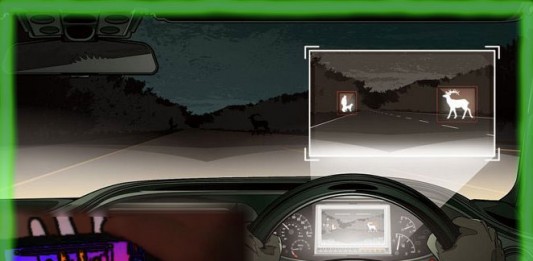
Night-vision windshields on automobiles may someday be possible with advanced thermal imaging technology based on flexible, transparent, atomically thin sheets of carbon, researchers say.
Thermal imaging lets people see the invisible infrared rays that objects shed as heat. Thermal imaging devices have helped soldiers, police, firefighters and others see in the dark and in smoky conditions so they can better do their jobs.
At present, many thermal imaging units need cooling systems to filter out background heat to be able to create useful images. However, these cooling systems complicate the design of the devices, increasing their price and bulkiness.
Now researchers have developed a new thermal imaging system based on sheets of graphene, which are each made from a single layer of carbon atoms organized in a honeycomb pattern. Graphene is extraordinarily strong—about 200 times stronger than steel by weight—and extremely electrically conductive.
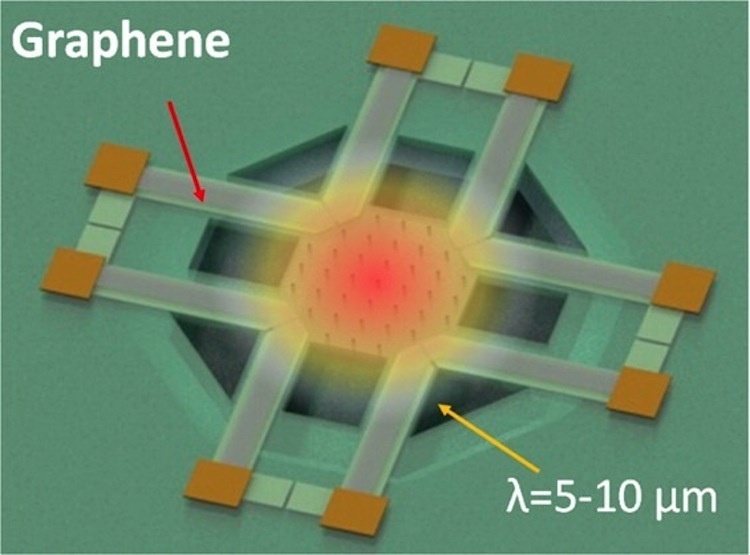
The center of the device is a square patch of graphene mixed with microscopic silicon devices (MEMS). This square patch serves as the thermal sensor, converting thermal signals into electrical signals.
“Graphene isn’t only great for transistors and nice for reinforcing structural materials, but it’s also one of the best possible materials we know for infrared detection,” stated study co-author Tomás Palacios, an electrical engineer at the Massachusetts Institute of Technology.
Instead of utilizing a cooling system, the researchers isolated the thermal sensor from the remainder of the system. They did this by using strips of graphene to suspend the thermal sensor in the open air, where it could detect incoming heat. These strips also convey electrical signals from the thermal sensor to the rest of the machine.
The scientists discovered that their device could make out the heat signature of a human hand at room temperature without needing cooling fluids, often called refrigerants. The researchers suggest their findings could in the future result in flexible, transparent, low-cost thermal imaging systems.
Scientists created a thermal sensor out of thin sheets of graphene. Source: American Chemical Society
“The benefit of significantly reducing the price and increasing the performance of infrared imagers is that now you can start introducing these cameras in many new places,” Palacios informed Live Science. “For instance, in the future, we can have infrared detectors built-in in every cellphone and every laptop. That means that in the future, you can control them just by waving your hand in front of them.”
Although computers nowadays can use regular cameras to recognize gestures, “it takes a lot of computing power to identify where your hands are and how they are moving,” Palacios stated. “By utilizing an infrared sensor, imaging of the body is simplified, since it’s very easy for thermal imaging to identify the contours of the human body with respect to backgrounds, which tend to be at a lower temperature.”
Thin, flexible, clear thermal imaging systems “may be integrated into the windshields of automobiles,” suggested Palacios, “You’ll be able to view night-vision systems in real time with out blocking a driver’s regular view of the street.”
The scientists detailed their findings online Oct. 15 in the journal Nano Letters.
A couple of years ago, some German scientists created a proof of concept to see if it was possible for data to jump across the air gap, using inaudible high frequency audio waves.
“Using nothing more than the built-in microphones and speakers of ordinary computer systems, the researchers had been able to transmit passwords and other small bits of data from distances of almost 65 ft.”
Now it seems, the same technology is being used by many marketing corporations to track individuals. Privacy advocates are warning federal authorities of a new menace that makes use of inaudible, high-frequency sounds, inaudible to human ears, to surreptitiously track an individual’s online habits throughout a range of devices, including smartphones, TVs, tablets, and personal computers.
The ultrasonic pitches are embedded into TV commercials or are played when a person encounters an advert displayed in a pc browser. While the sound cannot be heard by the human ear, close by tablets and smartphones can detect it. Once they do, browser cookies can now pair a single person to a number of gadgets and keep track of what TV commercials the individual sees, how lengthy the particular person watches the adverts, and whether or not the individual acts on the advertisements by doing a Net search or shopping for a product.
Cross-device monitoring raises vital privacy issues, the Center for Democracy and Technology wrote in recently filed comments to the Federal Trade Commission. Typically, individuals use as many as 5 connected units throughout a given day—a computer, smartphone, tablet, a wearable health gadget, and an RFID-enabled access fob. Till now, there has not been an easy technique to observe activity on one and tie it to the other.
“As an individual goes about his business, his activity on every device generates different data streams about his preferences and behavior that are siloed in these devices and services that mediate them,” CDT officials wrote. “Cross-device tracking permits marketers to combine these streams by linking them to the same individual, enhancing the granularity of what they know about that person.”
The officials said that companies with names including Flurry, Drawbrudge and SilverPush are working on methods to pair a given consumer to specific gadgets. Adobe is developing similar technologies. Undoubtedly, the most concerning of the companies the CDT talk about is the Indian startup, and now San Francisco-based SilverPush.
CDT wrote:
Cross-device tracking can also be performed through the use of ultrasonic inaudible sound beacons. Compared to probabilistic tracking via browser fingerprinting, the use of audio beacons is a more accurate method to track users across devices. The industry leader of cross-device monitoring using audio beacons is SilverPush. When a user encounters a SilverPush advertiser on the net, the advertiser drops a cookie on the computer while also playing an ultrasonic audio via the use of the speakers on the pc or the gadget. The inaudible code is recognized and received on the other smart device by the software development kit installed on it. SilverPush also embeds audio beacon signals into TV commercials which are “picked up silently by an app installed on a [device] (unknown to the person).” The audio beacon enables corporations like SilverPush to know which adverts the user saw, how long the user watched the ad before changing the channel, which kind of smart devices the individual uses, together with other information that adds to the profile of every user that’s linked across devices.
The user is unaware of the audio beacon, but when a smart device has an app on it that uses the SilverPush software development kit, the software on the app will be listening for the audio beacon and once the beacon is detected, devices are immediately recognized as being used by the same individual. SilverPush states that the company is not listening in the background to all of the noises occurring in proximity to the device. The only factor that hinders the receipt of an audio beacon by a device is distance and there is no way for the user to opt-out of this type of cross-device tracking. SilverPush’s company policy is to not “divulge the names of the apps the technology is embedded,” meaning that users have no knowledge of which apps are using this technology and no way to opt-out of this practice. As of April of 2015, SilverPush’s software is used by 67 apps and the company monitors 18 million smartphones.
SilverPush’s ultrasonic cross-device tracking was publicly reported as long ago as July 2014. More recently, the company received a new round of publicity when it obtained $1.25 million in venture capital. The CDT letter appears to be the first time the privacy-invading potential of the company’s product has been mentioned in detail.
Cross-device tracking already in use
The CDT letter went on to quote articles reporting that cross-device tracking has been put to use by more than a dozen marketing companies. The technology, which is usually not disclosed and cannot be opted out of, makes it possible for marketers to assemble a surprisingly detailed snapshot of the individual being tracked.
“For example, a company may see that a person searched for sexually transmitted disease (STD) symptoms on her pc, looked up directions to a Planned Parenthood on her cellphone, visits a pharmacy, then returned to her apartment,” the letter stated. “While previously the various elements of this journey would be scattered amongst several services, cross-device tracking allows companies to infer that the user obtained treatment for an STD. The combination of data across gadgets not only creates serious privacy concerns, but also permits for corporations to make incorrect and possibly harmful assumptions about individuals.”
What’s Next?
We at GadgTecs believe there might already be viruses and malwares out there utilzing this technology, however, none has been discovered by the mainstream security researches yet (a researcher did publish some work on his findings but others were skeptical). It is only a matter of time when they become even more common and harder to avoid.
Virtual reality has been a very long time coming, however probably the most notable strides have come in the past few years. Oculus has led a revitalization in Virtual Reality tech, the development of which had slowed considerably over the previous decade. Now, a resurgence in consumer VR products has resulted in great strides, and inexpensive virtual reality kits like the Samsung Gear VR make virtual reality accessible to almost anybody.
However there is still one key piece missing from the virtual reality puzzle that prevents the consumer from being really immersed in a VR experience. That will soon change, however, because of work being carried out by some researchers in Germany.
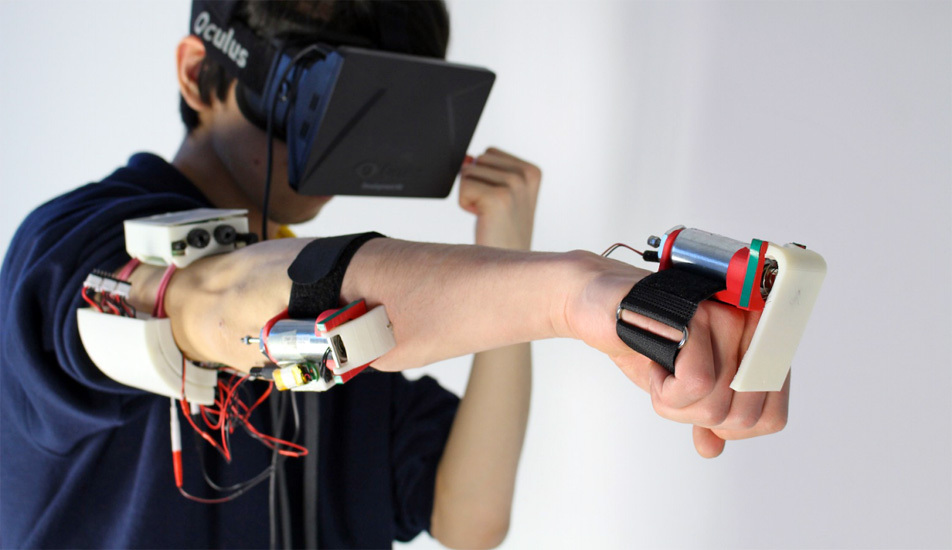
A group of researchers from the Human-Computer Interaction (HCI) lab at Germany’s Hasso Plattner Institute have created working prototypes of a device they call Impacto. The gadget is integrated into a band that may be worn on the arm, leg or foot of a virtual reality person. When mixed with a VR experience that incorporates the HCI researchers’ special software, Impacto simulates contact on the wearer so that she or he can really feel objects virtual reality. At least, to an extent.
Examples demonstrated by the group include a boxing sport where the consumer can actually feel the impact from blocked punches on his or her arm, and a game where the participant bounces a soccer ball on his or her foot and can really feel every strike.
Of note, Impacto isn’t a simple vibrate motor shoved into a plastic box. The machine combines a haptic vibration engine with electrical muscle stimulation to actually create a sensation of pushing or pulling, therefore more closely mimicking the sensation of contact from actual physical objects.
“The key concept that allows the small and lightweight impacto device to simulate a powerful hit is that it decomposes the stimulus: it renders the tactile aspect of being hit by tapping the skin utilizing a solenoid; it adds impact to the hit by thrusting the person’s arm backwards utilizing electrical muscle stimulation,” the team, led by Pedro Lopes, stated in an summary covering its research paper on Impacto. “The device is self-contained, wireless, and sufficiently small for wearable use, thus leaves the person unencumbered and able to walk around freely in a virtual environment. The gadget is of generic form, permitting it to even be worn on legs, in order to enhance the experience of kicking, or merged into props, such as a baseball bat.”
Here’s a video of the HCI team’s Impacto prototype in action:
Use cases for Impacto are limited in the meanwhile because of the device’s shape and size, however it’s totally possible to use the same technology in both smaller and bigger units. As a result, different Impacto modules could possibly be combined to form a suit of sorts that may give the wearer multiple contact points. So, rather than only being able to feel a jab to the arm or a soccer ball bouncing off of a foot, virtual reality users may feel contact from VR objects throughout their bodies. The researchers mentioned that they already have plans to create new Impacto modules for the stomach area and shoulders.
Algae has been genetically modified to kill most cancers cells with out harming healthy cells. The algae nano particles, created by scientists in Australia, had been found to kill 90% of cancer cells in cultured human cells. The algae was additionally successful at killing cancer in mice with tumors.
Nico Voelcker, from the University of South Australia, labored with researchers from Dresden in Germany to engineer diatom algae and loaded it with chemotherapeutic drugs. Publishing their research in the journal Nature Communications, the group also discovered that after they injected the nano particles into mice, tumors regressed.
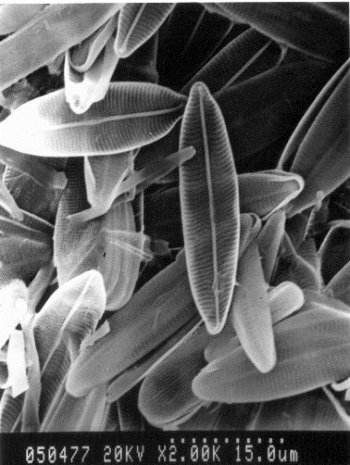
Diatom algae is a kind of tiny, unicellular, photosynthesizing algae. It measures just four to six micro metres in diameter and is enclosed inside a porous skeleton made of silica. Because chemotherapeutic drugs are often toxic to healthy tissue, the researchers have been able to conceal the medication inside the algae.
Researchers genetically engineered the algae to produce an antibody-binding protein on the surface of their shells. In turn, the antibody binds only to molecules found on cancer cells, which means it can ship medication to the target cells.
Voelcker said: “By genetically engineering diatom algae – tiny, unicellular, photosynthesizing algae with a skeleton made of nanoporous silica, we’re able to produce an antibody-binding protein on the surface of their shells. Anti-cancer chemotherapeutic drugs are often toxic to healthy tissues.
“To minimize the off-target toxicity, the medicine could be hidden inside the antibody-coated nano particles. The antibody binds only to molecules found on cancer cells, thus delivering the poisonous drug specifically to the target cancer cells.”
The report authors say that: “The data indicate that genetically engineered bio-silica frustules could also be used as versatile ‘backpacks’ for the focused delivery of poorly water-soluble anticancer medication to tumor sites.”
As algae basically only needs water and light to grow, the authors believe the approach may cut back the price and waste of nano particle manufacturing and has an enormous potential for future cancer treatments. “Though it’s still early days, this novel drug supply system primarily based on a bio-technologically tailor-made, renewable materials hold quite a lot of potential for the therapy of solid tumors including the presently untreatable brain tumors,” Voelcker mentioned.
Genetically engineered diatom biosilica (green) containing liposome-encapsulated drug molecules (yellow) could be targeted to lymphocyte cells in suspension (purple) by functionalizing the biosilica surface with cell specific antibodies. Liposome-encapsulated drug molecules are released from the biosilica carrier in the immediate vicinity of the target cells (inset). Source: Marc Cirera.
Cuba achieved food security with out destroying its environment, and the remainder of the world has finally noticed.
Cuba is presenting a number of of its unique bio-technologies at a global business fair this week, drawing further attention to a sector of the Cuban economy that’s been producing substantial interest overseas.
The Cuban Center for Genetic Engineering and Biotechnology presented numerous biotechnological improvements at the fair: all eco-friendly and biodegrable alternatives to traditional technologies, which may assist the transition towards a more sustainable model of agriculture.
Amongst them was an immunogen called “Gavac,” that provides for better control over ticks and tick-related infections in cattle, according to Dr. Hector Machado of Cuba’s Heber Biotec firm.
Gavac’s formulation reduces the usage of chemical pesticides, stated Machado, while diminishing the danger of diseases being transmitted by ticks, enhancing an animal’s natural capacity to respond to an infection with out increasing their resistance to treatment.
Gavac has already been commercialized in Venezuela, Mexico, Colombia and Brazil. Its awaiting approval to be used in Nicaragua, Panama and Costa Rica.
Other biotechnological merchandise included Acuabio’s range of nutritional complements used in aquaculture in order to boost the growth of larva and enhance their immune systems till they develop into adults, providing them better defences against infections.
The HeberNem eco-friendly pesticide against roundworms, or nematodes, is also increasingly well-liked inside Cuba, and shall be introduced in the fair this year.
The fair – one of the largest business events within the Caribbean – aims to draw investment in Cuba. This year, a number of U.S. corporations are attending the fair, the first time U.S. firms will be attending since the fair was launched 33 years ago.
Cuba has been attracting attention in recent years for its model of agriculture, because it has been able to develop low cost and eco-friendly technologies which have helped the nation to achieve a certain degree of food security with out damaging the environment. With the environmental and financial challenges the world is now facing, the Cuban model – built in a time of crisis, after the United States sanctions – is seen as offering potential solutions to many countries in the world.
If you are using an Android device, then sometimes, you might want to copy files from your Android device into your computer. Or you might want to do a full backup to keep your data safe. There are so many ways with appropriate apps that will help you do partial or full backup of your Android device. But which are the best?
In this article, I will tell you a list of top 5 best free backup apps for Android. These apps will help you backup all your data like contacts, messages, photos, videos, apps, personal files and other files. So if you want to backup your Android device, take a look at the list below:
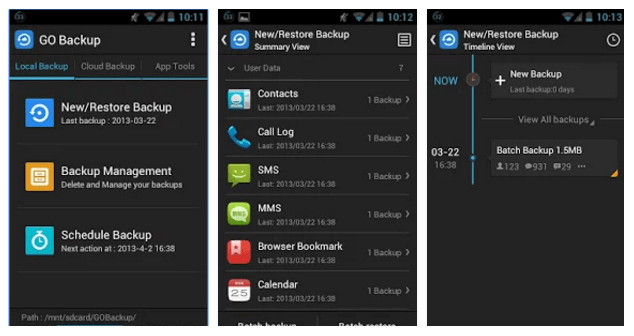
#1. GO Backup & Restore Pro
This app will help you backup and restore user data, apps & its data, system settings and many more. Comes with a friendly user interface, easy to use, and protect your Android device from any dangers.
The GO Backup & Restore Pro app also support to backup and upload the backup files into cloud services like Dropbox or Google Drive. And from these backup files, you can also restore the Android device.
If you want to use Titanium Backup, your Android device must be rooted. It is one of the most powerful backup and restore apps on Android. With the Titanium Backup app, you can backup, restore, freeze your Android apps and its data. It can also help you to protect apps, system apps or external apps and data on your MicroSD card. You can backup and sync it into Dropbox or Google Drive, manually or scheduled. In case you don’t want to store backup files on cloud services, you can use Android File Transfer to copy files from your Android to computer. It’s a fastest feature that supported on both Windows and Mac OS X platforms.
The Helium app does not require you to root the device to use. Along with backup and restore features, it allows you to sync data between Android devices, even both devices are not on the same network.
The app also lets you schedule automatic backups, supports cloud backup and restore (Dropbox, Box.net, Google Drive), and backup to your desktop.
It’s a free backup and restore app for Android. It’s not only helping you backup and restore the backup, but also help you uninstall & freeze the apps, sync to cloud services like Dropbox or Google Drive as well as many other features.
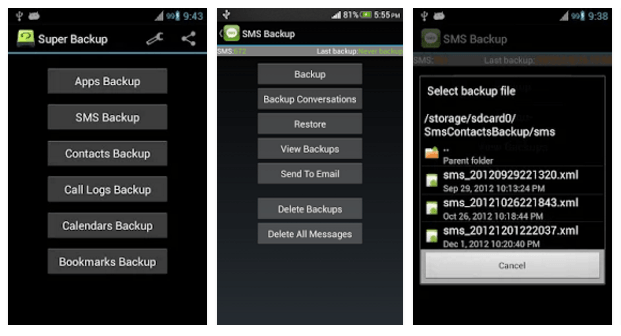
Backup and restore calls, messages, Wi-Fi SSID & password, bookmarks, etc.
This is a fastest data backup and restore app for Android users. With this app, you can backup anything you want from your Android device to SD card, cloud services or a computer.
A few features of this app are required to root device before use like backup & restore data app, backup & restore apps from MicroSD card. If you don’t have time to backup your Android device, just enter your Google Drive, or Gmail account, and then the app will automatically backup and upload the file.
Collections of ants have a outstanding capability to alter shapes and duties based on the demands of their surroundings. When floodwaters hit, they self-assemble and make rafts to stay alive. They will also use their bodies to construct bridges and span gaps. What are the properties of those ant aggregations that enable for this wide selection of talents? New research from the Georgia Institute of Technology says it’s because the bugs are actually liquid-like and solid-like concurrently. The research is presently published in Nature Materials.
The Georgia Tech group probed the mechanical properties of fire ant aggregations by placing thousands of ants into a rheometer, a machine used to test the solid-like and liquid-like response of materials similar to food, hand cream or melted plastic.
The ants were sheared at constant speeds from about 0.0001 rpm up to about a hundred rpm. The researchers discovered that the conduct of live ants was much like that of dead ants: when the aggregation is pressured to stream, live ants let go and play dead. In this case, the viscosity dramatically decreased as the pace increased.
“It’s not unlike ketchup,” stated Alberto Fernandez-Nieves, an associate professor in the School of Physics. “The harder you squeeze, the easier it flows. However with ants, this occurs far more dramatically than with ketchup.”
“Ants seem to have an on/off switch in that they let go for sufficiently massive applied forces,” mentioned David Hu, an associate professor in the George W. Woodruff School of Mechanical Engineering. “Regardless of wanting to be together, they let go and behave like a fluid to stop getting injured or killed.”
This identical conduct can be seen by dropping a penny through an ant aggregation. Ants will stream around the coin as it sinks by the aggregation. This flow takes a comparatively very long time to occur. Nevertheless, when the aggregation is poked rapidly, it responds like a spring and returns to its original form.
“That is the hallmark of viscoelastic behavior,” stated Fernandez-Nieves. “The ants exhibit a springy-response when probed at brief instances, however behave fluid-like at longer occasions.”
The group quantified this by observing the ants’ response to tiny wiggles of the rheometer. They discovered that the ants are equally liquid-like and solid-like. They did the identical experiment with dead ants and noticed that they are also solid-like. This confirmed that live ants are liquid-like and solid-like due to their activity.
“Remarkably, the observed behavior is comparable to what’s seen in materials that aren’t alive, like polymer gels right on the point after they become a gel,” stated Fernandez-Nieves. “That is quite puzzling, and we at the moment are performing many extra experiments to attempt to understand where these similarities come up from and how much they can be pushed. Doing this can hopefully extend our current mind-set about materials, that just like the ants, are active and thus out-of-equilibrium. There’s far more fascinating work we plan on doing with ants.”
Hu has studied ant habits for almost 10 years. Fernandez-Nieves is a physicist who makes use of rheology to understand the mechanics of soft materials and unravel the microscopic origin of their overall properties and behaviors.
Michael Tennenbaum, a graduate research assistant who participated in the research, also compared the conduct of the ant aggregation to jello.
“Think about when you wished to make the most jello possible out of a packet of gelatin. It will be solid, but additionally very liquidy,” he stated. “That’s because there would be just barely enough gelatin to make it solid-like however not enough to make it fully solid. The jello will be both solid-like and liquid-like.”
Hu has additionally used the liquid-like nature of the ants to study self-healing materials.
“In case you slice a dinner roll with a knife, you’re going to end up with two pieces of bread,” said Hu. “However when you slice through a pile of ants, they’ll merely let the knife go through, then reform on the opposite side. They’re like liquid metal – identical to that scene in the Terminator film.”
Hu says it’s this flexibility that permits ants to enjoy the best of both worlds. They are in a position to turn into solids to make things and liquids to avoid breaking into “smithereens.”
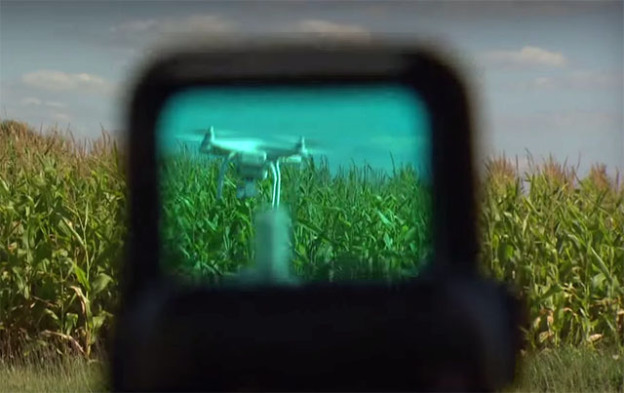
One would have to be quite an expert marksman to shoot a drone out of the sky with a traditional rifle. Firing a bullet with a diameter of around 7 mm and hitting an airborne drone from hundreds of meters away is obviously no simple task. However a brand new rifle unveiled earlier this week might be a game changer for people and organizations seeking to defend their privacy and security by fending off snooping drones, and it doesn’t even fire a single bullet.
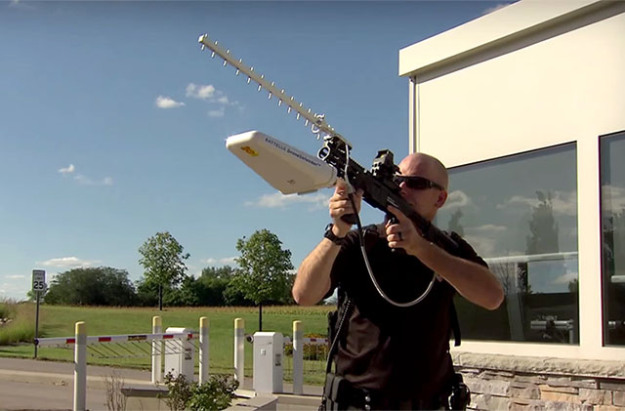
An Ohio-based nonprofit research and development corporation Battelle last week unveiled a 4.5kg gadget it calls the DroneDefender, which it says is “the first portable, accurate, rapid-to-use counter-weapon to stop suspicious or hostile drones in flight, offering critical security protection at home and abroad.” Whereas it’s not a weapon within the conventional sense, it represents an enormous step in the battle against undesirable drone activity.
The DroneDefender is a shoulder-mounted, rechargeable rifle-like weapon that takes drones, or UAVs, offline with a blast of radio waves. The rifle fires waves of electromagnetic energy tuned to common GPS and ISM frequencies, disabling the UAV by blocking it from receiving commands.
Radio waves from a DroneDefender should activate the disabled drone’s safety protocol, making it hover, land or return to its point of origin.
Battelle says the defender could be used to protect prisons, schools or historical sites and of course has military and law enforcement applications as well. No information on the price of the DroneDefender has yet been released, but the device is expected to go on sale in 2016.
There’s a battle against undesirable drone activity?
While the term “drone” has lately had its scope extended to incorporate a variety of simple radio controlled quadcopters aimed at recreational use, not all drones are fun and enjoyable little devices. Drones are used frequently as invasive tools meant to spy on people, or top-secret business operations or even smuggle contraband in the prison. Beyond that, the military, governments and law enforcement are also sometimes targeted by spy drones on reconnaissance missions.
The DroneDefender may be our first look at the right anti-drone technology. The gadget, which appears like a contemporary rifle with an antenna mechanism hooked up to the front — because that’s basically what it is — makes use of targeted radio waves to force the drones out of the sky. This non-destructive technology “utilizes a non-kinetic solution to defend airspace up to 400 meters against UAVs, such as quadcopters and hexacopters, without compromising safety or risking collateral.”
Regulations in many areas obviously prohibit individuals from firing conventional weapons at drones as a method of protection, so the DroneDefender rifle could possibly be a perfect workaround. The device’s current range of about 400 meters will probably be enhanced in future variations.
Source: Battelle
“This is just the kind of tool we need to safely counter a drone threat,” stated Battelle’s lead researcher Dan Stamm. “The DroneDefender can help protect us from those that may want to do us harm.”
“It can help us in numerous settings, from the White House lawn to bases and embassies abroad; from prisons and colleges to historic sites,” Alex Morrow, the technical director, added. “It easily and reliably neutralizes the threat.”
The video embedded below is a demo of the DroneDefender in action. While the demo is simulated because of federal laws in the U.S., Battelle notes that it has been successfully tested within the field many times. The video has been set to private and information regarding this topic no longer seems to be available on Battelle’s website and the URL https://www.battelle.org/media/press-releases/rogue-drones-have-met-their-match has now been deleted and is given a 404 error. Hmm, that is curious We’ll update you after we get a word from them 🙂
Electronic waste or ‘e-waste’ consists of electrical devices or appliances that may be considered non-functional, not needed, outdated, obsolete or electrical products that may have reached the end of their lifespan. With better technology products being introduced, some devices may become ‘trash’ after several years of use.
E-waste is a general term, but it also involves items such as TVs, computers, laptops, tablets, smartphones, and other white goods like refrigerators, washing machines, dryers, home entertainment packages, electronic toys, toasters and electric kettles.
Surprisingly, not all e-waste or discarded devices are not functioning. Some may still be reused, recycled, resold and salvaged, however due to incorrect recycling many of these items are missed and end up in landfill. Any electronic device or appliance used in our homes, offices or what we carry on a day to day basis like cellphones, USBs or laptops can be called e-waste once it loses its value to our daily lives.
Global Issue
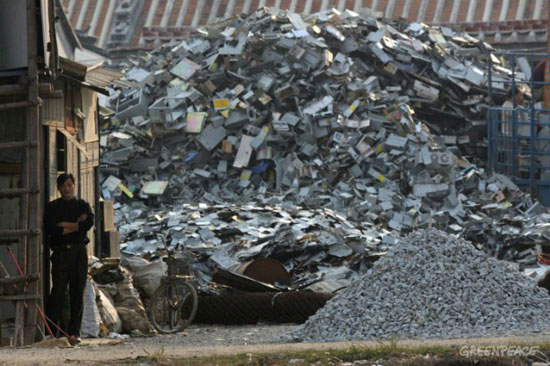
We produce a lot of e-waste and the amount created is very alarming. As this trash is sent to landfills, harmful amounts of toxic substances such as lead, mercury and cadmium are expelled into the environment, particularly into the soil and bodies of water located nearby.
Recent studies have shown that electronic waste has become an environmental challenge worldwide. In the U.S. alone, Americans produce 3.4 million tons of e-waste annually. It’s estimated that over 20 million tons of e-waste are being produced globally. Too much e-waste is being produced each year, but we still fail to confront the problem.
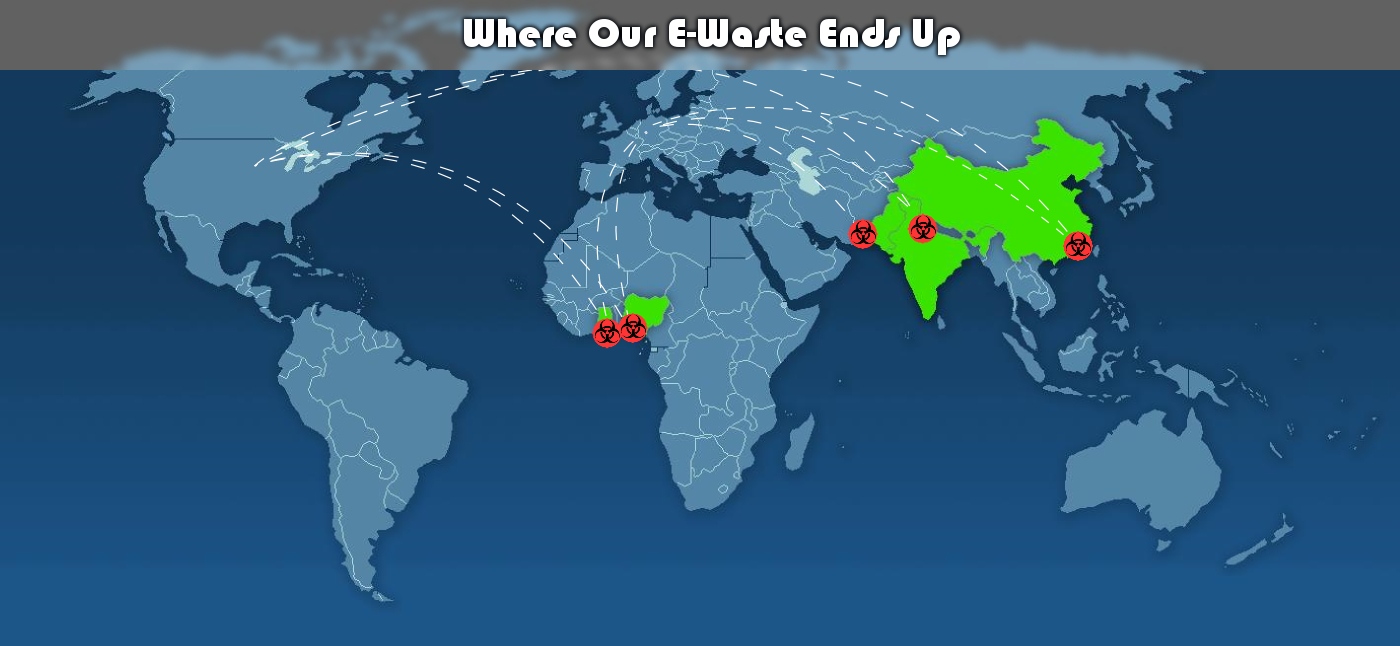
The issue on e-waste is a global concern as each country contributes to the waste level being produced worldwide while the problem is not properly addressed.
Quantifying global e-waste in general is difficult. But we are all aware that large volumes are being thrown in landfills daily where processing of this trash is conducted in a very unsophisticated manner. As a result, this brings potential impact on resource efficiency and the possible dangers to many people around the globe. By engaging different stakeholders and applying scientific systems on the e-waste chain of events, we can start addressing the problem. Involving everyone to take responsibility is a must to fight back the setbacks of e-waste.
E-Waste Benefits
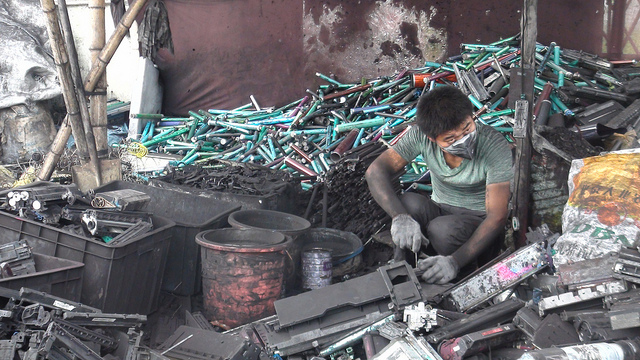
Despite these drawbacks, there may be some benefits from dealing with e-waste. Developing countries are provided access to affordable or low-cost repaired electronics. People are given the opportunity to experience the benefits of technology. Repairing used electronics creates jobs where few opportunities for skilled labor are available.
Many more people will have access to technology through the recycling of dated technology, but even so, the problem still lies in the production of too much e-waste and too little recycling of electronic gadgets.
Responding to the Challenge
Considering e-waste is global concern, everyone can contribute to solve the problem. Initially, we need the experts to teach us how carry out e-waste repair and refurbishment processes. We need to be informed about the different ways to repair our old gadgets or appliances so we can reduce the number of computers or laptops being replaced or thrown away. Repair manuals should also be easier to understand for the user. Having complex instructions adds burden to the gadget owner and pushes him to easily replace his machine.
Teaching the Next Generation
Solving the e-waste problem should start from the grassroots level. Every household has a significant role in combating the issue. Kids, in particular, should be taught the value of reduce, reuse and recycle for their future. Think about the electronic gadgets that may be available at home such as iPads, video games, televisions, cellphones, laptops and other old, operating appliances. When all these gadgets suddenly become ineffective or another appliance with better functions has been bought, these products are being kept and may already be considered e-waste as these devices are no longer needed or may be ready to be disposed.
One way to recycle old smart phones as well as putting some cash in your pocket is through a cellphone buyback company like Sold My Device. They will buyback iPhone, Samsung, LG, and HTC phones from consumers who have upgraded to a newer model and no longer use the older model phones. This is a great way to put these devices into the hands of more people and to keep them out of landfill.
Be Creative with Old Electronics
Don’t throw away old phones and gadgets in the trash. These products usually contain hazardous substances that may be harmful to our environment.
You may have a gadget that you no longer use. Instead of getting rid of it, pass it on to others for reuse. Somebody may find it useful. Give your old, favorite device to a friend who may keep it for daily use. If you can’t find any, donate it for charity in your community. Recycling is another option. Think of innovative ways to use your old gadget!
Revivn is a fantastic initiative that helps enterprises with their old technology by clearing their data and re-purposing the hardware that still has remaining life, providing it to people who lack computer access. These type of recycling start-ups are gaining traction, so keep an eye out for electronic re-purposing companies popping up in your community.
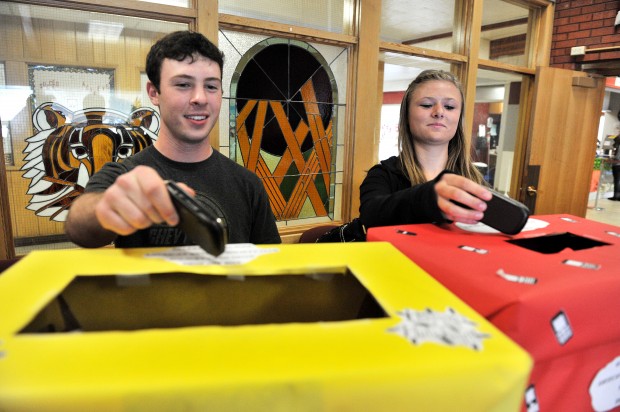
A recycling program set up at a school
Setting up a cellphone recycling drive as a community fundraising activity could be an interesting activity. Many people have old cellphones that they no longer need and just kept them anywhere around the house. The fund drive is an excellent community project as it helps on a grassroots level. Some of these cell phones may be donated to poor communities or traded to a smartphone recycler where the proceeds will go the community fund.
For some tech-savvy kids, learning to repair broken electronic gadgets can be fun. It only takes some effort and patience to learn how to fix the gadgets. This may also be a part-time venture to let old gadgets function again. Xboxes and iPods can be good starting points. A gadget repair project could also be an exciting school activity.
Next time you’re thinking about buying a new gadget, ask yourself “Do I really need it?” If the answer is “Not really”, and your old Galaxy S5 or modem is still working perfectly, maybe it is worth holding off on that purchase and doing your part to reduce e-waste.