Install Windows 10 using the ISO file

0

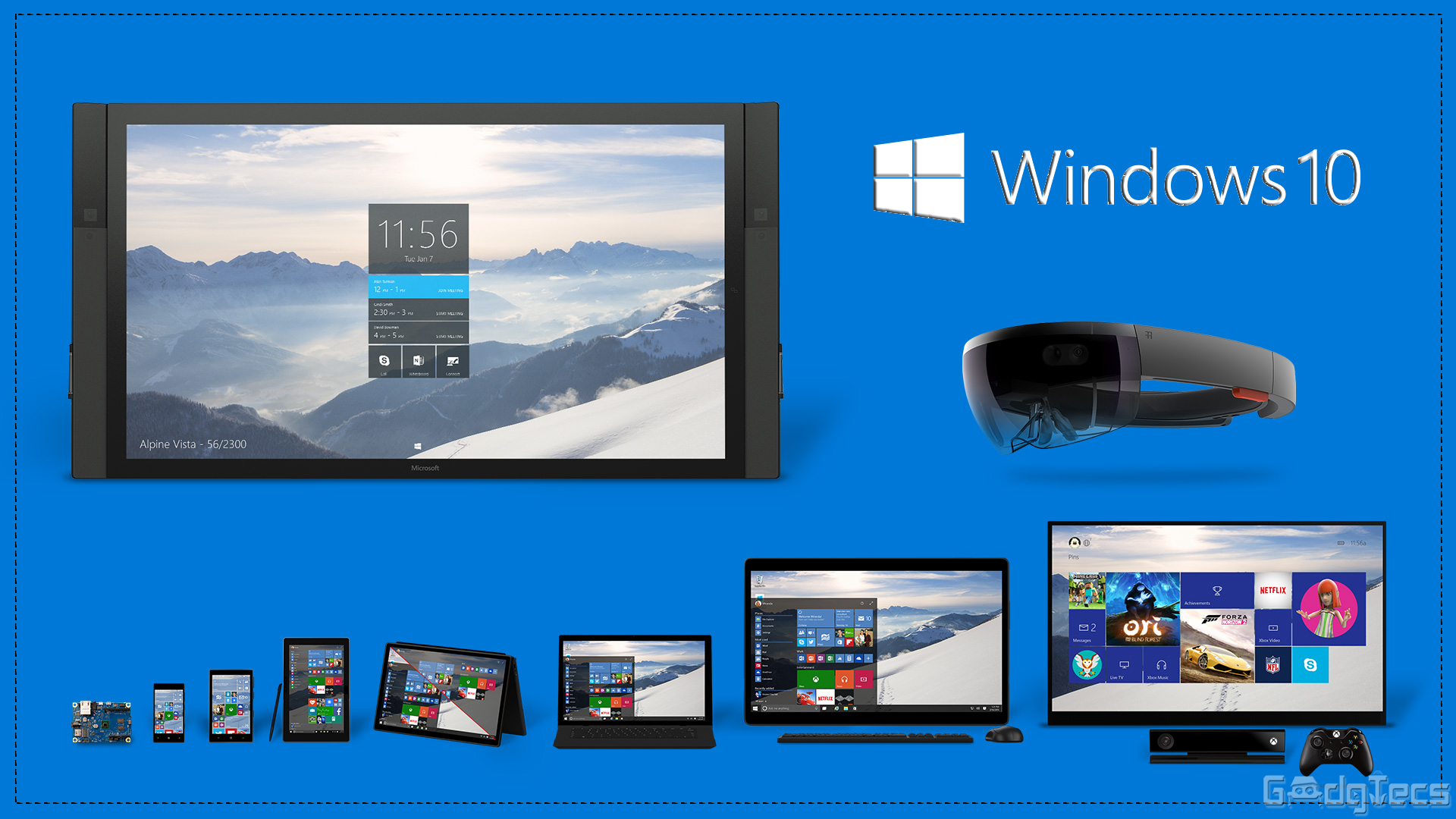
Microsoft has come up with its best Operating System (OS) so far, The MS Windows 10. Initially it is available for free for many users as an upgrade to their Windows 7, Windows 8 or Windows 8.1. For those people who can’t see it as an upgrade option, or for people who were on different OS such as Windows XP, Ubuntu or different flavors of Linux, we have prepared this simple guide to help you install Windows 10, using the official ISO file from Microsoft.

windows 10 iso download and booting

Before we begin Microsoft Windows 10 ISO download, you will need:

  • An internet connection for windows 10 iso download to your PC/laptop computer.
  • Sufficient storage space in your PC or laptop (It may require more than 3 GB).
  • A blank USB or a DVD which has minimum of 4GB empty space.
  • Your system should also meet these system requirements.
  • If you are installing for the first time you will need the product key. For more information, go to FAQ page.

First of all, we’ll download an image file of windows 10.

Click here to download the windows 10 iso file to your pc/laptop. (Alternatively, you can download it using torrents, Click here to download the 64-bit version, and here to download the 32-bit version) It’ll ask you whether you need the 32-bit or 64-bit version. If you are not sure, as a rule of thumb, if you have 4gb of RAM in your system, or more, you’ll need the 64-bit version, otherwise you are fine with the 32 bit one.

After downloading complete, you have to make a bootable USB or bootable DVD for windows 10 installation on your laptop/pc.

We suggest using a USB (pendrive) as they are faster, easier to carry and more durable then a DVD. Plus, unlike a DVD ROM, you can plug in a USB in almost any system out there.

To make a bootable Windows 10 installation USB, we recommend using the free version of Win To Flash. You can also use the official Microsoft USB tool, but we don’t recommend it as it is too buggy.

After you have created a USB, plug it in and restart your system. Go to the BIOS setup (usually by pressing F-12 or DEL) and make sure, in boot selection, USB is selected above your hard disk. Save and exit. When your computer will start, it should automatically take you to the Windows 10 setup.
From there, its as simple as ABC. If you have any trouble, you can ask for help in the comments below.

Users of Yahoo hacked because of Flash

4

Researchers at Malwarebytes, an anti-malware vendor, uncovered a large scale attack targeting Yahoo customers via Yahoo’s advertising network. Malwarebytes notified Yahoo about it and the “malvertising” marketing campaign is now no longer in progress.

The attack was possible as a result of Flash vulnerabilities in unpatched versions of Flash, even perhaps the same vulnerabilities that force Mozilla to block Flash by default in its browser for a number of days until Adobe released a patch. Not all Flash users have updated to the latest version, though, which implies they’re still susceptible to these highly dangerous security exploits.

Yahoo owns large Web properties with an estimated 6.9 billion monthly visits, based on data from SimilarWeb, which implies even if a small proportion of those visits resulted in malware installation on the users’ PCs, it might still affect millions of individuals.

Malvertising is particularly dangerous because it requires no action from the user, and it can download and install itself automatically on the user’s PC (assuming the user is on a Standard account and not an Administrator one, and the User Account Control protection is weak enough to be bypassed, or the malware makes use of native privilege escalation zero-days).

The malware can even install “ransomware” on users’ computers and lock their files till the customers pay the criminals.

Recently, Flash has been a lot in the news, with even Facebook saying it hurts their business. Apple and Twitch have already ditched Flash. Users are advised to either update their version of Flash or disable it completely.

We at GadgTecs think Flash should be abandoned by now. HTML5 is not perfect, but much secure and better alternate.


Upgraded: The flying car called the Terrafugia TF-X

Flying cars have probably been on the back of people’s from the time cars were invented. Many have daydreamed of having one, movies have come come up with concepts and ideas and a few have attempted or are attempting to actually build one.
Humans have gotten fairly good at waiting patiently for a flying car. If we’re being sensible, it might take a long time to produce them and get them into circulation. Many people who dreamt about this won’t be alive by the time one actually rolls of the garage of a common man.

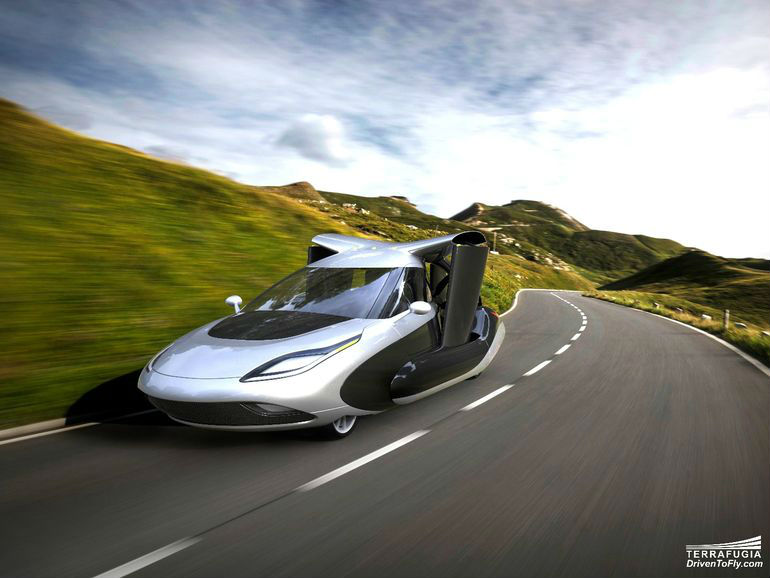
The Italian firm Terrafugia isn’t letting all of that hold it back though – it has released new designs for the TF-X, and still in scale testing, they appear to be very classy. It will require no runway to take off, will have a maximum cruising speed of 200 mph and would be able to fly for about 500 miles.

First announced in 2013, the TF-X is a 4-passenger hybrid automobile, which will able to recharge its batteries both from its engine or by plugging in to an electrical charging station. It is going to be sufficiently small enough to get parked inside a regular garage, and will hopefully be street legal.

If you wish to go into flying mode, the wings will fold out, and twin electrical motor pods on the ends will power up and raise the vehicle off the ground using 1 MW of energy. 2 small helicopter-type propellers will give the required thrust when wanted, and are then folded again when the car is cruising on the road.

terrafugia-tf-x-autonomous
An artists impression. Score: Terrafugia

Flying will be computer operated, so drivers don’t have to worry about knowing how to navigate an airborne car. The Terrafugia website explains that prior to departure, the driver will choose a primary landing zone, plus two backup touchdown zones. If the TF-X calculates inadequate power on board to at least be able to land at one of the two backup landing zones in an emergency, and then make it to the final destination in half-hour, it won’t take-off. It’ll additionally not embark on a flying journey if the weather forecast appears dangerous, or if any of the chosen landing zones are in restricted airspace.

“Operating a TF-X car should be statistically safer than driving a modern automobile,” they claim.

Right now, we are  still looking at 8-12 years of development for the Terrafugia TF-X. They’re yet to produce a prototype of the design, however they’re about to test a one-tenth scale model at the MIT Wright Brothers wind tunnel in the United States. “The wind tunnel test model will be used to measure drag, lift and thrust forces while simulating hovering flight, transitioning to forward flight and full forward flight,” the company says.

Can’t wait until the video above becomes a reality. Till then, daydream on…

Microsoft Windows 10: Out of the “Doghouse”

Disclaimer: The author hasn’t used Microsoft Windows since 2006, and tried Windows 10 just for the sake of this article

Windows 8 was a travesty for Microsoft users. There were people actually rolling back to version 7, or earlier.

Now Microsoft is rolling out Windows 10 with massive improvements—much like a lover in the doghouse trying to win over his partner by showering them with chocolates, flowers and tickets to that “thing they love.”

windows 10

And apparently it’s working. Windows 10 promises to be the software it’s supposed to be, and Windows fans are rejoicing, forgiving Microsoft for the nearly unforgivable slight that was Windows 8.

 So what’s making Windows 10 that new and improved, reformed “lover”?

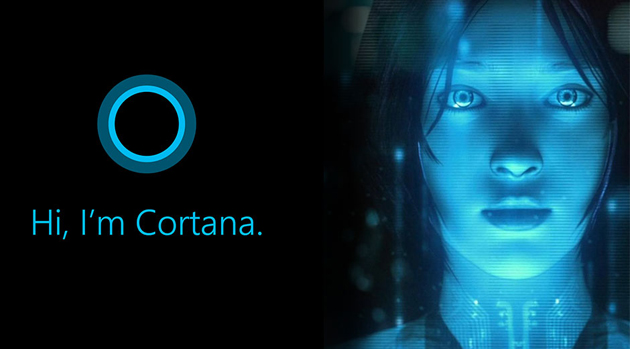
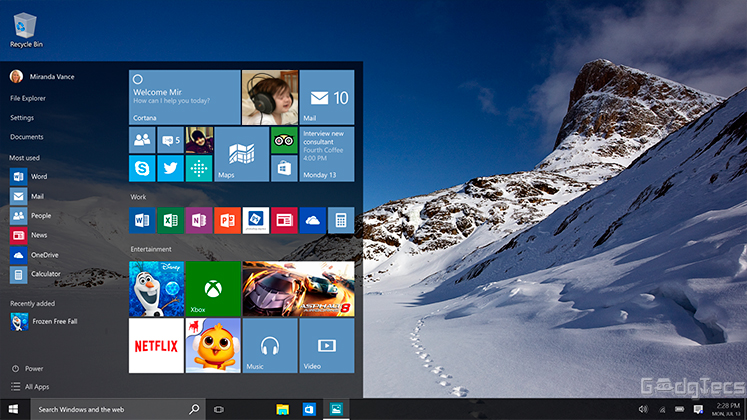
  • 1) Cortana has come to the PC from being relegated to the Windows phone. You can not only record things in “notebooks” so she can learn what your favorite cuisines are, just for example, but you can bring her up manually using a menu, or by voice recognition. So you can use Cortana on the PC while your cell phone safely sleeps.
  • 2) The start menu is resizable. Oh, yes. It used to be the start menu was static. It was the size that Microsoft gave it and if you didn’t like it, too bad, so sad. Now the start menu is all sleeky, sexy and shiny, with the ability for you to give it any size that suits your style. And the start menu gives you the weather, news headlines and whatever else takes your fancy—including dragging and dropping applications that you use often.

It’s one heck of a “make-up gift,” really.

  • 3) Windows 10 has an all new password system built in called “Windows Hello.” How this works is that you can use iris scanners—already built into some computers—as well as face and fingerprint scanners. It’s been tested over and over, it works flawlessly, and Microsoft says that identification can’t be faked by using photos or other dupes. It has to be your actual eyes, whole face or finger.

 And this isn’t just a crazy gimmick. Microsoft’s part of something called FIDO, or Fast Identity Online. It’s an alliance that’s getting banks and other financial institutions on board with this kind of software. You really can’t beat that kind of new technology for making sure your money is safe—because only you can prevent theft with a scan of your irises.

Continuum
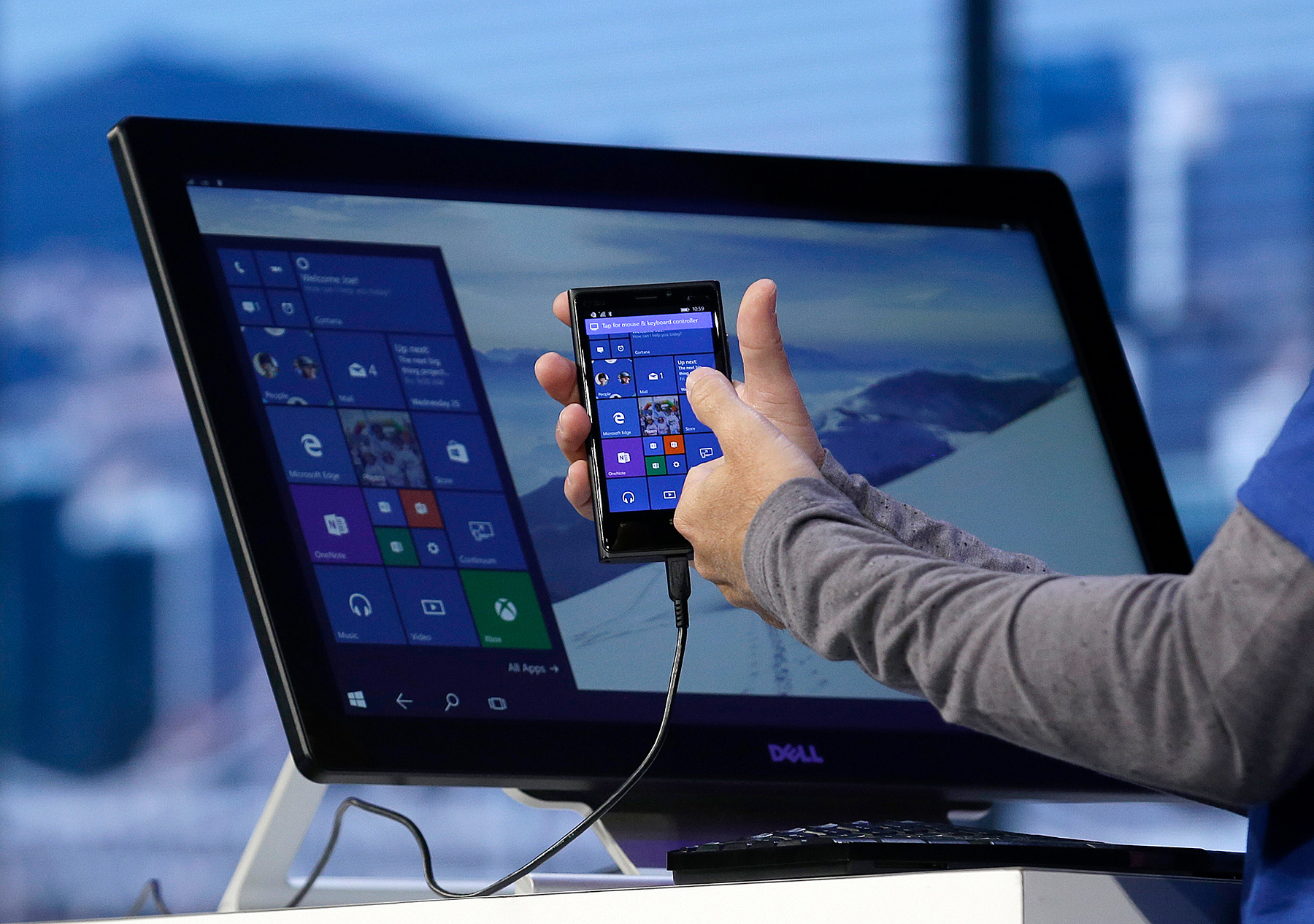
Joe Belfiore, Microsoft Corporate Vice President of Operating Systems Group, demonstrates Continuum for phones at the Microsoft Build conference in San Francisco, Wednesday, April 29, 2015. While Microsoft has already previewed some aspects of the new Windows 10, a parade of top executives will use the conference to demonstrate more software features and app-building tools, with an emphasis on mobile devices as well as PCs. (AP Photo/Jeff Chiu)
  • 4) There’s a new thing called “Continuum” that Microsoft’s developed for Windows 10 that allows tablet and 2-in-1 users to be able to switch between tablet mode and keyboard and mouse mode. Just attach a keyboard and voila! You’ll be given a notification to toggle. Continuum also means that apps are coded “to scale” on all screen sizes. So all apps you use can be run on all devices, from 4-inch screens to great big monitors. Just tug on the window and the app will scale in real time.
  • 5) The new browser has a new name: Edge. And it’s sure pretty sharp-looking. Gone are the clunky-looking browser buttons of Internet Explorer. In fact, Edge is that sexy new sports car you get with a little bit of trade credit from the clunky old jalopy that sometimes worked and sometimes didn’t.

 You can pin tabs, take screenshots and draw as much as you like on it using OneNote, share pages directly from the browser and so much more.

What’s great about Edge is that like a GPS in a fancy car, Cortana is built right in. If you look at a website for a restaurant or a museum, Cortana will give you days and hours of operation, among other pertinent information. Also, if you’re on a site and you come across a word you have no clue about, Cortana’s there to help with that, too. It seems like the only thing Cortana can’t do is jump out of your computer and do all your household chores for you, a la “Rosie” from “the Jetsons.” But at least she can tell you the best laundromat locations. Hey, we have to start somewhere, right?

More about Cortana

Cortana

The really amusing thing about Cortana and other digital assistants like her is that she’s programmed to answer some pretty crazy questions and give equally crazy-funny answers.

One of the answers she’s programmed to give is about the origins of her name, which, incidentally, is the AI of the same name, from the “Halo” game franchise.

Another great answer she gives is about where she comes from: human ingenuity, but a battery’s required. Such a smart-aleck, right?

But she proves to be an even bigger smart-aleck with the answer to the question “Will you marry me?” It’s something along the lines of her working on being more human, and us working on being more digital. Of course, you could say that just purchasing a Windows 10 computer or a Windows phone would be a rough equivalent of “putting a ring on it” since that kind of question is in there at all, and such a big-ticket item is more or less a big financial commitment.

Whatever your reasons for purchasing a computer or other Windows 10 device, you’re bound have tons more fun with it than previous iterations of Windows. Heck, Windows 10’s sexy Jaguar-like looks makes XP look like a big boat from the 70s.

And speaking of relationships, it could easily be said, therefore, that Microsoft is busy trying to repair their relationship with the consumer. And it’s working.

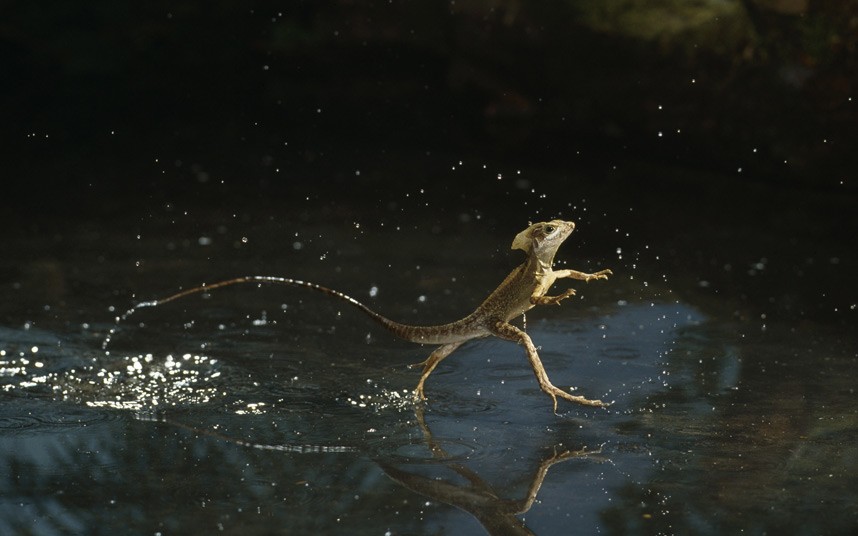
Robot can walk on water and jump from the surface!

2

A robotic Jesus Christ Lizard, that can jump very high from water


​The machine seems to be impossibly floating across the surface of water when, all of a sudden, it whips its 4 skinny legs towards its center in a single clean motion and blasts upward. Leaping with the force of 14g’s, it’s airborne faster than you may blink, easily leaping as fast and as high as it could have on land. However that is no pond-skater, Jesus lizard, or some Gerridae. It’s a mini-robot.

The world’s first robot that jumps from the surface of water using surface tension has been developed by a team of Korean roboticists. The 1 cm tall robot can jump to a height of 14 cm.

Engineers and roboticists at the Seoul Nationwide College in South Korea, led by Je-Sung Koh, have designed the first robot to imitate jumping water bugs like water striders. The robot balances on water and leaps into the air utilizing little more than the force of water’s natural surface-tension. The team stated in the journal Science, that they first needed to work out the mystery of how bugs like the ‘water strider’ manage this feat before they could construct a machine to imitate it.

“Usually, jumping requires a large force to be applied to the surface that you’re leaping from,” Kim says. “[But when jumping] on water, legs will easily penetrate the water, and even in the event you can jump on water, the height will [usually] be lower than jumping on the ground. However, our small robot can leap from water without breaking the surface tension, and can jump on as high as jumping on land.”

Utilizing high-speed cameras, the roboticists recorded jumping water striders (Aquarius paludum) they caught in ponds and streams outside Seoul. After studying their videos in detail, the team broke down the mechanics of how the insects avoid breaking the surface tension during their powerful leap.

One key to their leap is that water striders steadily and gradually increase their jumping power. How do they do that? By wicking their curved legs inward, across the water, keeping much of their leg in touch with the tiny divots each leg creates. This permits water striders to transfer the power generated by the water’s surface tension (which is trying to make it stay flat) into their upward motion.


water strider -  Seoul Nationwide College
2 robots along with a water strider – Seoul Nationwide College

The new robot jumps by utilizing a simple, light clasp that snaps shut via a heat-reactant spring after being zapped by an outside pulse of heat. That clasp generates the force needed to maneuver the legs, causing the robot’s 4 curved legs, that are generously coated with a water-repellent chemical known as Ultra-Ever Dry, to tug inwards. The researchers got the robot’s legs to imitate a water strider’s by constructing them with a super-elastic nickel-titanium alloy.

This new jumping robot isn’t the first to ever stroll across the surface of water (Robostrider claims that title). The work carried out on earlier robots, combined with the team’s study of water striders in nature, helped them design their running and leaping little machine. Mainly, just like an actual water strider, the bot can stand on water because its light weight is spread broadly across its four legs, causing a force that is far lower than force of water attempting to retain a taught surface.


We are moving!

0

We are moving to a new dedicated VPS. Hopefully there won’t be any hiccups, but in case there are, we apologize in advance.

The new server will be faster than the old one, and will reduce the loading times 🙂

and we wanted to remind you, you can send you articles to us at our email address and if they are related to science/technology or gadgets, we’ll be happy to publish them!

cheers


Major Flaw In Android Can Let Hackers In With Just An MMS

Android is the most popular mobile operating system in the Universe: More than 80 percent of smartphones run on it. According to mobile security experts at Zimperium, there’s a gaping hole within the software program — one that might let hackers break into somebody’s cellphone and take over, just by sending a text. According to the BBC, this exploit could affect more than a billion phones world wide.

Just An MMS?

In this attack, the target would not need to open an attachment or download a file that is corrupt. The malicious code would take over immediately, the second you receive a text from the hacker or a compromised system.

“This happens even before the sound that you’ve received a message has even occurred,” says Joshua Drake, safety researcher with Zimperium and co-writer of Android Hacker’s Handbook. “That’s what makes it so dangerous. It might be absolutely silent. You may not even see anything.”

Here’s how the exploit would work: The ‘bad person’ creates a short video, hides the malware inside it and texts it to your number. As soon as the message is received by the cellphone, Drake says, “it does its initial processing, which triggers the vulnerability.”

The messaging app Hangouts immediately processes videos, to keep them ready in the smart phone’s gallery. That means the consumer does not have to waste time looking. But, according to Drake, this invites the malware right in.

If you are utilizing the telephone’s default messaging app, he explains, it is “a tiny bit less harmful.” You would have to view the textual contents before it processes the attachment. But, to be clear, “it doesn’t require in either case for the targeted person to need to play back the media at all,” Drake says.

Once the attackers get in, Drake says, they’d have the ability to do anything — copy or transmit the data, delete it, take over your microphone and camera to watch each and every word and move. “It’s really up to their imagination what they do as soon as they get in,” he says.

Solution

According to Zimperium, this set of vulnerabilities impacts nearly every Android cellphone in use. Drake says he found it in his lab, and he doesn’t believe that hackers are currently exploiting it — at least not yet.

In correspondence in April and May, he shared his findings with Google, which makes the Android operating system. He even sent along patches to fix the bugs.

“Basically, within forty eight hours I had an e-mail telling me that they’d accepted all the patches I sent which was nice,” he says. “You know, that is an excellent feeling.”

Adrian Ludwig, the lead engineer for Android safety at Google, stated that they’ve notified partners and already dispatched a fix to the smartphone makers that use Android.

Whether it gets to the people’s smart phones isn’t in Google’s hands.

According to security firm F-Secure, 99 percent of mobile malware threats in the first quarter of 2014 had been designed to run on Android devices.

Android phones are very completely different from iPhones, for instance. Apple runs a closed system: It controls the hardware and software, the iOS, and it is simple to ship out a major revamp. The firm says 85% of iPhone customers have the latest operating system.

Android Central, a famous blog, has described the challenge of updating the operating system as an “impossible problem.” Earlier this year, an exploit discovered in the Android Web-browsing app was left largely un-patched too.

Updated 5:21 p.m. 27 July: Google Issues Statement + response from companies

Google has said:

“We thank Joshua Drake for his contributions. The security of Android users is extremely important to us and so we responded quickly and patches have already been provided to partners that can be applied to any device.

“Most Android devices, including all newer devices, have multiple technologies that are designed to make exploitation more difficult. Android devices also include an application sandbox designed to protect user data and other applications on the device.”

Smartphone Manufacturers

HTC:

“Google informed HTC of the issue and provided the necessary patches, which HTC began rolling into projects in early July. All projects going forward contain the required repair.”

Silent Circle:

“We patched ‘Blackphone’ weeks in the past!”

Other manufacturers have yet to respond. We will update the page as soon as we get a response from them.

Update: Thanks to reddit user Patchsalts for correcting us. It should have been MMS instead of SMS
United Nation says encryption & anonymity vital to free speech

0
Data encryption is crucial to free speech, because it gives the privacy and safety essential in at this time’s digital age, a brand new United Nations report states. It calls on the US Congress to prohibit Washington from requiring corporations to offer “backdoor entry.”

“Encryption and anonymity, separately or together, create a zone of privacy to protect opinion and belief,” says the report written by David Kaye, a special rapporteur within the UN’s Office of the High Commissioner for Human Rights.

The report, which shall be introduced to the UN Human Rights Council in the coming month, comes as many governments try and put “back doors” in encryption programs to help law enforcement agencies.

Kaye speaks out in opposition to such back doors within the report, calling on the US Congress to “prohibit the Government from requiring companies to weaken product security or insert back-door access measures.”

“States ought to avoid all measures that weaken the security that individuals might enjoy on-line, such as backdoors, weak encryption standards and key escrows,” the report states, including that encryption is critical for artists, journalists, whistle blowers, and plenty of others.

In an interview with the Washington Post, Kaye stated back doors “lead to insecurity for everyone, even if intended to be for criminal law enforcement purposes.”

It comes as the United States continues to participate in an ongoing privacy debate, in an effort to balance privacy rights and national security.

 One aspect of the token is tech firms, many of which have rushed to encrypt their programs following Edward Snowden’s 2013 NSA revelations.

READ MORE: UK Police Admits to investigating journalists for covering Snowden files

However, Obama administration officials are pushing for encryption with a backdoor, or “master key,” which can be utilized by law enforcement and other agencies.

On Wednesday, US Attorney General Loretta Lynch echoed the administration’s wishes, stating that she has “grave concerns” about encryption being utilized by “individuals whose sworn duty is to hurt Americans here and abroad.”

Speaking at a cyber warfare convention on Wednesday, National Security Agency’s director Mike Rogers stated encryption is “not bad,” and that it’s a “fundamental part of the future.”

However, he continued by asking whether or not it was possible to create “some mechanism” which permits governments to “access info that directly pertains to the safety of our respective nations” whereas being “conscious” that citizens’ rights have to be protected.

The reply to Rogers’ question, according to Kaye, is a clear-cut “no.” Kaye says that compromised encryption will merely weaken everybody’s safety on-line.

He added that those with the abilities to exploit the weak factors of compromised encryption would be capable to simply achieve this – whether or not those individuals had been “State or non-State, legitimate, or criminal.”

The report, which has been welcomed by encryption advocates, additionally warns against state prohibitions of anonymity on-line – together with real-identify registration, SIM card registration, or banning of anonymity instruments such as Tor (or the upcoming HORNET), adding that such requirements intrude with the freedom and liberty of expression.

Russia’s Stealthy Fifth Generation Nuclear Bomber in Big Trouble

Speaking at the Samara-based Kuznetsov Plant of the United Engine Corporation, a Russian defense company, Russian Deputy Defense Minister Yuri Borisov told reporters that manufacturing of the PAK DA has been delayed so that Tupolev Tu-160M2 bomber’s production can be resumed.

russian tu 160
A Russian Tu-160 about to takeoff

The Kremlin planned on introducing its fifth-generation PAK DA bomber into service beginning in 2023. However, the PAK DA project has been pushed back again and Russia will instead concentrate on manufacturing of an updated version of the Soviet-era Tu-160 (Russian: Туполев Ту-160, NATO reporting name: Blackjack) supersonic nuclear bomber.

“According to the plans, serial production of the [Tu-160] aircraft new version [the Tu-160M2] is to be implemented starting from 2023,” Russian Deputy Defense Minister Yuri Borisov told at a press conference on 17th July. “The PAK DA project will be somewhat shifted beyond [2023], otherwise there is no sense in it.”

According to Russia Beyond the Headlines, the decision to begin constructing the updated Tu-160M2 at the expense of the fifth-generation PAK DA was made by Russian President Vladimir Putin in May.

According to the National Interest, this decision to modernize the Tu-160 , when the Russian Economy is in a tumble could ultimately lead to the complete abandonment of the PAK DA. The enhancements that the new TU-160M2 will feature embody many designs that were intended for the PAK DA, and the modernized aircraft is “also expected to have a service life of around 40 years.”

Among the upgrades for the TU-160M2 are a newly modernized engine that will enhance the plane’s flight range by over a thousand kilometers, along with several new missiles that will improve the aircraft’s combat capabilities, IHS Jane’s 360 notes.

This is not the only occasion of Russia having to scale back on its military modernization ambitions. The Kremlin is also facing problems in financing its third-generation Armata tank. Harvard scholar Dmitry Gorenburg estimates that Russia will only be able to field a maximum of 330 Armata tanks by 2020, a fraction of the 2,300 initially planned.Moreover, the Moscow Times reported that the programs which have experienced a delay on account of sanctions include: “manufacturing of Navy guard ships, Beriyev Be-200 amphibious planes, Vikhr anti-tank missiles, remote control & radio monitoring equipment for Igla surface-to-air missiles, and weapon launch systems for Tupolev-160 strategic bomber planes.”

Moscow’s failure to follow projections for top notch weaponry is a common theme. There’s a pattern of Russia announcing huge projects before drastically scaling back its plans. In March, for example, Russian media outfit RT announced that Kremlin would eventually be able to deploy eighty PAK TA transport super-planes — even though Russia has not made a single prototype of the aircraft.

In scaling back the Armata and these two advanced aircraft, the Russia clearly realizes that it is significantly easier and more cost efficient to modify existing programs for future use — although it isn’t as exciting from a propaganda point of view.

UK Police Admits To Investigating Journalists For Covering Snowden Files

0

Remember when a journalist David Miranda was detained at the Heathrow Airport for 9 hours during transit in 2013? The reason given was an anti-terrorism regulation, indirectly claiming that journalism can be terrorism. Apparently, UK law enforcement is doubling down on that claim, with a the brand new admission that there is an ongoing and open criminal investigation into the reporters who’ve printed from the  Snowden leaks.

Snowden’s first disclosures from the National Security Agency (NSA) had been revealed in June 2013 by Glenn Greenwald in The Guardian, a UK based newspaper. Greenwald, now residing in Brazil, left in October 2013 to co-found The Intercept.

The Guardian’s revelations included particulars about dragnet D.R. Internet spying operations, the publicity of which infuriated high British authorities officers and led to the newspaper being pressured into destroying exhausting drives containing copies of the paperwork.

Apparently the UK law enforcement has gone bonkers and are going to great lengths to intimidate journalists, even once forcing the Guardian to destroy a laptop which contained the Snowden files, sighting the ‘National Security’.

A secretive British police investigation focusing on journalists working with Edward Snowden’s leaked paperwork stays ongoing two years after it was quietly launched.

The intimidation has been taken up a notch. Greenwald’s new publication, the Intercept, has been engaged in an ongoing Freedom of Information battle with the Metropolitan Police Service of UK to find out out if the Met is investigating journalists, and the police, after denying to confirm for many months, have finally confirmed in an email to Ryan Gallagher, an author of The Intercept, that the police is in fact still criminally investigating those journalists involved with the Snowden files. The email from the Police states that:

“the mps can confirm that it continues to conduct investigation into the events as described above”

As the reporters didn’t really commit a crime, it appears that the only motive for the investigation is to harass journalists who may publish such articles or might do so in the future.

The Intercept reports that:

“The main reason the investigation is still carrying on is probably to create a degree of uncertainty around journalists and their advisers about what can and cannot be done in terms of carrying documents,” said Stephens, who is a companion at London firm Howard Kennedy. “They are trying to shake down and instill fear into journalists and discourage them from exposing issues that have to do with national security.”


Links in the Article