Massive Hack Hits US Government!

0

Hackers have personnel data on every federal employee

WASHINGTON (AP) — Hackers stole personnel data and Social Security numbers for each and every federal employee, a government worker union stated Thursday, saying that the cyber theft of U.S. employee data was more damaging than the Obama administration has acknowledged.

hacked

Sen. Harry Reid, the Democratic leader, said on the Senate floor that the December hack into Office of Personnel Management data was carried out by “the Chinese” without specifying whether he meant the Chinese government or individuals. Reid is one of eight lawmakers briefed on the most secret intelligence information. U.S. officials have declined to publicly blame China, which has denied involvement.

J. David Cox, president of the American Federal of Government Employees, mentioned in a letter to OPM director Katherine Archuleta that based on OPM’s internal briefings, “We believe that the Central Personnel Data File was the targeted database, and that the hackers are actually in possession of all personnel data for each federal worker, every federal retiree, and as much as a million former federal employees.”

U.S. Office of Personnel Management building in Wa …
U.S. Office of Personnel Management building

The OPM data file contains the records of non-military, non-intelligence executive branch employees, which covers most federal civilian employees but not, for example, members of Congress and their staffs.

The union believes the hackers stole military records and veterans’ status information, address, birth date, job and pay history, health insurance, life insurance, and pension information; and age, gender and race data, he said. The letter was obtained by The Associated Press.

The union said it is basing its assessment on internal OPM briefings. The agency has sought to downplay the damage, saying what was taken “could include” personnel file information such as Social Security numbers and birth dates.

“We believe that Social Security numbers were not encrypted, a cybersecurity failure that is absolutely indefensible and outrageous,” Cox said in the letter. The union called the breach “an abysmal failure on the part of the agency to guard data that has been entrusted to it by the federal workforce.”

Samuel Schumach, an OPM spokesman, said that “for security reasons, we will not discuss specifics of the information that might have been compromised.”

The central personnel data file contains up to 780 separate pieces of information about an employee.

Cox complained within the letter that “very little substantive information has been shared with us, despite the fact that we represent greater than 670,000 federal staff in departments and agencies throughout the executive branch.”

The union’s release and Reid’s comment in the Senate put into sharper focus what is looking like a massive cyber espionage success by China. Sen. Susan Collins, an intelligence committee member, has also said the hack came from China.

Senate Minority Leader Sen. Harry Reid of Nev. speaks at a news conference on Capitol Hill in Washington, Tuesday, June 9, 2015, following a Senate policy luncheon. (AP Photo/Molly Riley)

U.S. intelligence officials say China, like the U.S., spies for national security advantage. Unlike the U.S., they say, China also engages in large-scale theft of corporate secrets for the benefit of state-sponsored enterprises that compete with Western companies. Nearly every major U.S. company has been hacked from China, they say.

The Office of Personnel Management is also a repository for extremely sensitive data assembled by means of background investigations of staff and contractors who hold security clearances. OPM’s Schumach has stated that there’s “no proof” that information was taken. But there’s rising skepticism amongst intelligence agency staff and contractors about that claim.

In the Senate on Thursday, Democrats blocked a Republican effort to add the cybersecurity bill to a sweeping defense measure. The vote was 56-40, four votes short of the number necessary.

Democrats had warned of the dangers of cyber spying after the theft of government personnel files, but Democrats voted against moving ahead on the legislation, frustrated with the GOP-led effort to tie the two bills together. President Barack Obama has threatened to veto the defense legislation over budget changes by the GOP.

“The issue of cyber security is simply too important to be used as a political chit and tucked away in separate legislation.” Sen. Chris Coons, D-Del. mentioned.

___

Associated Press writers Donna Cassata and Eric Tucker contributed to this report.

Are You in Depression? Get Rid of it Now!

3

What Is Depression?

Everyone occasionally feels blue or sad. These feelings are usually short-lived & pass within a couple of days. But when you have depression, it interferes with daily life and causes pain for both you and those who care about you. Depression or depressive disorder is a common but serious illness.

<Sponsered Post>

depression

There are several forms of depressive disorders.

Major depression,—severe symptoms that interfere with your ability to work, sleep, study, eat, and enjoy life. An episode can occur only once in a person’s lifetime, but more often, a person has several episodes.

Persistent depressive disorder—depressed mood that lasts for at least 2 years. A person diagnosed with persistent depressive disorder may have episodes of major depression along with periods of less severe symptoms, but symptoms must last for 2 years.

depression shadow

Some forms of depression are slightly different, or they may develop under unique circumstances. They include:

  • Psychotic depression, which occurs when a person has severe depression plus some form of psychosis, such as having disturbing false beliefs or a break with reality (delusions), or hearing or seeing upsetting things that others cannot hear or see (hallucinations).

  • Postpartum depression, which is much more serious than the “baby blues” that many women experience after giving birth, when hormonal and physical changes and the new responsibility of caring for a newborn can be overwhelming. It is estimated that 10 to 15 percent of women experience postpartum depression after giving birth.

  • Seasonal affective disorder (SAD), which is characterized by the onset of depression during the winter months, when there is less natural sunlight. The depression generally lifts during spring and summer. SAD may be effectively treated with light therapy, but nearly half of those with SAD do not get better with light therapy alone. Antidepressant medication and psychotherapy can reduce SAD symptoms, either alone or in combination with light therapy.

Bipolar disorder, also called manic-depressive illness, is not as common as major depression or persistent depressive disorder. Bipolar disorder is characterized by cycling mood changes—from extreme highs (e.g., mania) to extreme lows (e.g., depression).

Depressed head gadgtecs

Treatment

Once diagnosed, a person with depression can be treated in several ways. The most common treatments are medication (which can be costly and have a lot of side effects) and psychotherapy (can be very costly and time consuming!). Fortunately, there is another way to cure depression! It is called the Destroy Depression System, it costs a fraction of any others, has NO side effects and comes with a 60 day money back guarantee! Several people have already tried and benefited from it. You can try it risk free NOW. There is nothing to lose. You’ll thank us! The return rate for this system is less than 1.8% (meaning out of 100 people who buy it, less than 2 choose to return it for a full no questions asked refund!). USE THIS LINK and get a MASSIVE DISCOUNT + 3 FREE GIFTS. Do tell us your results (good or bad) and we’ll publish them (if you allow it).

money back

Directory World
Technology Directory
ASR Search Engine

All you need to know about iOS 9: ProActive – Bye Bye Home Screen?

0

iOS has never mattered more. THE HOME SCREEN has always been at the heart of the iPhone experience. At Apple’s World Wide Developer Conference (WWDC), Apple signaled that they’re moving on. What we noticed on stage at was more than just an annual update to Apple’s OS. It’s a glimpse at how Apple’s operating systems are being unified as it builds out new devices and platforms. Critics say it’s simply copying Google’s Android.

letter 9 for ios 9


It’s Proactive

The main feature of iOS9 is Proactive Assistant. Following Google Now’s lead, iOS 9 will attempt to anticipate what you need when you want it. If you fire up Weather every morning right when you get up, iOS 9 will endeavor to note the habit & make the app available in the morning as a shortcut on the lock screen. When you plug in the headphones, the OS will serve up music based on your location, eliminating the need to find the music app. These new features join the lock screen’s present choices for circumventing the home screen grid: the swipe-up control center and swipe-down “today” window.

Aside from these shortcuts, iOS 9 will provide a new interactive hub in the form of a personalized search panel. Here, towards the left of the home screen, you’ll notice shortcuts for contacts and apps, both filtered by context. It’s like the Home Screen 2.0—instead of a dumb grid, it guesses who you might wish to speak to or what you might want to do, based on where you’re at, what time it is, and what you are doing. It’s worth noting that the Apple Watch already works like this. On the wrist, notifications and messaging shortcuts take precedent over the home screen of apps.

demo io9

Proactive can also do things like suggest who unknown callers could be when a number pops up on your display. It might recommend apps that you have a tendency to use throughout certain times of the day—or even suggest locations close by. There’s also an API for search, an update that was met with wild applause and cheers from the crowd at WWDC. This kind of functionality will really feel familiar to Google Now (Android) users, however for iOS fans, it’s a significant update.

Security & Privacy

Security was another major talking point , Apple is enabling two-factor authentication for your ID. (Again, we note similarities to Google here)

After all, now that this more intelligent and observant iOS will have more details about how, when, and where you use your smartphone, privacy will become an even bigger issue. While Apple’s senior vice president didn’t spend a lot of time on iOS, he did spent a big proportion of the presentation promising that Apple won’t be collecting that data on your usage—saying it’s going to be anonymous, and primarily based on a randomized identifying number.

Notes, Transit and News

iOS 9 includes one entirely new app, in addition to big improvements to Maps and Notes.

First up, a long-awaited and desperately-needed addition to Maps that includes public transportation routes and other contextual tweaks. It remains to be seen if it will work as well as Apple says it’s going to, but it surely seems more useful, with routing for subways, buses, and other types of public transit. It’ll even let you know details like where to enter the subway for the fastest access to the right train. There’s better search functionality, too, in addition to a predictable Apple Pay tie-in. Apple wants you to know that McDonald’s takes Apple Pay before you trek up there!

apple maps

Then there is ‘News’, a brand-new app that’ll replace Newstand and look a bit like Flipboard. ‘News’ appears to be simple, clean method to read on your iPad/iPhone that pulls material from Washington Post, The New York Times, the BBC, and many more.

iPad Multi-tasking

An app called SplitView allows you to pull two apps up in a split screen, either in a 50/50 or 70/30 split. You will have the ability to scroll both apps simultaneously.

multi-tasking on ipadThere’s a feature known as SlideOver that lets you swipe another app in from the side, and Picture-in-Picture is exactly what it sounds like: You can keep a little viewer in the nook while you go about your Facebook stalking. There’s also a cursor now: If you place two fingers on the keyboard, it’ll work like a mouse trackpad.

SlideOver and Picture-in-Picture will be available on the iPad Air and up, Mini 2 and up. Split View is only for the iPad Air 2. These features could be a warm-up for Apple’s upcoming iPad, because the next model is anticipated to be super-sized and perfect for keeping more than one app pulled up at once.

Battery

Battery life is improved, updates are actually faster to install, and Apple says that the overall security has been tightened. For instance, your iPhone now knows if it is face down on the desk and prevents the display screen from turning on even if you get a message.

A brand new Low Power mode allows you to prolong your battery life by shutting down energy-hungry features briefly.

Fonts

After two rocky years as Apple’s typographical identity, the font ‘Helvetica Neue’ is being replaced by an in-house developed font, San Francisco, as the default font on both OS X El Capitan and iOS 9.

The Size

iOS 8 was about 4.6 gigabytes! Users were outraged and exasperated while trying to update their devices! A debacle that Apple took note of, as the size of iOS 9 is 1.3 gigs, about 3.5 times smaller than its predecessor.

You want it?

iOS 9 shall soon be out as a free update later this fall and it’ll probably be available for all models of iPads and iPhones (good news for the older iPhone users) . However, there may be a public beta coming in July—which you can sign up for right here.

Check out this iPhone manager for iOS transfer

Power Over WiFi: Charge your devices from 28 feet away!

Energy beamed to camera via modified Wi-Fi signals

Everyone hates wires, especially when you have a LOT of them. A cable to charge your android phone, another one to charge your iPad and not to mention the dozen or so for Laptops, Desktop Computers and even Printers. Soon, you might not need any power cables! That’s the promise of new research from a team, which has developed what it’s calling a “power over Wi-Fi” system that can recharge batteries through the air, from up to 28 feet away. The system has been developed by PhD student Vamsi Talla and colleagues at the Sensor Systems Lab at the University of Washington in Seattle.

wifi charging

The system contains just two components; an access point (a router), and custom-built sensors. “The goal of the sensors is to harvest RF (radio frequency) energy and convert it into DC power,” explains Vamsi Talla, a researcher on the project. “The second piece, the access point, there we actually developed a customized solution on it, just a software modification that will enable the access point to act both as a good power delivery source and, simultaneously, also as a Wi-Fi router.” In other words, it achieves power over Wi-Fi in a manner that both works with pre-existing hardware, and doesn’t interfere with your Internet connection in any way.

Those are two vital distinctions. Although Energous already sells a device that transmits power through the air via RF signals. It requires completely new, dedicated hardware, though, and loses the WiFi aspect. The UW research, meanwhile, can coexist with conventional WiFi routers, pushing both data and power simultaneously. Or, more accurately, efficiently harnessing the power that your router already puts out.

As for WiFi interference, there’s a hard cap on how much output of any form your router can handle at once, sort of like how putting extra ketchup on a hot-dog leaves lesser room for mayo. But the UW team came up with a intelligent workaround to ensure neither charging nor connectivity goes sideways.

“If we wanted to just blast as much power as we possibly can, that would kill your WiFi, because you’d have power on the channel all the time,” explains Bryce Kellogg, another researcher on the project. “We optimized the router so that we can deliver what seems like, to the sensor, constant power without impacting your WiFi too much. Instead of having continuous power on one of your Wi-Fi channels, we split it among your three non-overlapping WiFi channels. That allows us to deliver about the same amount of power without impacting any one channel very much.”

“The work we’ve published, you could think of it as the first proof of concept,” said Talla, the inventor “But it’s by no means the optimal solution. We’re actively working to make it better.”

The team has already tested this out with temperature sensors, a camera, and rechargeable batteries, powering all from ranges of 20 feet, 17 feet, and 28 feet, respectively. If those applications seem a little small-fry, don’t blame them. Blame the FCC, which has imposed a one-watt limit on router power output, for reasons that are mysterious to Talla and company. Should those restrictions loosen, you could start to see far more robust applications.

The good thing is, you won’t just see them in a lab. The UW team has already installed functional systems in six Seattle-area homes, using Asus RT-AC68U routers outfitted with customized code. It’s worth noting both that the router model they used is several years old, and in the end inconsequential. It could just as easily be the router in your home right now. “In theory, it’s only a firmware upgrade,” says Talla, with the caveat that hardware manufacturers would need to be on board. While they don’t have any deals in place presently, the crew is actively exploring the likelihood.

wifi router
The power beam system uses modified wi-fi routers and hubs

In a paper detailing their work, Mr Talla and colleagues stated, had the potential to help power the small, low-power sensors and actuators that are expected to become common in homes and workplaces as part of the internet of things.

“The ability to deliver power wirelessly to a wide range of autonomous devices and sensors is hugely significant,” said a story about the research in MIT‘s Technology Review. ” Powi-fi could possibly be the enabling technology that brings the internet of things to life.”

Facial Recognition for Birds is Here!

Ever saw some birds and wondered what species the bird are? Well, now there’s an app for that! Almost! The Cornell Lab of Ornithology and Visipedia are collaborating to develop computer vision technology to identify birds in photos. They have released a beta product called Merlin, where right now, they can identify through a photo (and some hints for better results, like where was this picture taken, if you know) about 400 North American birds! We agree, that’s not a lot, but wow, that is something! Hopefully soon, they will be able to identify a lot more than 400 birds!

blackburnian bird

Merlin can recognize 400 bird species, including the Blackburnian warbler shown above.

To begin, you simply add a picture of the unknown bird in question to the web site, enter the location and date that the image was taken (you can leave the fields blank if you are not sure). You’ll be prompted to draw a box around the bird, click on its beak tip, eye, and tail tip. Merlin does the rest, querying the eBird.org citizen science database’s 70 million entries to present you with the most probable species matches, together with pictures and sounds.

The site is still in beta, and the developers are the process of making a smartphone app. But that’s no reason you shouldn’t give it a go now: Because the picture identifier uses machine learning techniques, it has the potential to improve the more we use it. Imagine seeing any bird anywhere, just take out your smart phone and zap, you’ll know the name of the bird, species, life, age, favorite foods etc etc.. well, that reality is now very close! A true gift for the bird-watchers I say! Just imagine a world where you could go on a hike and, utilizing your cell, quickly determine whether or not that plant, mushroom, spider or snake you came across was harmful or could be eating as food!


Air Force intel uses ISIS ‘moron’s’ selfie pics to target airstrikes

0

isis

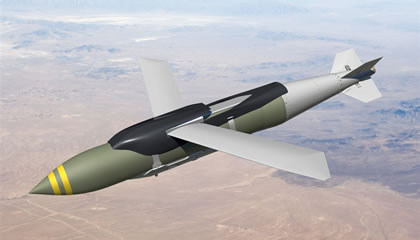
Who knew selfies could be so dangerous? According to the Air Force Times, Islamic State militants, who have allowed selfies, took some in front of a secret headquarters in Syria or Iraq, which surfaced on their social media. The pictures caught the attention of USAF Intel, who, 22 hours later, took the entire building out with three JDAM-equipped bombs.


jdam


General Hawk Carlisle, commander of Air Combat Command, described the Air Force’s successful use of social media intel to take out an ISIS target at a speech Monday in Arlington:

The [airmen are] combing through social media and they see some moron standing at this command. And in some social media, open forum, bragging about command and control capabilities for Da’esh, ISIL, And these guys go ‘ah, we got an in.’

So they do some work, long story short, about 22 hours later through that very building, three JDAMS take that entire building out. Through social media. It was a post on social media. Bombs on target in 22 hours.

It was incredible work, and incredible airmen doing this sort of thing.

Hak Carlisle, USAF
Gen. Hawk Carlisle

ISIS is infamous for exploiting social media for recruitment purposes. Carlisle’s comments came two days before a House Homeland Security Committee hearing on the Islamic State group’s use of social media. The group, experts told Congress, has published 1,700 pictures, videos and other publications, reaching up to 200,000 readers on Twitter and other sites. The media are used by “core propagandists” to recruit and, in the case of the airstrike, attempt to show off their ability. “Their best way to make money was oil collection and refining capacity, and we’ve taken out about 90 percent of that,” Carlisle added.

So, ISIS should take note, its’ own propaganda tools can be used against them, and that too in a deadly manner! Previously, analysts have also used the militants social media pictures in identifying their locations as well and once as ISIS Jihadi from New Zealand accidentally shared his location on Twitter! I wouldn’t be surprised if ISIS bans social media now or severely restricts its use, by doing some beheadings and showing them off on…..?

The US Air Force wants Suicide Drones!

0

The United States Army is looking for Suicide Drones! Or to put it mildly, they want cheap attack UAVs that they can afford to lose in battle!


MQ-9 reaper
A fully armed MQ-9 Reaper taxis down an Afghanistan runway. Source: WikiMedia


Compared to manned flights, military unmanned aerial vehicles are safer and  cheaper. Well, compared to $148 million+ for the Air Force’s F35A, a Reaper sets the US tax payers back by about $13 million. That’s 11 times less, but still a big figure! So the military wants something that still hits the targets, but also is okay if lost in battle. At least that’s the rationale behind the “Low Cost Attritable Strike UAS Demonstration,” posted online on the 4th of June 2015. To encourage the design of an inexpensive and deadly drone, the federal government is willing to reimburse up to $7,450,000 for developing the concept in a month.


The solicitation notes that aircraft are increasingly costly, so the USAF needs drones that “provide dramatic reductions in cost with a purpose to bring ‘mass’ to the engagement, and obtain a cost imposing impact on future adversaries.” Which is to say: a good quantity of drones which can be low-cost enough so that it really becomes costly to shoot all of them down. The solicitation goes on to say that these drones will not be designed for the lengthy haul. Traditionally, drones are designed like other Air Force aircraft, dependable and with a protracted life expectancy, however the Air Force desires to chill out these requirements for a low-cost drone, to give them something useful at a much lower cost.


How much lower? While it is difficult to say what’s low cost in a service that views $148 million fighter jets as essential, experts anticipate that the value of the drone would be between Half a Million Dollars to a Million Dollars, the cost of a cruise missile.


We’ve seen indicators of this coming. DARPA is exploring airborne aircraft carriers, where cheaper cargo planes launch wings of drones. In addition, DARPA is engaged on a system for drones hunting in packs, as lethal robotic groups in hostile skies. Honestly, the strategy wouldn’t be a lot different than what the militants have ladopted lately, Suicide Bombing. It’s almost impossible to stop a person who has decided to sacrifice himself for the “sake of greater good” (or Kamikaze, as they were known in World War II). With the advent of these drones, the cost of suicide bombings will be greatly reduced! The robot’s won’t mind giving up their lives for the State (as long as they don’t develop AI… or will they?)

Bake Your Bread While Cutting It

0

Ever wanted to toast bread while cutting it?

It’s from the future! There’s a scene in the 2005 The Hitchhiker’s Guide to the Galaxy movie where a lightsaberish bread knife is not only able to slice a loaf, it toasts it at the same time. That was carried out with special effects, but a crazy British inventor Colin Furze has gone and built a similar contraption in real-life, and his creation works. Called the FurzoToasto, it is an electric knife that toasts bread while it slices.

toasting knife

Using a modified microwave transformer (Obvious Caution: Do NOT try this at home… unless of course you are a loopy inventor yourself), some copper pipes, and some heavy-duty wiring, the FurzoToasto simply runs a current through a saw blade until it turns red hot—visible when Furze turns all the lights off in his garage workshop. He demonstrates how to make this device in a brilliant Youtube video.

The cherry on top? Applying butter!! Oh, we are thinking, maybe it can cook meat too while cutting? That would be awesome2!

ODIN – The tiny robot head laser-projected mouse

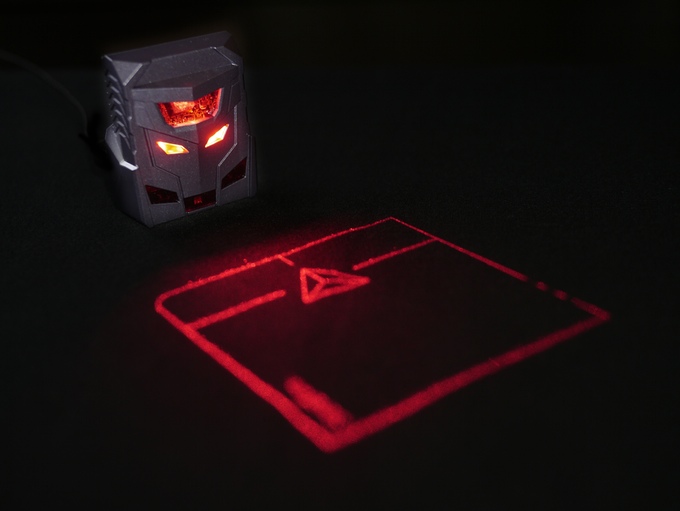
robot mouse


If you do not wish to be reliant on a trackpad, and tire of dragging a full-sized mouse around, then the ODIN, a laser-projected mouse, may be worth a glance.

laser keyboard

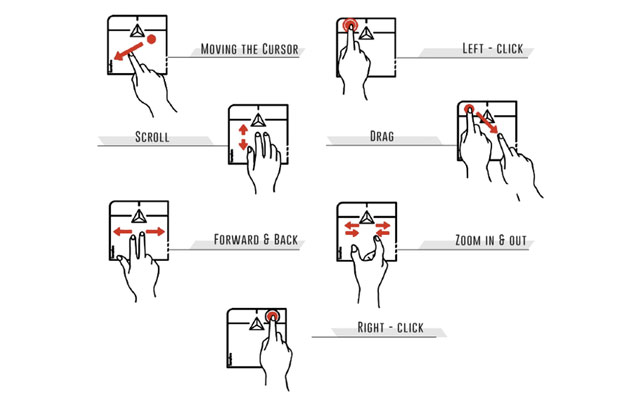
You’ve seen laser projected interfaces that mimin keyboards, however the crew that made ODIN says it is the world’s first laser-projected mouse interface. Which is cool… as long as you’re prepared to carry around the disembodied head of a tiny Optimus Prime when meddling with Powerpoint. We just gave it a cursory web browsing test, and while it lacks, obviously, the physical feedback of both mice or click-able trackpads, it behaves a whole lot the former. We just wished it looked subtle.

Odin use

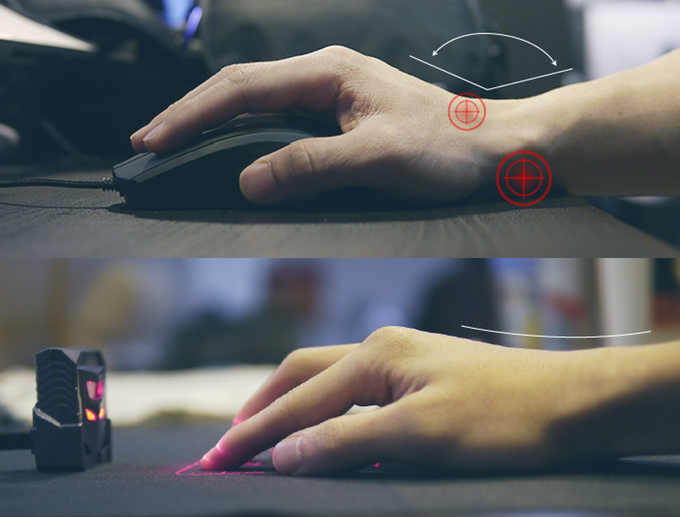
The Odin moused began life as a Kickstarter venture, and it’s surpassed its targets and is set to enter full production in the coming month. The crew says that the lower wrist angle reduces carpal tunnel, and it definitely feels gentler than a physical mouse: latency was respectable and the gadget requires a flat surface to work, with the workable area fixed at just over three inches squared.

osin vs norml mouse

Limitation-wise, that space can’t be changed and while laser projection is only in red, you can select from three different colours of robotic shrunken heads. Hit up the crowdfunding website for all nitty gritty and an option to buy!

I Made an Untraceable AR-15 ‘Ghost Gun’ in My Office—And It Was Easy

7

(This article originally appeared in WIRED)

This is my ghost gun. To quote the rifleman’s creed, there are many like it, however this one is mine. It’s known as a “ghost gun”—a term popularized by gun control advocates but increasingly adopted by gun lovers too—because it’s an untraceable semiautomatic rifle with no serial number, existing beyond law enforcement’s information and management. And if I really feel an unusually private connection to this deadly, libertarian weapon, it’s because I made it myself, in a back room of WIRED’s downtown San Francisco workplace on a cloudy afternoon.


I did this mostly alone. I have nearly no technical understanding of firearms and a Cro-Magnon man’s mastery of power tools. Still, I made a completely metallic, functional, and accurate AR-15. To be particular, I made the rifle’s lower receiver; that’s the body of the gun, the only part that US legislation defines and regulates as a “firearm.” All I needed for my completely legal DIY gunsmithing venture was about six hours, a 12-yrold’s understanding of pc software program, an $80 chunk of aluminum, and an almost featureless black 1-cubic-foot desktop milling machine known as the Ghost Gunner.

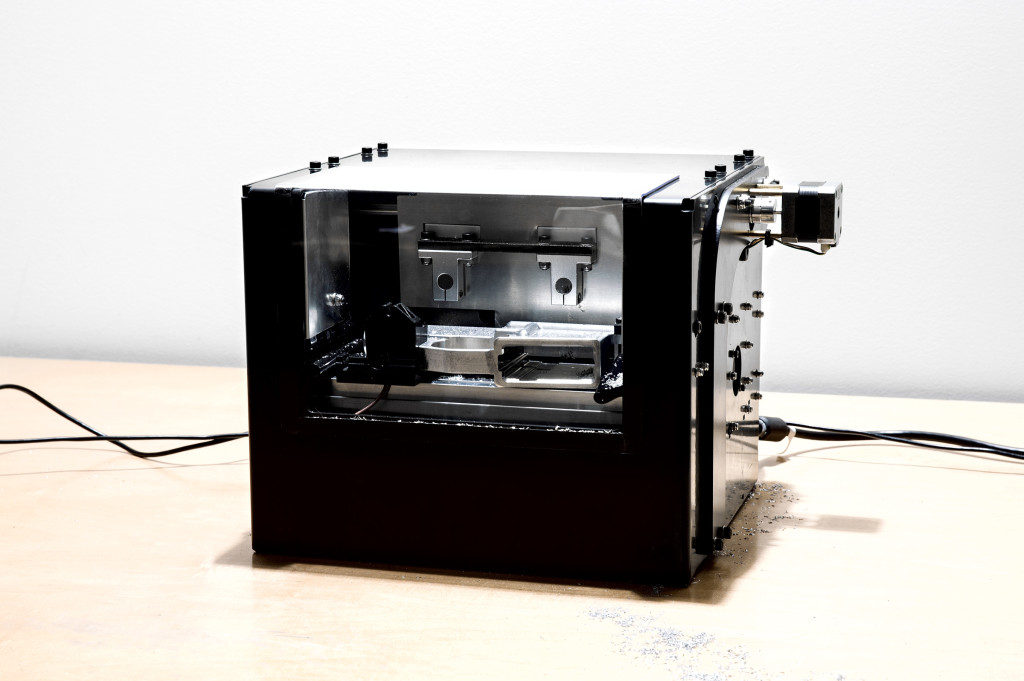
The Ghost Gunner is a $1,500 computer-numerical-controlled (CNC) mill sold by Defense Distributed, the gun access advocacy group that gained notoriety in 2012 and 2013 when it started creating 3D-printed gun components and the Liberator, the world’s first totally 3D printed pistol. While the political controversy surrounding the notion of a deadly plastic weapon that anybody can obtain and print has waxed and waned, Defense Distributed’s DIY gun-making has advanced from plastic to metallic. Like different CNC mills, the Ghost Gunner uses a digital file to carve objects out of aluminum. With the primary shipments of this sold-out machine starting this spring, the group intends to make it vastly simpler for regular folks to manufacture gun elements out of a material that’s practically as sturdy as the stuff utilized in industrially manufactured weapons.

In early May, I obtained a Ghost Gunner, the first of these rare CNC mills loaned to a media outlet, and I tried it out. I’m going to give away the ending: Aside from a single temporary hardware hiccup, it worked remarkably well. In truth, the Ghost Gunner worked so effectively that it might signal a brand new era within the gun control debate, one where the barrier to legally building an untraceable, sturdy, and lethal semiautomatic rifle has reached an unprecedented low level in price and skill.

But the Ghost Gunner represents an evolution of novice gun-making, not a revolution. Home-brew gunsmiths have been making ghost weapons for years, machining lower receivers to legally assemble rifles that fall outside the scope of American firearms laws. In fact, when we revealed the Ghost Gunner’s existence last yr, the feedback section of my story flooded with critics declaring that anybody can do the same garage gunsmithing work with an old-fashioned drill press.

I could hardly judge the fancy new CNC mill in WIRED’s workplace with out attempting that methodology too. Or for that matter, Defense Distributed’s earlier trick, constructing gun components with a 3D printer. Before I realized exactly what I was stepping into, I decided to try all three methods in a ghost-gun-making case study. I would construct an untraceable AR-15 all 3 ways I’ve heard of: utilizing the old school drill press technique, a commercially obtainable 3D printer, and eventually, Defense Distributed’s new gun-making machine.
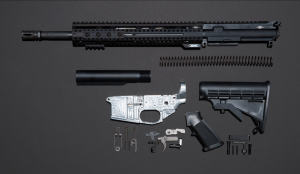
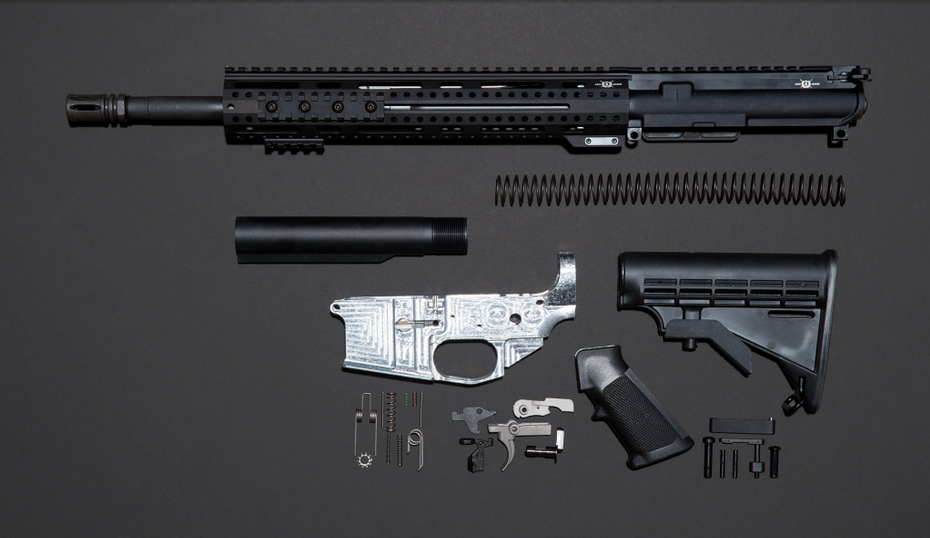
parts of a gunAll the parts of my AR-15, together with my do-it-yourself decrease receiver, the gleaming aluminum piece. Josh Valcarcel/WIRED
The Ingredients of a Ghost Gun

Almost no one builds a ghost gun from scratch, and I didn’t either. The shortest path to constructing an untraceable AR-15 requires only that you build one comparatively simple part your self, a part that’s become the main focus of a fierce gun control controversy: the lower receiver.

US gun laws have centered on the lower receiver because it’s the essential core of a gun: It holds together the stock, the grip, the ammunition magazine, and the upper receiver, which includes the barrel and the chamber where the cartridge is detonated. As Doug Wicklund, senior curator at the NRA museum explained to me, the lower receiver always carried the serial number because it’s the part that remains when the others wear out and are replaced. Like the frame of a bicycle or the motherboard of a pc, it’s the nucleus of the machine around which every thing else is constructed.
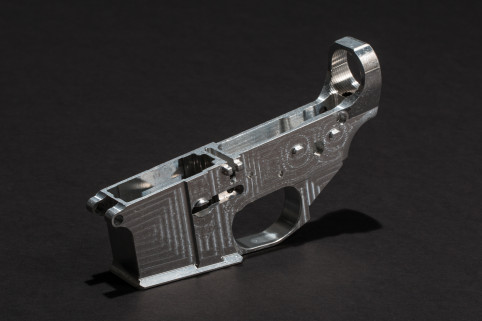
lower recieverMy AR-15’s do-it-yourself lower receiver. Josh Valcarcel/WIRED

It’s worth noting that buying an AR-15 within the US isn’t hard. But the privacy-minded—as well as those disqualified from gun purchases by felony records or psychological illnesscan make their very own lower receiver and buy all the other parts, which are subject to nearly zero regulation. I ordered each part of my AR-15 but the lower receiver from the web site of Ares Armor, a Southern California gun vendor that doesn’t require any personal data beyond a shipping address. If I wished to cover my purchases from my credit card firm, I could have paid in bitcoin—Ares accepts it.

There’s even a technique to anonymously purchase that highly regulated lower receiver—almost. Like many gun vendors, Ares sells what’s referred to as an “eighty percent lower,” a chunk of aluminum legally deemed to be eighty percent of the way towards becoming a functional lower receiver. Because it lacks just a few holes and a single precisely formed cavity known as the trigger well, it’s not technically a regulated gun part.

Machining the final 20 percent myself with a CNC mill or drill press would enable me to obtain a gun without a serial number, with no background check, and with out a waiting period. I wouldn’t even have to show anyone ID. Law enforcement could be completely unaware of my ghost gun’s existence. And that sort of secrecy appeals to Americans who consider their relationship with their firearms an extremely private affair that the government ought to keep out of.

Controversy swelled around ghost weapons when John Zawahri, an emotionally disturbed 23-yrold, used one to kill 5 folks in Santa Monica in the summer of 2013. Even so, they haven’t been outlawed; buying or selling a ghost gun is against the law, however making one remains kosher under US gun control laws. California state senator Kevin Deleon launched a bill to ban ghost weapons last year, following the Santa Monica mass shooting. Governor Jerry Brown vetoed it a couple of months later.

But as the shouting match over ghost weapons gets louder, few of the shouters have actually tried to make one. Even fewer have tried to check how the evolution of a new set of digital “maker” tools is altering that gun control question.

So over the course of one unusual week in WIRED’s office, that’s what I set out to do. Here’s the way it all went down.
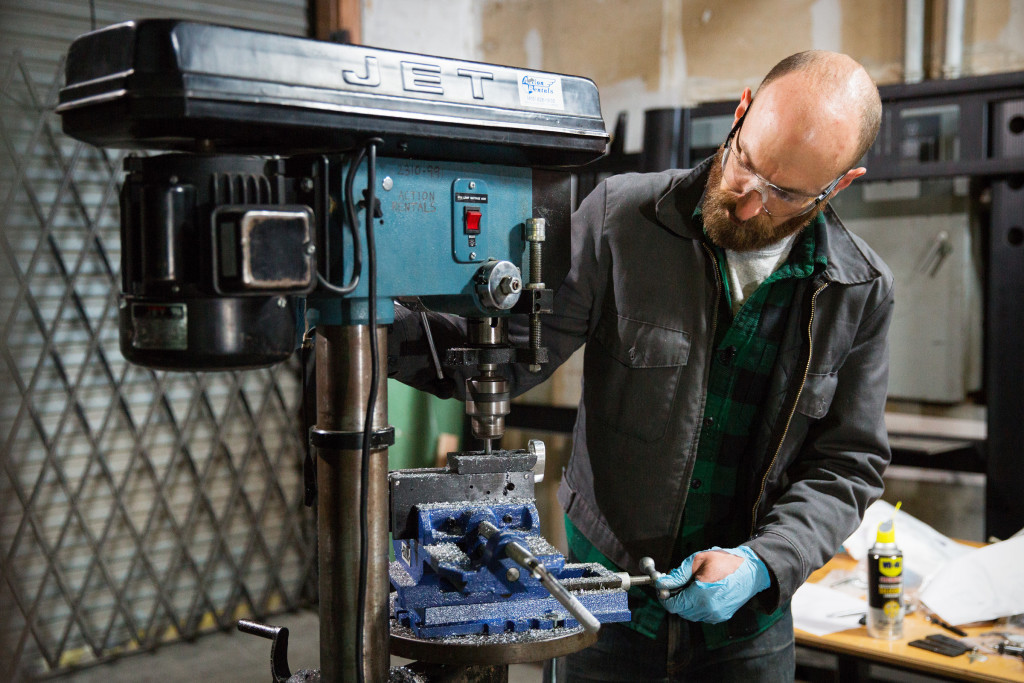
 

working on the millThe drill press, jigs and vise I used in my first attempt to finish an eighty percent lower receiver. Josh Valcarcel/WIRED
The Drill Press

Remember when I stated I know nothing about using power tools? Unsurprisingly, this portion of my gunsmithing experiment didn’t go well.

Step one: Acquire a drill press, an enormous stand-alone drill meant to cut the aluminum features out of my eighty percentlower receiver. One $250 rental charge later, two colleagues helped me haul a drill practically 6 ft tall all the way down to our building’s loading dock, a dark and chilly concrete space occupied by a pair of huge Dumpsters. I’d paid Ares $97 for a set of steel-carbide drill bits and end mills—tools that act like bits but also can cut sideways like a milling machine—all of which the company recommended I use with the drill press to do the job. I paid another $110 for a set of steel jigs, metallic stencils that would guide the machine as I tried to mill and drill exact shapes.

All that planning and spending, it turned out, couldn’t compensate for my utter lack of even highschoollevel shop abilities. Before I’d even begun, I realized I had the incorrect sort of vise, and we had to drive an hour and drop $80 to pick up another one. Then there was the drilling itself—which, it would prove, is not as simple as it appears on the Internet.

I reviewed my lower-receiver drilling basics on YouTube one final time, put on latex gloves and eye protection, screwed the steel jigs around my slug of aluminum, tightened the clamps, and hit the chunky green power button.

As the drill bit chewed into the block, I felt a rush of excitement and tasted fine aluminum dust between my teeth. The bit threw off metallic shavings and left behind a gleaming, polished crater. But my elation faded as I realized how badly I was mangling the trigger well. No matter how hard I cinched it down, the vise shuddered continuously, moving the aluminum piece. The holes I was cutting veered off till they were practically diagonal.

When I switched to the end mill to clean up the spaces between the pits I’d created, I discovered they had been mostly at different depths: The drill bit had somehow moved up and down, and I hadn’t noticed. The bottom of the cavity I’d made began to resemble the surface of the moon. Meanwhile, the huge machine protested loudly, shaking like a train about to derail. Throughout this ordeal, WIRED video producer Patrick Farrell, a former bike mechanic who most likely could have offered useful advice, watched me wrestle from behind his digital camera with a restrained smirk. The unwritten rule: I was in this alone.

I kept at it for 5 and a half hours. Then the head of the drill press—the part that holds the bit, which I’d later learn is called the “chuck”—fell off. I had no idea whether this was supposed to happen as a form of fail-safe, or if I had destroyed an costly piece of equipment rented with Farrell’s credit card. I screwed the chuck back in, and after a few more minutes of metal-on-metal violence, it dropped off once more. (I still don’t know if I damaged the drill press, however a gunsmith later explained to me that it likely wasn’t designed to handle the lateral stress of using it as a milling machine.)

That’s when I gave up. I had nothing to show for my labor but a sad metallic block scarred by a maze of crooked channels. Well, that and a left hand bristling with tiny aluminum shards where my latex glove had split.
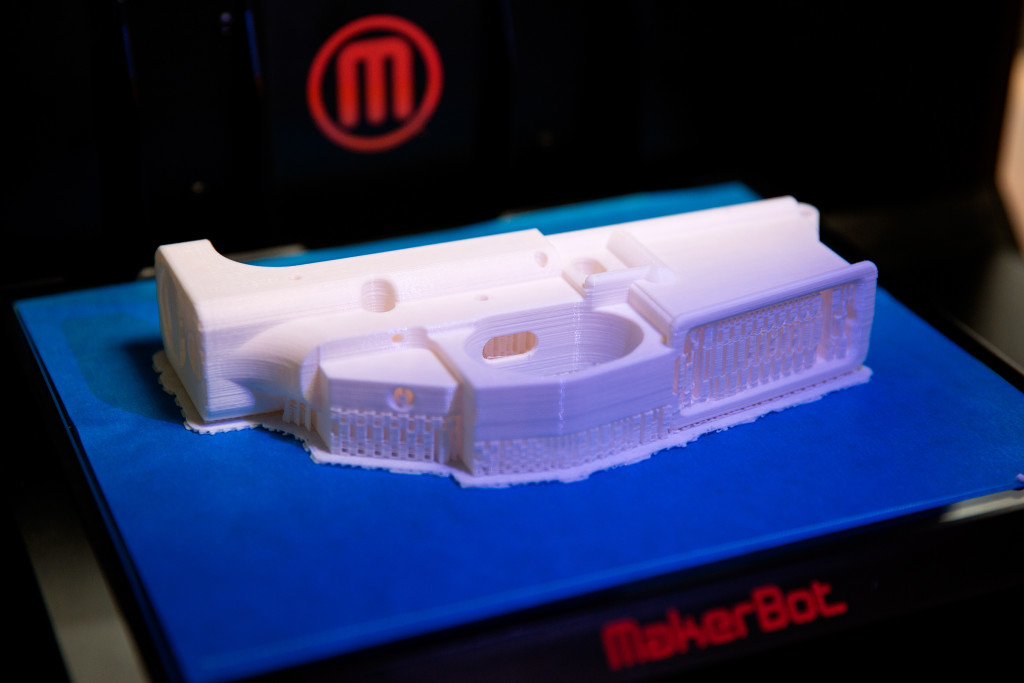
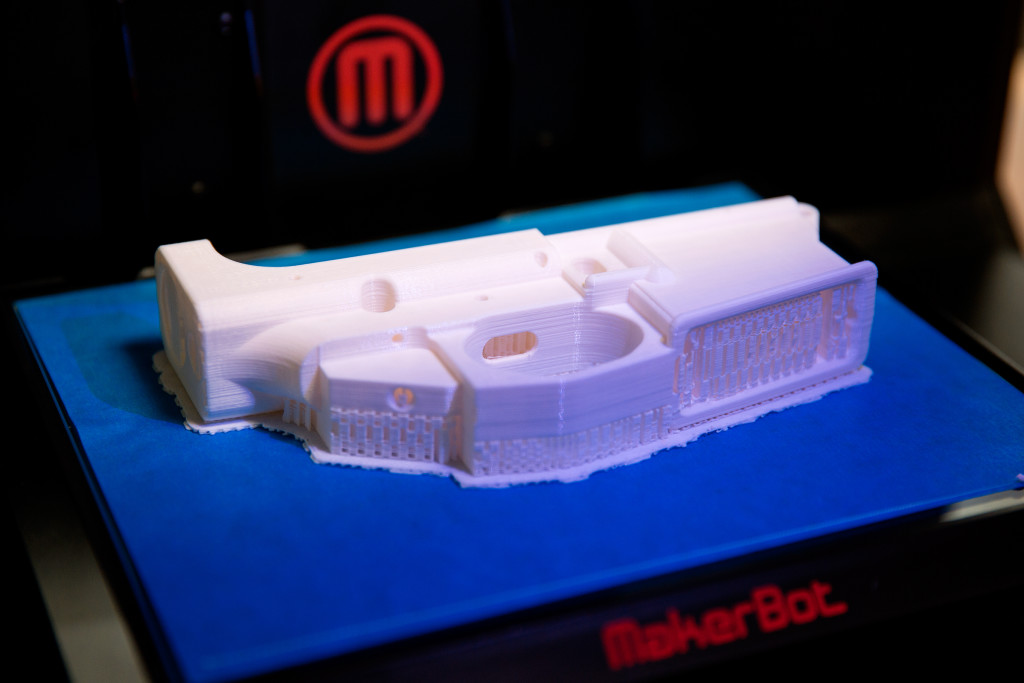
3d printed plastic recieverA 3D printed lower receiver on the print bed of a Makerbot Replicator. Josh Valcarcel/WIRED


3D Printing

I left the grease-soaked drill press in WIRED’s loading dock, headed back upstairs, and pulled a $2,800 Makerbot Replicator from its box. It felt like the elevator was a time machine shortcutting about a century of technological progress.

I plugged the 3d printer, followed a series of delightfully idiot-proof instructions, and in minutes was test-printing a tiny white coffee table. Soon I was ready to begin making gun parts; no obscure YouTube instruction videos, calipers, jigs, or aluminum splinters required.

I discovered the blueprint for a printable, reinforced AR-15 lower receiver on The Pirate Bay. It was one of dozens of gun parts out there for download in the rogue BitTorrent repository’s “physicles” section, a part of the site created in 2012 to host controversial digital blueprints other websites wouldn’t or couldn’t. In fact, the file I downloaded had been created by Defense Distributed in 2013, but the group had pulled it from its personal web site after the State Department threatened to prosecute the group’s employees for weapons-export-control violations.

It took a couple of minutes to torrent the lower receiver file. I opened it in Makerbot’s printing software, centered it on the app’s digital representation of the machine’s print bed, and clicked print. The printer’s motors started to whir, and within seconds its print head was laying out extruded white plastic in a flat structure that vaguely resembled the body of a semiautomatic rifle. As the workday ended and WIRED’s office emptied, I found myself sitting alone in a darkening room, transfixed by the gun part slowly materializing before me.

At one point, six hours into the 9-hour print job, the Replicator’s print head overheated and took a while to chill down. That required pressing one more button on the machine. I didn’t touch it again. The next morning I got back to the stilldark room and found a completed, eerily translucent lower receiver glowing inside the Replicator’s LED-lit chamber.

As science-fictional as that process felt, the results were flawed. When I pried the finished lower receiver off the print mattress, one side was covered in support material meant to prevent the hot plastic structures from collapsing before they solidified. Snapping and scraping off that matrix of plastic was a long, messy process. I tried using a knife, cut my thumb, and bled all over one side of the rifle body. And the same support materials also filled tiny holes in the piece, in some cases choking the delicate threads meant to accept metallic screws.

It’s clearly possible, based on YouTube evidence, to 3D-print AR-15 lower receivers which are capable of firing hundreds of rounds. But mine wasn’t so practical; I wouldn’t know it till I visited a gunsmith two days later, but I’d eventually give up on assembling a gun out of that plastic-printed lower receiver long before it was anywhere close to a becoming a functional weapon.
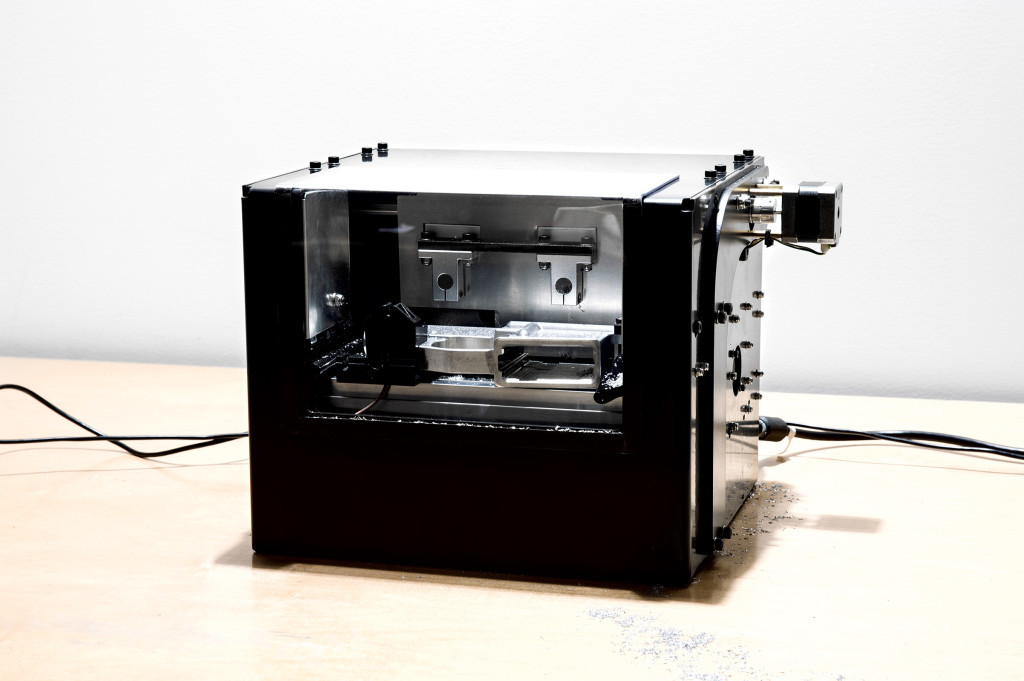
the ghost gunnerThe Ghost Gunner, with an eighty percent lower receiver bolted inside. Josh Valcarcel/WIRED


The Ghost Gunner

The new technology of “maker” instruments like 3D printers and CNC mills have been lauded as machines that allow anybody to make anything. But from my first moments using the Ghost Gunner, it was clear: This is a machine designed to make a gun.

Defense Distributed’s CNC mill is a simple black cube, with two tiny stepper motors sticking out of two of its six sides. As if to underscore the power contained in its microwave-sized footprint, the machine was so heavy I could barely lift it from its box. When I did haul it onto a table, I was struck by the lack of branding or the toylike LED lights and buttons of the Replicator. Its stark simplicity mirrors the unmarked gun parts it’s designed to create.

The Ghost Gunner works with either of two pieces of software: GRBL, an open source, general-purpose milling application, and DDCut, a Windows-only gun-milling program created by Defense Distributed and recommended by the group for anyone other than advanced CNC mill users. The Ghost Gunner also comes with the DDCut instruction file for milling an AR-15 lower receiver, shipped on a USB thumb drive in the box. (Putting it on the Internet, as with the 3-D-printable files, might have prompted the State Department to threaten Defense Distributed with prosecution again for weapons-export-control violations.)

I installed DDCut and found that for its primary purpose of finishing a lower receiver, the Ghost Gunner is absurdly easy to use—mostly because I was never given the chance to make any choices. Once DDCut began running the AR-15 file and cutting into my 80 percent-lower receiver, my only interaction with the software was clicking “next” through a 22-step set of instructions and then doing things to the aluminum part that the software told me to do.

For one hour-long stretch in that process, I was given nothing to do but simply admire the Ghost Gunner as its blurred, cylindrical blade cut away the gun’s trigger well with inhuman precision. At other times it seemed to alternate between carving aluminum and assigning me tasks like changing the lower receiver’s position, tightening and loosening bolts, switching the end mill to a drill bit, or even vacuuming up the aluminum shavings that piled up in and around the machine. Eventually, it felt much more like the Ghost Gunner had programmed me to be its gun-making tool than vice versa.
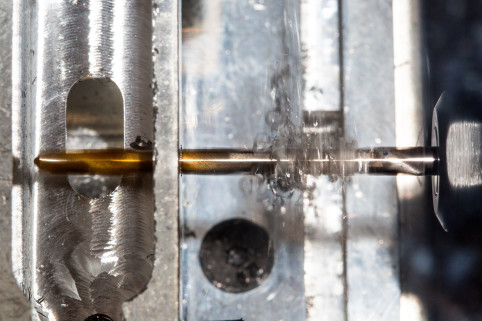
DrillThe Ghost Gunner drills out a lower receiver’s trigger pin hole. Josh Valcarcel/WIRED

Over those hours, I couldn’t help but appreciate the beauty of the Ghost Gunner’s design and engineering. As it patiently removed metal, the aluminum piece and the cutting tool moved in robotic, mesmerizing patterns. The noises the machine produced alternated between high-pitched shrieking and low groans that echoed through the WIRED newsroom and elicited complaints from neighbors. But during quieter lulls, the Ghost Gunner also emitted a series of rising and falling harmonics, produced by vibrations of the mill’s stepper motors, that sounded like a kind of alien melody. My editor, Joe Brown, who came into the room to watch the machine at work, remains convinced the machine was programmed to play a piece of composed music.

When it was only three steps away from finishing its full process, however, the Ghost Gunner hit a serious snag. The probe the mill uses to measure the lower receiver’s location malfunctioned, and the machine locked itself. To get it moving again, I had to break the rules of my experiment and call Cody Wilson, Defense Distributed’s founder, to seek advice. At first he told me I’d have to rerun the entire process—close to four hours of wasted time. “It’s a design flaw,” Wilson admitted. “If it stops, it has to start again from the beginning.”

But Wilson soon came up with a better plan and sent me a new file that rehearsed only the last portion of the AR-15 cutting process. Twenty minutes later I pulled from the machine the shining, perfect body of a semiautomatic rifle, as warm as if it were some baked good fresh from the oven.
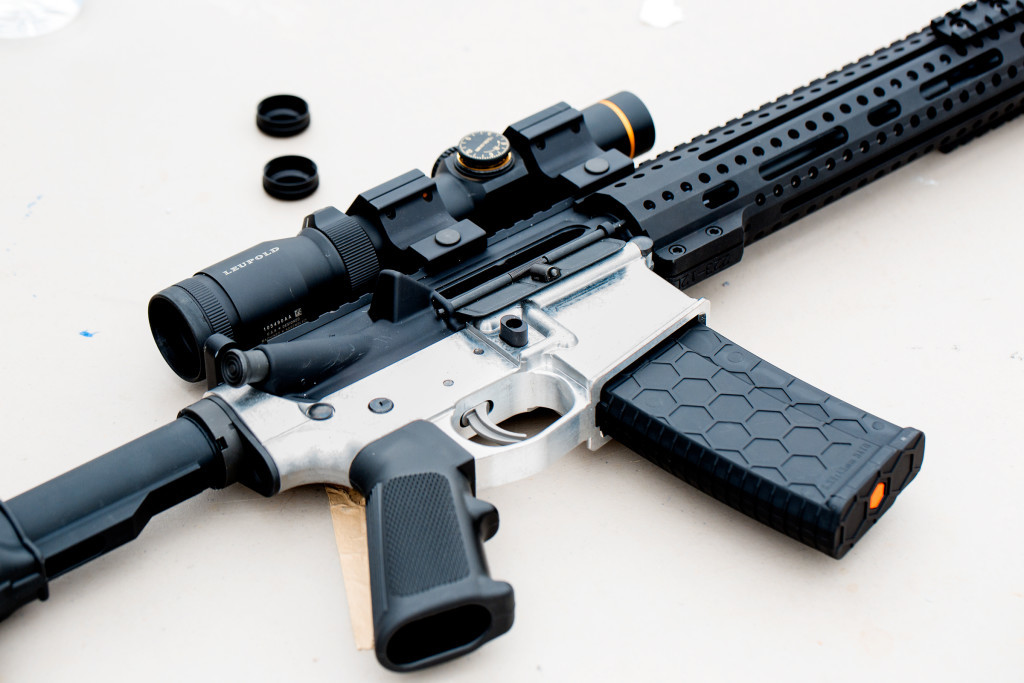
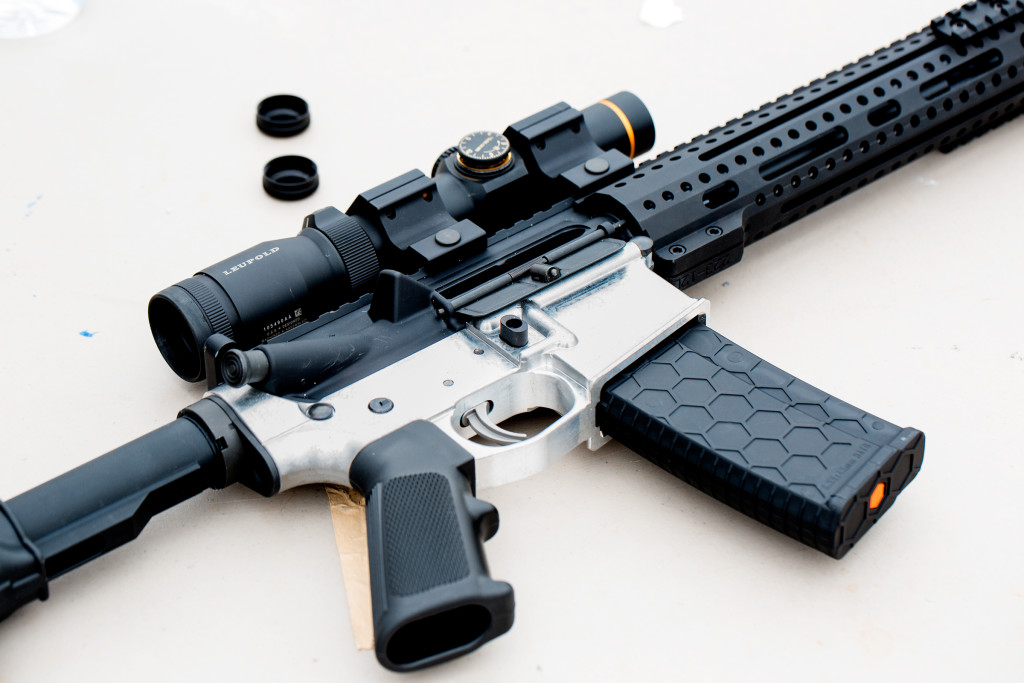
ar-15My fully assembled AR-15. Josh Valcarcel/WIRED


Assembly

The Ghost Gunner’s lower receiver looked obviously superior to my 3-D-printed one—and even more obviously superior to the hot mess of uneven aluminum I’d chewed up with the drill press. But before assembling the full weapon, I wanted an expert opinion. So I visited Bay Area Gunsmithing, a sunny garage in Novato, California, populated by two professional gunsmiths, a very impressive collection of ordnance, and a gracefully aging dachshund named Ruth.

When I showed my manually drilled lower receiver to Nathan Rynder, the shop’s owner, he dismissed it immediately. The hammer and trigger wouldn’t fit into the narrow, winding gorge of the trigger well I’d created, and I hadn’t even gotten as far as drilling holes for the selector and trigger pins. (He did note that he’d seen worse attempts, including a customer who had brought him a lower receiver with a gaping, unintended orifice drilled through its side.)

I was more surprised when Rynder insulted my 3-D-printed lower receiver. “This is not ready to rock,” he said, skeptically probing the part’s details with his fingers. He pointed out that the blueprint had misplaced something called a “takedown pin hole,” and he made a further to-do list of necessary fixes before it could be assembled. “You’d need to thread in a pistol grip, clean out the buffer tube threads, clean up everything a pin went through,” Rynder said. “You’d need several hours of labor to clean this thing up.”

Just the idea of a 3-D-printed lower receiver bothered him; if the ring that held on the buffer tube and stock (the big loop at the back of the receiver) were to break, he pointed out, it could unleash a large and powerful spring inches from the shooter’s face. “It scares me,” Rynder said.
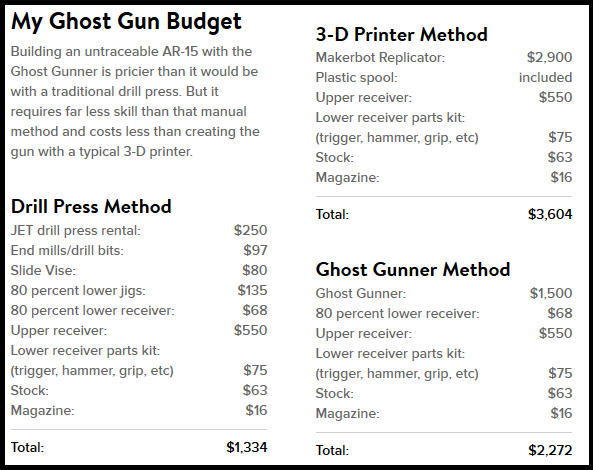
My Ghost Gun Budget

Building an untraceable AR-15 with the Ghost Gunner is pricier than it would be with a traditional drill press. But it requires far less skill than that manual method and costs less than creating the gun with a typical 3-D printer.

My Ghost Gunner–milled AR-15 body, by contrast, got a stoic nod of approval. Rynder—who, allow me to stress, makes guns for a living—wasn’t exactly wowed that I’d produced a functional, essentially flawless lower receiver. But he gave me the go-ahead to build it into a full rifle. “It’s safe to assemble, safe to fire,” he said. “Yes, you could put this together and it would be ready to go.”

Over the next hour in Rynder’s shop, I constructed my AR-15. This was harder than Forrest Gump makes it look. But I persisted, learning the process as I went by watching a YouTube video from Ares Armor a few seconds at a time. (At a couple of points, Rynder couldn’t help but point out that I had inserted a part backward or give me an unsolicited hint. I suppose this was cheating in my one-man gunsmithing experiment, but unfortunately Rynder was a very friendly, helpful, and competent person.)

When I finally slotted in the pins to attach the upper receiver—a component that looks much more like a gun than the lower receiver and whose total lack of regulation is, frankly, bizarre—they made a pleasant chink. My AR-15 was complete.

I looked down at the fully built rifle and something in my brain shifted. I realized that the abstracted parts I’d been fiddling with had turned into an object capable of killing someone. My lower receiver had transformed from a “gun” in a legal sense to a “gun” in a very practical sense.

I remembered that I should start being careful where I pointed it.
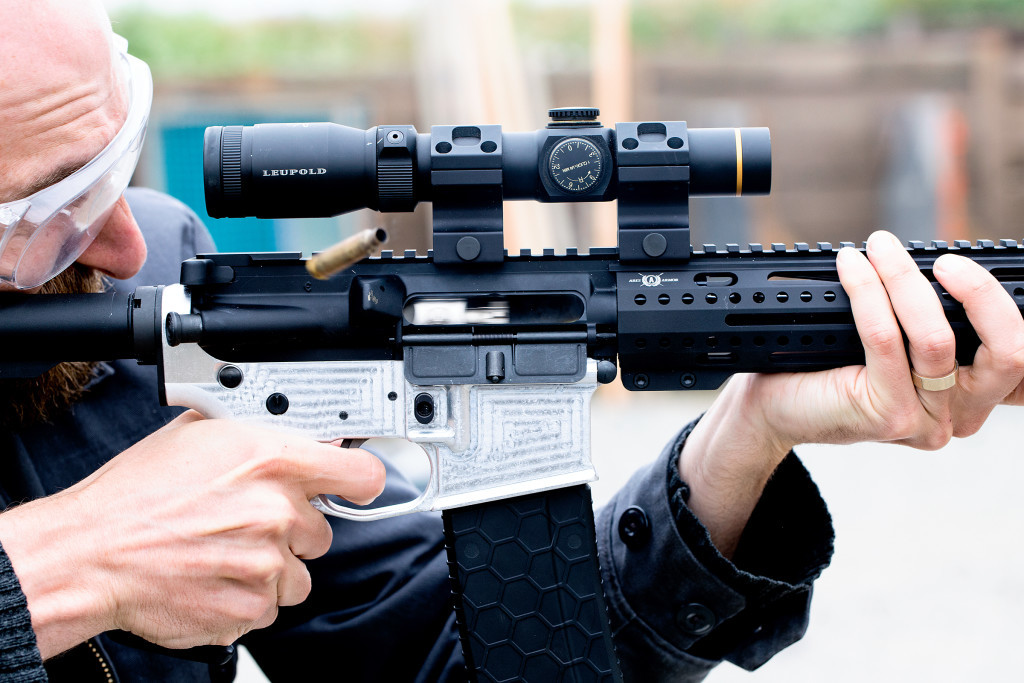
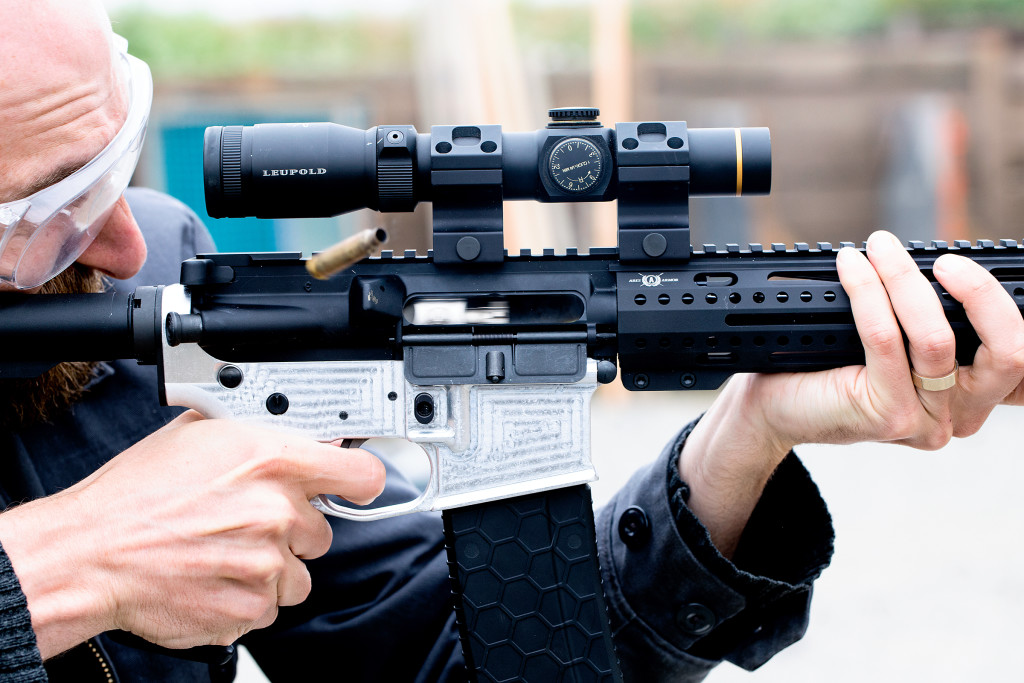
firing ar-15Firing my AR-15. Josh Valcarcel/WIRED


Shooting

Three days later, at a private range in Richmond, California, a half hour from Rynder’s shop, I loaded my AR-15 with a 10-round magazine of .223 caliber ammunition and fired it for the first time. I pulled the trigger hesitantly as I aimed at a piece of cardboard 50 yards away. The deafening blast silenced the tweeting of nearby birds and echoed around the range’s wooden walls as the rifle’s stock dug into my shoulder. I could see a tiny hole in the cardboard. A plume of dust rose from the dirt berm behind it.

“Well, it goes bang,” Rynder said.

I fired again. Then three more times. Then I emptied the magazine. Then I reloaded and emptied another one.

Halfway through the next magazine, I pulled the trigger but got nothing but a soft click. The rangemaster, who happened to be a former winner of the shooting competition reality TV show Top Shot named Chris Cheng, diagnosed that the upper receiver had jammed and needed to be lubricated—a common problem with new rifles. He opened it up and doused the bolt and buffer parts in grease, then put the upper receiver back on.

My rifle performed perfectly for the rest of the morning. After our video team fired the rest of the 40 rounds I’d brought, Rynder walked over to the neighboring range and convinced the friendly local SWAT team members practicing there to give us another 60 rounds. We shot those too. The gun didn’t misfire again.


Exorcising My Ghost Gun

The day after that shooting field trip, I had a flight home to New York. Taking my ghost gun on a plane—legally, three ghost guns, in fact, since I had created three lower receivers—seemed unwise. I couldn’t leave them in WIRED’s office in San Francisco either, because that might count as legally transferring ownership of the unserialized guns, which is a felony. I considered destroying them with a hacksaw, but regulations posted online by the Bureau of Alcohol, Tobacco and Firearms seem to demand that a lower receiver be destroyed with a blowtorch, removing enough metal that it can’t possibly be welded back together.
 

budget

So instead I decided to surrender my three lower receivers to the local police. I disassembled my AR-15 and left a large box containing all of the parts except the lower receivers on my editor’s chair. Then I walked down the street to the police station in San Francisco’s SoMa neighborhood and told the lady at the front desk I wanted to hand over some firearm components. She gave me a puzzled look and asked me to sit down.

Forty minutes later, two cops emerged from a door and asked what I was doing there. I explained and showed them the three lower receivers. They examined them with expressions that were simultaneously quizzical and bored. I asked them if it was common to see AR-15 lower receivers like these: homemade, with no serial numbers. “I’ve never seen this before,” one of them said.

The cops gave me a handwritten receipt for the three weapons I’d turned in, as if to definitively present that these were not outside of law enforcement’s awareness or control: They now had a number. Then they took my lower receivers behind their locked door and I said good bye to my ghost gun.

When this story was published, the Ghost Gunner still sat in a storage room of WIRED’s workplace a couple of blocks away. It’s ready to make another lower receiver at any time. And Defense Distributed has already sold more than a thousand of their gun-making boxes, each one a tiny, easy-to-use, anarchic rifle manufacturing unit.
In other words, to paraphrase the rifleman’s creed once more, this ghost gun was mine. But there will likely be many like it.